Wir haben vorgestern im Waschsalon eine Familie aus Vancouver (Kanada) getroffen. Für beide Seiten eine so schöne Begegnung, dass es fast schon klar war, dass man sich auf dem DragStar Rennen in Messini gestern doch nicht wieder traf.
Es hätte nicht schöner werden können, als die Begegnung vor den sich drehenden Trommeln in Kalamata wo Silvana Englisch sprach und Glenna wieder Deutsch, was sie in der Uni lernte.
Aber zumindest ich bildete mir anfangs ein, dass uns etwas verloren ging, dabei haben wir nur gewonnen: Neue Bekannte und die Erfahrung von real quietschenden Reifen und „gepimpten Gurken“ mit enthusiastischen Motorfreaks aus Griechenland.
Das Gefühl des Verlustes war also ein Fantomschmerz, der somit nicht real war.
Ich habe mir den Verlust also eingebildet, es gab keinen Verlust, so wie es bei einem Tinnitus kein Geräusch gibt, sondern nur einen Druck, der mir suggeriert, das etwas klingt, obwohl alles still ist.
Beim darüber Nachdenken merkte ich, dass bestimmt 80 Prozent meiner Sorgen und Nöte nur Phantomverluste oder Schmerzen sind. Ich hab quasi prophylaktische Schmerzen, weil ich ja welche haben werde, wenn dies oder jenes passieren würde.
Es war und ist wie eine Offenbarung für mich, diesen Ereignissen in meinem Leben so begegnen zu können. Ich muss nicht mit einem realen Schmerz oder Verlust oder anderen Katastrophen umgehen lernen, sondern damit, dass ich ständig denke, dass da dergleichen ist.
Nur dann hört mein Ohr auf zu piepen, weil ich realisiere, dass da kein Piepen ist, sondern nur ein Druck, den ich mir aus schlechter Erfahrung in der Vergangenheit einbilde.
Vielleicht ist der Knacks in meiner Seele oder meinem Geist so tief, dass der Ton oder die Angst nie aufhört für mich so zu erscheinen, aber ich kann mir immer wieder bewusst machen, dass der Ton eigentlich nicht da ist.
Ich muss also lernen, die omnipräsente Angst anzunehmen, was viel leichter ist, wenn ich weiss, dass ich sie mir nur einbilde, als wenn ich versuche etwas scheinbar Reales zu ignorieren.
Bis morgen,
Euer Ulf
In english
Imagination is a dangerous education We met a family from Vancouver (Canada) the day before yesterday at the laundromat. It was such a nice encounter for both sides that it was almost clear that we would not meet again at the DragStar race in Messini yesterday.
It couldn’t have been more beautiful than the meeting in front of the spinning drums in Kalamata where Silvana spoke English and Glenna spoke German again, which she learned at university.
But at least I thought at first that we were losing something, but we only gained something: New acquaintances and the experience of real squealing tires and „pimped cucumbers“ with enthusiastic motor freaks from Greece.
So the feeling of loss was a phantom pain that wasn’t real.
So I imagined the loss, there was no loss, just as there is no sound with tinnitus, but only a pressure that suggests to me that something sounds, although everything is silent.
When I thought about it, I realized that probably 80 percent of my worries and distress were just phantom losses or pain. I have prophylactic pain, so to speak, because I will have some if this or that happens.
It was and is like a revelation for me to be able to face these events in my life in this way. I don’t have to learn to deal with real pain or loss or other catastrophes, but with the fact that I constantly think that something like this is happening.
Only then does my ear stop beeping, because I realize that there is no beeping, but only a pressure that I imagine from bad experiences in the past.
Maybe the crack in my soul or mind is so deep that the sound or fear never stops appearing to me, but I can keep reminding myself that the sound is not actually there.
So I have to learn to embrace the omnipresent fear, which is much easier when I know I’m imagining it than when I’m trying to ignore something seemingly real.
See you tomorrow,
Your Ulf
En francaise
L’imagination est une éducation dangereuse Avant-hier, nous avons rencontré une famille de Vancouver (Canada) à la laverie automatique. Une si belle rencontre pour les deux parties qu’il était presque évident qu’ils ne se reverraient pas à la course DragStar de Messini hier.
Cela n’aurait pas pu être plus beau que la rencontre devant les tambours qui tournent à Kalamata, où Silvana parlait anglais et Glenna de nouveau allemand, qu’elle a appris à l’université.
Mais au moins, au début, je m’imaginais que nous avions perdu quelque chose, alors que nous n’avons fait que gagner : De nouvelles connaissances et l’expérience de pneus qui grincent réellement et de „concombres bichonnés“ avec des motards enthousiastes venus de Grèce.
Le sentiment de perte était donc une douleur fantôme, qui n’était donc pas réelle.
J’ai donc imaginé la perte, il n’y avait pas de perte, tout comme il n’y a pas de bruit dans un acouphène, mais seulement une pression qui me suggère que quelque chose résonne alors que tout est silencieux.
En y réfléchissant, je me suis rendu compte que 80 % de mes soucis et de mes problèmes n’étaient que des pertes fantômes ou des douleurs. J’ai des douleurs quasi prophylactiques, car j’en aurai si telle ou telle chose se produit.
C’était et c’est toujours comme une révélation pour moi de pouvoir faire face à ces événements dans ma vie de cette manière. Je ne dois pas apprendre à gérer une douleur réelle, une perte ou une autre catastrophe, mais à penser constamment qu’il y a quelque chose de ce genre.
Ce n’est qu’alors que mon oreille cesse de biper, parce que je réalise qu’il n’y a pas de bip, mais seulement une pression que j’imagine à partir d’une mauvaise expérience passée.
Peut-être que le craquement dans mon âme ou mon esprit est si profond que le son ou la peur ne cesse jamais de m’apparaître ainsi, mais je peux toujours me rendre compte que le son n’est en fait pas là.
Je dois donc apprendre à accepter la peur omniprésente, ce qui est beaucoup plus facile si je sais que je ne fais que l’imaginer, que si j’essaie d’ignorer quelque chose qui semble réel.
À demain, donc,
Votre Ulf
El Español
La imaginación es una educación peligrosa Anteayer conocimos en la lavandería a una familia de Vancouver (Canadá). Fue un encuentro tan agradable para ambas partes que casi estaba claro que no nos volveríamos a encontrar ayer en la carrera DragStar en Messini.
No pudo ser más bonito que el encuentro delante de los tambores giratorios en Kalamata, donde Silvana hablaba inglés y Glenna volvía a hablar alemán, que aprendió en la universidad.
Al principio imaginé que perdíamos algo, pero sólo ganamos algo: Nuevos conocidos y la experiencia de verdaderos chirridos de neumáticos y „pepinos chulos“ con entusiastas locos del motor de Grecia.
Así que el sentimiento de pérdida era un dolor fantasma que no era real.
Entonces imaginé la pérdida, no había pérdida, igual que no hay sonido con el tinnitus, sino sólo una presión que me sugiere que algo suena, aunque todo esté en silencio.
Cuando pensé en ello, me di cuenta de que probablemente el 80% de mis preocupaciones y angustias no son más que pérdidas o dolores fantasmas. Tengo dolor profiláctico, por así decirlo, porque lo tendré si ocurre esto o aquello.
Fue y es como una revelación para mí poder afrontar estos acontecimientos de mi vida de esta manera. No tengo que aprender a lidiar con el dolor real o la pérdida u otras catástrofes, sino con el hecho de pensar constantemente que algo así está sucediendo.
Sólo entonces mi oído deja de pitar, porque me doy cuenta de que no hay ningún pitido, sino sólo una presión que estoy imaginando a partir de malas experiencias del pasado.
Puede que la grieta en mi alma o en mi mente sea tan profunda que el sonido o el miedo nunca dejen de aparecerme de esa manera, pero puedo seguir recordándome a mí mismo que el sonido no está ahí en realidad.
Así que tengo que aprender a aceptar el miedo omnipresente, lo cual es mucho más fácil cuando sé que me lo estoy imaginando que cuando intento ignorar algo aparentemente real.
Gestern hätte mein Quasiopa seinen 115. Geburtstag gefeiert. Quasiopa, weil er der Bruder von meinem eigentlichen Opa war, aber wir in seinem Haus lebten und er deshalb gefühlt mein eigentlicher Opa gewesen ist.
Ein unangenehmer Geselle. Ehemaliger Bauunternehmer mit zurückgekämmten Haaren, großen Ohren, immer im Anzug und meist mit finsterer Mine. Ein Typ Chef der alten Schule: rechthaberisch, bestimmt, selbstbewusst und wenn er wütend war auch laut.
18 Jahre verbrachten wir zusammen und seine Frau war meine Lieblingsoma. Als Opa Adolf starb, schrieb meine wirklich echte Mutter, die viel unter ihm zu leiden hatte „Du imponiertest uns durch deinen Charakter. Viel mehr Positives könnte sie nicht übers Herz bringen, aber es brachte auf den Punkt, was den Mann ausmachte, der mich wohl mehr prägte als mir bewusst war.
Er war ein Mann mit Überzeugungen und Prinzipien, leider mehr als Idealen, aber er stand und kämpfte für diese, mit allem was der hatte und bis zum bitteren Ende. Eben ein Mann mit Charakter.
Ich glaube, dass meine Mutter heute, wenn ich sterben würde, das Gleiche über mich sagen würde “ Du imponiertest uns durch deinen Charakter“. Ich würde stolz darauf sein, auch wenn es nicht viel ist, denn das, woran es der Welt heute meines Erachtens am meisten mangelt, sind Menschen mit Charakter.
Bis morgen,
Euer Ulf
In english
My uncle Tienappel
Yesterday would have been my Quasiopa’s 115th birthday. Quasi grandpa because he was the brother of my real grandpa, but we lived in his house and therefore he felt like my real grandpa.
An unpleasant fellow. A former building contractor with slicked-back hair, big ears, always in a suit and usually with a frown on his face. An old-school type of boss: bossy, determined, self-confident and loud when he was angry.
We spent 18 years together and his wife was my favorite grandma. When Grandpa Adolf died, my real mother, who had suffered a lot under him, wrote „You impressed us with your character. She couldn’t say much more positive than that, but it summed up what made the man who probably influenced me more than I realized.
He was a man with convictions and principles, unfortunately more than ideals, but he stood and fought for them with everything he had and to the bitter end. A man of character.
I believe that if I were to die today, my mother would say the same thing about me: „You impressed us with your character“. I would be proud of that, even if it wasn’t much, because what I think the world lacks most today is people with character.
See you tomorrow,
Your Ulf
En Francaise
Mon oncle Tienappel Hier, mon Quasiopa aurait fêté son 115e anniversaire. Quasiopa parce qu’il était le frère de mon vrai grand-père, mais que nous vivions dans sa maison et qu’il avait donc l’impression d’être mon vrai grand-père.
Un compagnon désagréable. Ancien entrepreneur, cheveux tirés en arrière, grandes oreilles, toujours en costume et la plupart du temps avec une mine sombre. Un type de chef à l’ancienne : autoritaire, déterminé, sûr de lui, et même bruyant quand il était en colère.
Nous avons passé 18 ans ensemble et sa femme était ma grand-mère préférée. Lorsque grand-père Adolf est mort, ma vraie mère, qui a beaucoup souffert de lui, a écrit : „Tu nous as impressionnés par ton caractère. Elle n’aurait pas pu dire beaucoup plus de choses positives, mais cela résumait bien ce qui caractérisait l’homme qui m’a sans doute plus marqué que je ne le pensais.
C’était un homme avec des convictions et des principes, malheureusement plus que des idéaux, mais il les défendait et se battait pour eux, avec tout ce qu’il avait et jusqu’au bout. Un homme de caractère, en somme.
Je pense qu’aujourd’hui, si je mourais, ma mère dirait la même chose de moi : „Tu nous as impressionnés par ton caractère“. J’en serais fier, même si ce n’est pas grand-chose, car ce dont le monde manque le plus aujourd’hui, à mon avis, ce sont des gens de caractère.
A demain, donc,
Votre Ulf
El Español
Mi tío Tienappel Ayer hubiera sido el 115 cumpleaños de mi Quasiopa. Cuasi abuelo porque era hermano de mi abuelo de verdad, pero vivíamos en su casa y por eso se sentía como mi abuelo de verdad.
Un tipo desagradable. Un antiguo contratista de obras con el pelo repeinado hacia atrás, orejas grandes, siempre de traje y normalmente con el ceño fruncido. Un jefe de la vieja escuela: mandón, decidido, seguro de sí mismo y ruidoso cuando se enfadaba.
Pasamos 18 años juntos y su mujer era mi abuela favorita. Cuando murió el abuelo Adolf, mi verdadera madre, que había sufrido mucho con él, escribió: „Nos impresionó con su carácter“. No podía decir mucho más positivo que eso, pero resumía lo que hacía el hombre que probablemente influyó en mí más de lo que yo creía.
Era un hombre con convicciones y principios, desgraciadamente más que ideales, pero los defendió y luchó por ellos con todo lo que tenía y hasta el amargo final. Un hombre de carácter.
Creo que si yo muriera hoy, mi madre diría lo mismo de mí: „Nos impresionaste con tu carácter“. Me sentiría orgulloso de ello, aunque no fuera mucho, porque creo que lo que más falta le hace al mundo hoy en día son personas con carácter.
Das Letzte womit wir gerechnet haben, was unser never ending Problem sein wird, ist die Tür.
Ich weiss nicht, wie oft sie schon rau sgefallen ist und man kann sich kaum vorstellen wo und wie wir sie schon reparierten.
Egal ob bayrische Parkplätze, kroatische Serpentinen, griechische Strände oder Lidl-Parkplätze: Die Tür fiel raus.
Und während wir beim ersten Mal noch Schockgefrohren waren, sind es mittlerweile nur noch Achsel zuckende Momente des „nicht schon wieder“, wenn unsere Beifahrerseite wie die eines ausgeschlachtet Vans aussieht, weil die Tür fehlt.
Heute wäre es beinahe wieder passiert, aber ein geschulter Blick vorm Schließen bewahrte uns vor Schlimmeren, weshalb wir kurzerhand mit einem Schraubenzieher und physikalischen Basiswissen alles wieder in Position brachten, um am Strand in Ruhe der Sache auf den Grund zu gehen.
Eigentlich muss ja nur noch ein Teil ausgetauscht werden, aber jetzt ist eine Schraube ausgenudelt, bzw. Dessen Bit-Einsatzstelle, weshalb wir doch wieder aufs Wochenende warten, um dem Problem auf den Zahn zu fühlen.
Wir brauchen ja nur eine neue Schraube und eine Flex, ich gebe zu, das ist so ziemlich das einzige Werkzeug, was wir uns noch nicht beschafft haben, aber irgendein pragmatischer Grieche wird sich schon finden lassen, der nach dem Motto, „was nicht passt, wird passend gemacht agiert und uns aus der Bedroullie hilft“, zur Not bei Paul in Preveza, wenn wir bald kurz nach Albanien müssen, um unseren Aufenthalt zu verlängern, oder so.
Wie auch immer, derzeit knarrt sie nur und das ist doch schon ein Fortschritt und wenn alle Stricke reißen, baut Silvana die Schraube eben selbst, die letzte Unterlegscheibe aus einem Euro-Stück funktionierte ja auch ganz hervorragend.
Bis morgen,
Euer Ulf
In english
The door
The last thing we expected to be our never-ending problem was the door.
I don’t know how many times it has fallen off and it’s hard to imagine where and how we’ve repaired it.
Whether Bavarian parking lots, Croatian serpentines, Greek beaches or Lidl parking lots: The door fell out.
And while we were shocked the first time, we now just shrug our shoulders and say „not again“ when our passenger side looks like that of a gutted van because the door is missing.
It almost happened again today, but a trained eye before closing the door saved us from worse, which is why we quickly put everything back in place with a screwdriver and basic knowledge of physics so that we could get to the bottom of the matter on the beach in peace.
Actually, only one part needs to be replaced, but now a screw is worn out, or rather its bit insertion point, which is why we are waiting for the weekend again to get to the bottom of the problem.
We only need a new screw and an angle grinder, I admit, that’s pretty much the only tool we haven’t got ourselves yet, but some pragmatic Greek will be able to be found who will act according to the motto „what doesn’t fit will be made to fit and help us out of our predicament“, if necessary at Paul’s in Preveza if we have to go to Albania soon to extend our stay or something.
Anyway, at the moment it’s just creaking and that’s already progress and if all else fails, Silvana will build the screw herself, the last washer made from a piece of Euro worked perfectly well.
See you tomorrow,
Your Ulf
En francaise
The door La dernière chose à laquelle nous nous attendions et qui serait notre problème sans fin, c’est la porte.
Je ne sais pas combien de fois elle est tombée et il est difficile d’imaginer où et comment nous l’avons réparée.
Que ce soit sur des parkings bavarois, des routes en lacets croates, des plages grecques ou des parkings Lidl : La porte est tombée.
Et si la première fois, nous étions encore sous le choc, ce ne sont plus que des hausses d’épaules et des „pas encore“ lorsque notre côté passager ressemble à celui d’un monospace détruit parce qu’il manque la porte.
Aujourd’hui, cela a failli se reproduire, mais un coup d’œil avisé avant la fermeture nous a évité le pire, raison pour laquelle nous avons rapidement tout remis en place à l’aide d’un tournevis et de connaissances de base en physique, afin d’enquêter tranquillement sur la plage.
En fait, il ne reste plus qu’une pièce à remplacer, mais une vis est maintenant usée, ou plutôt l’emplacement de son embout, et nous attendons donc à nouveau le week-end pour résoudre le problème.
Nous n’avons besoin que d’une nouvelle vis et d’une clé à molette, j’avoue que c’est à peu près le seul outil que nous n’avons pas encore acheté, mais nous trouverons bien un Grec pragmatique qui agira selon la devise „ce qui ne va pas, on l’adapte“ et nous aidera à nous sortir de ce mauvais pas, au besoin chez Paul à Preveza, si nous devons bientôt nous rendre en Albanie pour prolonger notre séjour, ou autre chose.
Quoi qu’il en soit, pour l’instant, elle ne fait que grincer, ce qui est déjà un progrès, et si tout se passe mal, Silvana construira la vis elle-même, la dernière rondelle faite avec une pièce d’un euro a très bien fonctionné.
À demain,
Votre Ulf
El Español
The door
Lo último que esperábamos que fuera nuestro eterno problema era la puerta.
No sé cuántas veces se ha caído y es difícil imaginar dónde y cómo la hemos reparado.
Ya fueran aparcamientos bávaros, serpentinas croatas, playas griegas o aparcamientos del Lidl: La puerta se cayó.
Y aunque la primera vez nos escandalizamos, ahora nos limitamos a encogernos de hombros y decir „otra vez no“ cuando nuestro lado del pasajero parece el de una furgoneta desvalijada porque le falta la puerta.
Hoy ha estado a punto de volver a ocurrir, pero un ojo avizor antes de cerrar la puerta nos ha salvado de algo peor, por lo que rápidamente hemos vuelto a colocar todo en su sitio con un destornillador y conocimientos básicos de física para poder llegar al fondo del asunto en la playa tranquilamente.
En realidad, sólo hay que cambiar una pieza, pero ahora se ha desgastado un tornillo, o más bien su punto de inserción de la broca, por lo que esperamos de nuevo al fin de semana para llegar al fondo del problema.
Sólo necesitamos un tornillo nuevo y una amoladora angular, lo admito, es prácticamente la única herramienta que aún no tenemos nosotros mismos, pero se encontrará algún griego pragmático que actúe según el lema „lo que no encaja se hará encajar y nos ayudará a salir del apuro“, si es necesario con Paul en Preveza si tenemos que ir pronto a Albania para prolongar nuestra estancia o algo así.
En fin, de momento sólo chirría y eso ya es un progreso y si todo falla, Silvana construirá ella misma el tornillo, la última arandela hecha con un trozo de Euro funcionó perfectamente bien.
Denken ist Problem(e) lösen. Also hat jeder der denkt ein Problem. Die Frage ist also, wie kann es sein, dass ein Problem glücklich macht?
Ganz einfach: Man muss schon lange und immer Probleme haben, sodass der Zustand des Probleme habens, normal für das jeweilige Individuum ist.
Der Denker kennt keine Welt ohne Probleme. Aber wann oder wie wird ein Zustand zu einem Problem?
Was ist also ein Problem?
Ist ein Zustand nicht erst dann ein Problem, wenn er als Herausforderung das Potential des nicht gemeistert werden könnens hat?
Für Kinder gibt es das nicht. Kinder wissen erst dann, dass es keine Lösung für eine Herausforderung gibt, wenn man es Ihnen sagt.
Ein Kleinkind hört nicht auf mit dem Üben des Laufenlernens, nur weil es nicht sofort klappt. Es macht weiter, und warum? weil es an anderen Individuen sieht, dass es möglich ist.
Also wenn es sieht, dass möglich ist, was es selbst (noch) nicht kann, übt es weiter, bis die Herausforderung (!) gemeistert ist.
Erst wenn man dem Kind sagt oder zeigt, dass es möglich sein kann, dass es selbst, warum auch immer, nicht laufen lernen könnte, wird aus einer generischen Herausforderung ein Problem.
Aber warum sind Denker dann nicht Menschen mit Herausforderungen, sondern Problemen?
Weil es unendlich viele Herausforderungen gibt, so viele, dass man nicht einmal alle kennen können kann.
Wie selektiert man also die jeweiligen Herausforderungen heraus, die es zu meistern gilt? Indem man in Prioritäres Denken genötigt wird. Das Kind kann krabbeln aber nicht laufen. Andere Menschen laufen, also hat man als nicht Läufer einen Nachteil (survival of the fittest -Darwin). Diesen Nachteil muss man kompensieren, um die Wahrscheinlichkeit zu überleben zu erhöhen.
Das Laufen lernen ist also eine Herausforderung, die zum Problem wird, sobald man andere laufen sieht.
Wer dann irgendwann laufen lernt und gelobt wird, sucht nicht nach neuen Herausforderungen, sondern löst nur die, die unvermeidlich sind.
Zukünftige Denker werden aber nicht gelobt, sondern getadelt oder wenigstens animiert, noch mehr Herausforderungen zu meistern. Und diese „noch mehr“ gezeigten Herausforderungen sind neue Probleme, weil einem zugetraut wird, diese zu meistern. Schafft man das nicht, ist man frustriert, schafft man es doch, ist man süchtig, süchtig nach Herausforderungen, die als lösbare Probleme erscheinen.
Man wird süchtig nach denken. Man kann also nur dann Befriedigung empfinden, wenn man die Sucht des Denkens befriedigt.
Denker können also durchaus glücklich sein, allerdings zu einem hohen Preis, denn nicht denken können, weil einem keine Herausforderungen als Probleme erscheinen, macht unglücklich.
Der Denker muss also das nicht denken können wollen als Problem meistern, um wirklich glücklich, im Sinne von nicht denken wollen zu können, zu sein.
Die Frage ist also nicht, ob Denker glücklich sein können, sondern ob Nicht-Denker einfacher glücklich sein können. Aber weiss der Nicht Denker beim nicht denken glücklich ist?
Möglicherweise nicht, aber ich halte es für wahrscheinlich, dass er zufriedener ist, denn er hat weniger Probleme, allein schon deshalb, weil er keine Notwendigkeit im Glücklichsein sieht, er oder sie ist ja mit dem eigenen Status Quo zufrieden(er).
Bis morgen,
Euer Ulf
In english
Can thinkers be happy?
Thinking is solving problem(s). So everyone who thinks has a problem. So the question is, how can a problem make you happy?
Quite simply: you have to have had problems for a long time and always have, so that the state of having problems is normal for the individual in question.
The thinker does not know a world without problems. But when or how does a condition become a problem?
So what is a problem?
Isn’t a condition only a problem when it has the potential of not being able to be mastered as a challenge?
This is not the case for children. Children only know that there is no solution to a challenge when they are told.
A toddler doesn’t stop practicing learning to walk just because it doesn’t work right away. They keep going, and why? Because they see from other individuals that it is possible.
So if they see that what they can’t (yet) do themselves is possible, they keep practicing until the challenge (!) is mastered.
Only when you tell or show the child that it may be possible for them not to learn to walk themselves, for whatever reason, does a generic challenge become a problem.
But why then are thinkers not people with challenges, but problems?
Because there are an infinite number of challenges, so many that you can’t even know them all.
So how do you select the challenges that need to be mastered? By being forced into prioritized thinking. The child can crawl but not walk. Other people walk, so as a non-runner you have a disadvantage (survival of the fittest – Darwin). This disadvantage must be compensated for in order to increase the probability of survival.
Learning to run is therefore a challenge that becomes a problem as soon as you see others running.
Those who eventually learn to walk and are praised do not look for new challenges, but only solve the ones that are unavoidable.
Future thinkers, however, are not praised, but reprimanded or at least encouraged to master even more challenges. And these „even more“ challenges are new problems, because you are trusted to master them. If you don’t manage it, you are frustrated, but if you do manage it, you are addicted, addicted to challenges that appear to be solvable problems.
You become addicted to thinking. So you can only feel satisfaction if you satisfy your addiction to thinking.
Thinkers can therefore be happy, but at a high price, because not being able to think because no challenges appear to be problems makes you unhappy.
The thinker must therefore master not wanting to be able to think as a problem in order to be truly happy, in the sense of not wanting to be able to think.
So the question is not whether thinkers can be happy, but whether non-thinkers can be happy more easily. But does the non-thinker know that not thinking is happy?
Possibly not, but I think it’s likely that they are happier because they have fewer problems, if only because they don’t see the need to be happy – they are satisfied with their own status quo.
See you tomorrow,
Your Ulf
En francaise
Les penseurs peuvent-ils être heureux ?
Penser, c’est résoudre un ou des problèmes. Donc, tous ceux qui pensent ont un problème. La question est donc : comment un problème peut-il rendre heureux ?
C’est très simple : il faut avoir des problèmes depuis longtemps et depuis toujours, de sorte que l’état d’avoir des problèmes est normal pour l’individu concerné.
Le penseur ne connaît pas de monde sans problèmes. Mais quand ou comment un état devient-il un problème ?
Qu’est-ce qu’un problème ?
Un état n’est-il pas un problème uniquement lorsqu’il présente le potentiel de ne pas pouvoir être maîtrisé en tant que défi ?
Pour les enfants, cela n’existe pas. Les enfants ne savent pas qu’il n’y a pas de solution à un défi jusqu’à ce qu’on le leur dise.
Un petit enfant n’arrête pas d’apprendre à marcher parce qu’il n’y arrive pas tout de suite. Il continue, et pourquoi ? parce qu’il voit chez d’autres individus que c’est possible.
Ainsi, lorsqu’il voit qu’il est possible de faire ce qu’il ne peut pas (encore) faire lui-même, il continue à s’entraîner jusqu’à ce que le défi ( !) soit maîtrisé.
Ce n’est que lorsqu’on dit ou montre à l’enfant qu’il est possible qu’il n’apprenne pas lui-même à marcher, quelle qu’en soit la raison, qu’un défi générique devient un problème.
Mais alors, pourquoi les penseurs ne sont-ils pas des personnes avec des défis, mais des problèmes ?
Parce qu’il y a une infinité de défis, tellement qu’on ne peut même pas tous les connaître.
Alors comment sélectionner les défis à relever ? En étant contraint de penser en termes de priorités. L’enfant peut ramper, mais pas marcher. D’autres personnes marchent, donc si vous ne courez pas, vous avez un désavantage (survival of the fittest -Darwin). Il faut compenser ce désavantage pour augmenter la probabilité de survie.
Apprendre à courir est donc un défi qui devient un problème dès que l’on voit les autres courir.
Ceux qui finissent par apprendre à marcher et qui sont félicités ne cherchent pas à relever de nouveaux défis, mais se contentent de résoudre ceux qui sont inévitables.
Les futurs penseurs ne sont toutefois pas félicités, mais réprimandés ou du moins incités à relever encore plus de défis. Et ces défis „encore plus nombreux“ sont de nouveaux problèmes, car on vous fait confiance pour les surmonter. Si l’on n’y parvient pas, on est frustré, si l’on y parvient quand même, on est accro, accro aux défis qui apparaissent comme des problèmes solubles.
On devient accro à la pensée. On ne peut donc éprouver de la satisfaction que si l’on satisfait son addiction à la pensée.
Les penseurs peuvent donc tout à fait être heureux, mais à un prix élevé, car ne pas pouvoir penser parce qu’aucun défi ne nous semble être un problème rend malheureux.
Le penseur doit donc maîtriser le fait de ne pas pouvoir penser comme un problème pour être vraiment heureux, dans le sens de ne pas vouloir penser.
La question n’est donc pas de savoir si les penseurs peuvent être heureux, mais si les non-penseurs peuvent être plus facilement heureux. Mais est-ce que le non-penseur sait qu’il est heureux lorsqu’il ne pense pas ?
Peut-être pas, mais je pense qu’il est probable qu’il soit plus heureux, car il a moins de problèmes, ne serait-ce que parce qu’il ne voit pas la nécessité d’être heureux, il ou elle est satisfait(e) de son propre statu quo.
À demain, donc,
Votre Ulf
El Español
¿Pueden ser felices los pensadores?
Pensar es resolver problemas. Así que todo el que piensa tiene un problema. Así que la pregunta es: ¿cómo puede un problema hacerte feliz?
Muy sencillo: hay que haber tenido problemas durante mucho tiempo y siempre, para que el estado de tener problemas sea normal para el individuo respectivo.
El pensador no conoce ningún mundo sin problemas. Pero, ¿cuándo o cómo un estado se convierte en un problema?
¿Qué es un problema?
¿No es un estado un problema sólo cuando tiene el potencial de no poder ser dominado como un reto?
Para los niños no existe tal cosa. Los niños sólo se dan cuenta de que un reto no tiene solución cuando se lo dicen.
Un niño pequeño no deja de practicar el aprendizaje de la marcha sólo porque no funcione a la primera. Siguen adelante, y ¿por qué? Porque ven en otros individuos que es posible.
Así que si ven que lo que (todavía) no pueden hacer ellos mismos es posible, siguen practicando hasta que dominan el reto (!).
Sólo cuando se le dice o muestra al niño que es posible que él mismo no pueda aprender a andar, por la razón que sea, un reto genérico se convierte en un problema.
Pero ¿por qué entonces los pensadores no son personas con retos, sino con problemas?
Porque hay un número infinito de retos, tantos que ni siquiera se pueden conocer todos.
Entonces, ¿cómo se seleccionan los retos que hay que dominar? Obligándole a pensar por prioridades. El niño puede gatear pero no andar. Los demás caminan, así que como no corre tiene una desventaja (supervivencia del más apto – Darwin). Esta desventaja debe compensarse para aumentar la probabilidad de supervivencia.
Aprender a correr es, por tanto, un reto que se convierte en un problema en cuanto ves a otros correr.
Los que finalmente aprenden a andar y son alabados no buscan nuevos retos, sino que se limitan a resolver los que son inevitables.
A los pensadores del futuro, sin embargo, no se les elogia, sino que se les reprende o al menos se les anima a dominar aún más retos. Y estos „aún más“ retos son problemas nuevos porque se confía en que los domines. Si no lo consigues, te sientes frustrado, pero si lo consigues, te vuelves adicto, adicto a los retos que parecen problemas solucionables.
Te vuelves adicto a pensar. Así que sólo puedes sentir satisfacción si satisfaces tu adicción a pensar.
Por lo tanto, los pensadores pueden ser felices, pero a un alto precio, porque no poder pensar porque no hay retos que parezcan problemas te hace infeliz.
Por tanto, el pensador debe dominar el no querer ser capaz de pensar como un problema para ser verdaderamente feliz, en el sentido de no querer ser capaz de pensar.
Así que la cuestión no es si los pensadores pueden ser felices, sino si los no pensadores pueden serlo más fácilmente. Pero, ¿sabe el no pensador que no pensar es ser feliz?
Posiblemente no, pero creo que es probable que sean más felices porque tienen menos problemas, aunque sólo sea porque no ven la necesidad de ser felices: están satisfechos con su propio statu quo.
Jede Nation hat wohl ein Nationalgericht. Den Mexikaner ist das Chili eingefallen, Belgier erfanden die Pommes, Amerika bahnte den Siegeszug der Burger, Spanien liebt Paella, Italien Spaghetti, für Griechenland steht Gyros in der Welt synonym, mein Freund aus Perth in in Australien hat sogar eine ganze Känguru-Farm und bei den Deutschen ist es wohl das Sauerkraut, was in den Köpfen der Welt, alle Menschen zwischen Kiel und Rosenheim täglich zu sich nehmen.
Aber was wäre der Burger ohne Cola, das Chili ohne Tequila, das Gyros ohne Ouzo, das Sauerkraut ohne Bier und die Paella ohne Rioja? Und überhaupt, darf man in globalisierten Zeiten solch süffisante Aussagen überhaupt machen? Ich mein, ich trinke als Deutscher wirklich gern Bier und esse auch gern Sauerkraut, übrigens am liebsten mit Eisbein, aber wenn ich ehrlich bin, kenne ich nur noch wenige Deutsche, die meine Vorlieben teilen.
Meine Tochter mag kein Bier, mein bester Freund Max aus München, aus München (!), trinkt nur alkoholfreies Bier, Recip aus der Türkei trank keinen Raki, ich hab Jiannis noch nie Ouzo trinken sehen und die meisten Amerikaner die ich kenne tranken Pitcher Miller Beer und nicht Liter Cola. Und Burger haben wir auch nur deshalb gegessen, weil ich unbedingt mal zu Hooters sollte.
Sind Nationalgerichte und Getränke also nur noch ein altes Etikett was abgeschafft gehört, oder doch, auch wenn man es sich nicht gern eingesteht Identitätsstiftend; vielleicht sogar dann, wenn man sie selbst gar nicht mag?
Ich fürchte, dass es für die meisten mehr Last und Bürde als Stolz ist, als Deutscher mit Bier und als Amerikaner mir Cola in Verbindung gebracht zu werden, schließlich sind beide mehr im Flugzeug als auf dem Boden und da trinkt man ja bekanntlich Tomatensaft.
Schade, dass wir uns sukzessive von unseren Wurzeln emanzipieren wollen, egal ob der vegane Argentinier vom Steak oder der sportliche Schweizer von seiner Schokolade.
Denn eigentlich ist es doch ein warmes Gefühl, wenn sich eine neue internationale Bekanntschaft bemüht, eine Beziehung zum Unbekannten zu finden. Oder wenn man in der Innenstadt kulinarisch die Welt bereisen kann.
Natürlich muss deshalb nicht jeder Österreicher Wiener Schnitzel mit Melange zu sich nehmen und auch nicht jeder Schwede Knäckebrot mögen.
Aber macht es die Welt nicht so viel bunter und ganz unpolitisch sympathischer und spannender?
Wäre es nicht schade, wenn es wirklich plötzlich keine Unterschiede mehr gäbe? Was wäre die Welt, wenn plötzlich alle alles sind? Man kann doch auch eine stolze Beziehung zu Bier haben, ohne es zu trinken. Immerhin entsprang doch alles als gute Idee aus der Not.
Sauerkraut wuchs im harten deutschen Winter und hat alles, was ein starkes Immunsystem braucht und Bier entstand deshalb, weil man so Wasser länger trinkbar halten konnte und Cola, ob fett machend oder nicht, war und ist einfach eine geile Idee, allein schon, weil es einem Wunder gleichkommt, so viel Zucker flüssig zu halten.
Mir werden mit jedem Tag in der Welt jedenfalls die kleinen und großen Unterschiede immer bewusster und willkommener. Deshalb bin ich unterwegs, deshalb liebe ich eine Frau und die Tochter der besten Freundin meiner Mutter auch. Nicht weil sie gleich ist, sondern eine andere Beziehung zum scheinbar Gleichen hat.
Ich liebe Vielfalt und freue mich, wenn mir Klischees in den Kopf kommen. Nicht weil der Reisende in Rumänien ein Dieb ist, sondern weil derlei Reisende aus dem Wiener Schnitzel ein Zigeuner Schnitzel machten, eine Delikatesse aus allem, was sich unterwegs finden lässt, Pilze und Schnittlauch von Wiesen und Feldern, wilden Paprikas aus Ungarn, Fleisch vom eigenen Rind und Reis aus China oder Kartoffeln aus Deutschland. (Übrigens von Friedrich dem II im 18. Jahrhundert aus Großbritanien importiert, um einer Hungersnot zu begegnen. Es dauerte lange, bis man begriff, dass die Leckerei nicht die giftige Pflanze, sondern die Knolle war.)
Und wenn ich jetzt gleich meine Festivalspezialität Ravioli aus der Dose esse, die es leider in Griechenland nicht gibt (danke Michaela und Ramona), dann denke ich an Italien, weil es ja doch ein Pastagericht ist, obwohl hier bestimmt (Finanz-)Zigeuner (von Gauner) in irgendeiner Chemieküche am Werk waren.
Na gut Sauerkraut mit Eisbein wäre jetzt noch geiler, aber dazu Cola und danach am besten Schweizer Schokolade.
Bis morgen,
Euer Ulf
In english
Enjoy your meal!
Every nation has a national dish. The Mexicans came up with chili, the Belgians invented French fries, America paved the way for the triumph of the burger, Spain loves paella, Italy spaghetti, Greece is synonymous with gyros, my friend from Perth in Australia even has a whole kangaroo farm and for the Germans it is probably sauerkraut, which everyone between Kiel and Rosenheim eats every day in the minds of the world.
But what would a burger be without cola, chili without tequila, gyros without ouzo, sauerkraut without beer and paella without Rioja? And anyway, is it even allowed to make such smug statements in these globalized times? I mean, as a German, I really like drinking beer and eating sauerkraut, preferably with pork knuckle, but to be honest, I only know a few Germans who share my preferences.
My daughter doesn’t like beer, my best friend Max from Munich, from Munich (!), only drinks non-alcoholic beer, Recip from Turkey didn’t drink raki, I’ve never seen Jiannis drink ouzo and most Americans I know drank Pitcher Miller Beer and not liters of Coke. And we only ate burgers because I really needed to go to Hooters.
So are national dishes and drinks just an old label that should be abolished, or do they create identity, even if you don’t like to admit it; perhaps even if you don’t like them yourself?
I’m afraid that for most people it’s more of a burden than a source of pride to be associated with beer as a German and Coke as an American – after all, both are more likely to be on an airplane than on the ground, where, as we all know, people drink tomato juice.
It’s a shame that we want to gradually emancipate ourselves from our roots, whether it’s the vegan Argentinean from his steak or the sporty Swiss from his chocolate.
Because it’s actually a warm feeling when a new international acquaintance makes an effort to find a relationship with the unknown. Or when you can travel the world in culinary terms in the city center.
Of course, not every Austrian has to eat Wiener Schnitzel with Melange and not every Swede has to like crispbread.
But doesn’t it make the world so much more colorful and, quite unpolitically, more likeable and exciting?
Wouldn’t it be a shame if there really were suddenly no more differences? What would the world be like if suddenly everyone was everything? You can have a proud relationship with beer without drinking it. After all, it all started as a good idea out of necessity.
Sauerkraut grew in the harsh German winter and has everything a strong immune system needs, beer came about because it was a way of keeping water drinkable for longer and cola, whether fattening or not, was and is simply a great idea, if only because it’s a miracle to keep so much sugar liquid.
Every day in the world, I become more and more aware of the small and big differences and welcome them more and more. That’s why I’m on the road, that’s why I love a woman and my mother’s best friend’s daughter too. Not because she is the same, but because she has a different relationship with what appears to be the same.
I love diversity and am happy when clichés pop into my head. Not because the traveler in Romania is a thief, but because such travelers turned the Wiener Schnitzel into a Gypsy Schnitzel, a delicacy made from everything that can be found on the road, mushrooms and chives from meadows and fields, wild peppers from Hungary, meat from their own cattle and rice from China or potatoes from Germany. (Incidentally, these were imported from Great Britain by Frederick II in the 18th century to counter a famine. It took a long time for people to realize that the tasty treat was not the poisonous plant, but the tuber).
And when I eat my festival specialty ravioli from the tin, which unfortunately isn’t available in Greece (thanks Michaela and Ramona), I think of Italy, because it is a pasta dish after all, even though there must have been (financial) gypsies (of crooks) at work in some chemical kitchen.
Well, sauerkraut with knuckle of pork would be even better now, but with a Coke and then preferably Swiss chocolate.
See you tomorrow,
Your Ulf
En francaise
Bon appétit ! Chaque nation a son plat national. Les Mexicains ont inventé le chili, les Belges les frites, les Américains les burgers, l’Espagne la paella, l’Italie les spaghettis, la Grèce le gyros, mon ami de Perth en Australie a même un élevage de kangourous et les Allemands la choucroute, que tout le monde mange tous les jours entre Kiel et Rosenheim.
Mais que serait le burger sans coca, le chili sans tequila, le gyros sans ouzo, la choucroute sans bière et la paella sans rioja ? Et puis, à l’heure de la mondialisation, a-t-on le droit de faire des déclarations aussi complaisantes ? Je veux dire, en tant qu’Allemand, j’aime vraiment boire de la bière et manger de la choucroute, de préférence avec du jarret de porc, mais pour être honnête, je ne connais que peu d’Allemands qui partagent mes préférences.
Ma fille n’aime pas la bière, mon meilleur ami Max, de Munich ( !), ne boit que de la bière sans alcool, Recip, de Turquie, ne buvait pas de raki, je n’ai jamais vu Jiannis boire de l’ouzo et la plupart des Américains que je connais buvaient de la pitcher miller beer et non des litres de coca. Et si nous avons mangé des hamburgers, c’est parce que je devais absolument aller chez Hooters.
Les plats et boissons nationaux ne sont-ils donc qu’une vieille étiquette qu’il faut supprimer, ou sont-ils au contraire, même si on ne veut pas se l’avouer, des éléments identitaires, peut-être même quand on ne les aime pas du tout ?
Je crains que pour la plupart des gens, le fait d’être associé à la bière en tant qu’Allemand et au Coca-Cola en tant qu’Américain soit plus un fardeau et un fardeau qu’une fierté, car les deux sont plus souvent en avion que sur terre, et il est bien connu que l’on y boit du jus de tomate.
Dommage que nous voulions nous émanciper successivement de nos racines, que ce soit l’Argentin végétalien du steak ou le Suisse sportif de son chocolat.
Car en fait, c’est un sentiment chaleureux lorsqu’une nouvelle connaissance internationale s’efforce de trouver une relation avec l’inconnu. Ou lorsque l’on peut faire un tour du monde culinaire dans le centre-ville.
Bien sûr, cela ne signifie pas que tous les Autrichiens doivent manger des escalopes viennoises avec du Melange ou que tous les Suédois aiment le pain croustillant.
Mais cela ne rend-il pas le monde tellement plus coloré, sympathique et passionnant, sans aucune connotation politique ?
Ne serait-il pas dommage qu’il n’y ait soudain plus de différences ? Que serait le monde si tout le monde était soudain tout ? On peut tout de même avoir une relation fière avec la bière sans la boire. Après tout, tout est né de la nécessité, comme une bonne idée.
La choucroute a poussé pendant le rude hiver allemand et possède tout ce dont un système immunitaire fort a besoin, la bière a été créée parce qu’elle permettait de garder l’eau potable plus longtemps et le cola, qu’il fasse grossir ou non, était et est toujours une idée géniale, ne serait-ce que parce que cela tient du miracle de garder autant de sucre sous forme liquide.
En tout cas, chaque jour qui passe dans le monde me rend de plus en plus consciente des petites et grandes différences et les rend bienvenues. C’est pourquoi je voyage, c’est pourquoi j’aime une femme et la fille de la meilleure amie de ma mère aussi. Non pas parce qu’elle est identique, mais parce qu’elle a une relation différente avec ce qui semble être le même.
J’aime la diversité et je me réjouis lorsque des clichés me viennent à l’esprit. Non pas parce que le voyageur en Roumanie est un voleur, mais parce que de tels voyageurs ont fait de l’escalope viennoise une escalope tzigane, une délicatesse faite de tout ce que l’on peut trouver en chemin, des champignons et de la ciboulette des prés et des champs, des poivrons sauvages de Hongrie, de la viande de son propre bœuf et du riz de Chine ou des pommes de terre d’Allemagne. (D’ailleurs, Frédéric II l’a importé de Grande-Bretagne au 18e siècle pour faire face à une famine. Il a fallu longtemps avant que l’on comprenne que la friandise n’était pas la plante toxique, mais le tubercule).
Et si je m’apprête à manger ma spécialité de festival, les raviolis en boîte, qui n’existent malheureusement pas en Grèce (merci Michaela et Ramona), je pense à l’Italie, parce que c’est quand même un plat de pâtes, même si des gitans (financiers) (de voyous) étaient certainement à l’œuvre dans quelque cuisine chimique.
Bon, d’accord, la choucroute avec du jarret de porc serait encore plus géniale, mais avec du coca-cola et ensuite, de préférence, du chocolat suisse.
À demain,
Votre Ulf
El Español
¡Disfrute de su comida! Cada nación tiene un plato nacional. A los mexicanos se les ocurrió el chile, los belgas inventaron las patatas fritas, Estados Unidos allanó el camino para el triunfo de la hamburguesa, a España le encanta la paella, a Italia los espaguetis, Grecia es sinónimo de gyros en el mundo, mi amigo de Perth, en Australia, tiene incluso una granja entera de canguros y para los alemanes probablemente sea el chucrut, que todo el mundo entre Kiel y Rosenheim come todos los días en la mente del mundo.
Pero, ¿qué sería de una hamburguesa sin cola, de una guindilla sin tequila, de un gyros sin ouzo, de un chucrut sin cerveza y de una paella sin Rioja? Y de todos modos, ¿está permitido hacer afirmaciones tan petulantes en estos tiempos globalizados? Quiero decir, como alemán me gusta mucho beber cerveza y comer chucrut, preferiblemente con codillo de cerdo, pero para ser sincero, sólo conozco a unos pocos alemanes que compartan mis preferencias.
A mi hija no le gusta la cerveza, mi mejor amigo Max de Múnich, de Múnich (¡!), sólo bebe cerveza sin alcohol, Recip de Turquía no bebe raki, nunca he visto a Jiannis beber ouzo y la mayoría de los americanos que conozco beben cerveza Miller de jarra y no litros de Coca-Cola. Y sólo comimos hamburguesas porque realmente necesitaba ir a Hooters.
Entonces, ¿son los platos y bebidas nacionales sólo una vieja etiqueta que debería abolirse, o crean identidad, aunque no te guste admitirlo; quizá aunque a ti mismo no te gusten?
Me temo que para la mayoría de la gente es más una carga que un motivo de orgullo estar asociado a la cerveza como alemán y a la Coca-Cola como estadounidense; después de todo, es más probable encontrar ambas cosas en un avión que en tierra, donde, como todos sabemos, la gente bebe zumo de tomate.
Es una pena que queramos emanciparnos poco a poco de nuestras raíces, ya sea el argentino vegano de su filete o el suizo deportista de su chocolate.
Porque en realidad es una sensación cálida cuando un nuevo conocido internacional se esfuerza por encontrar una relación con lo desconocido. O cuando se puede recorrer el mundo en términos culinarios en el centro de la ciudad.
Por supuesto, no todos los austriacos tienen que comer Wiener Schnitzel con Melange ni a todos los suecos les tiene que gustar el pan crujiente.
Pero, ¿no hace el mundo mucho más colorido y, muy poco políticamente, más simpático y emocionante?
¿No sería una pena que de repente ya no hubiera diferencias? ¿Cómo sería el mundo si de repente todo el mundo fuera todo? Se puede tener una relación orgullosa con la cerveza sin beberla. Al fin y al cabo, todo empezó como una buena idea fruto de la necesidad.
El chucrut crecía en el duro invierno alemán y tiene todo lo que necesita un sistema inmunológico fuerte, la cerveza surgió porque era una forma de mantener el agua potable durante más tiempo y los refrescos de cola, engorden o no, fueron y son simplemente una gran idea, aunque sólo sea porque es un milagro mantener líquida tanta azúcar.
Cada día en el mundo, soy más consciente de las pequeñas y grandes diferencias y las acojo cada vez con más satisfacción. Por eso estoy en el camino, por eso amo a una mujer y también a la hija de la mejor amiga de mi madre. No porque sea igual, sino porque tiene una relación diferente con lo que parece ser igual.
Me encanta la diversidad y me alegro cuando los tópicos se me vienen a la cabeza. No porque el viajero de Rumanía sea un ladrón, sino porque esos viajeros convirtieron el Wiener Schnitzel en un Gypsy Schnitzel, un manjar hecho con todo lo que se puede encontrar en el camino, setas y cebollinos de prados y campos, pimientos silvestres de Hungría, carne de su propio ganado y arroz de China o patatas de Alemania. (Por cierto, éstas fueron importadas de Gran Bretaña por Federico II en el siglo XVIII para contrarrestar una hambruna. La gente tardó mucho tiempo en darse cuenta de que lo sabroso no era la planta venenosa, sino el tubérculo).
Y cuando como mis raviolis de lata, especialidad del festival, que por desgracia no están disponibles en Grecia (gracias Michaela y Ramona), pienso en Italia, porque al fin y al cabo es un plato de pasta, aunque los gitanos (financieros) (de los sinvergüenzas) deben de haber estado trabajando en alguna cocina química.
Bueno, el chucrut con codillo de cerdo estaría aún mejor ahora, pero con un refresco de cola y luego preferiblemente chocolate suizo.
Wenn sich eine Jacke mit einer Banane unterhält, ist das nicht kreativ, sondern albern. Kreativ wäre es erst, wenn es nur noch Jacken und nur noch Bananen gäbe und diese sich nicht unterhalten, aber trotzdem verstehen, indem sie beispielsweise gerade nicht miteinander reden.
Denn (,meines Erachtens,) ist Kreativität nicht etwas erfinden, was es noch nicht gab und möglicherweise (deshalb) die meisten nicht brauchen, sondern etwas finden, wo andere Betriebsblind sind.
Der Kreative schafft nicht vorwiegend etwas, sondern entdeckt Ungenutztes.Der kreative Geist kultiviert eine Not.
Wie geht etwas, was unmöglich scheint, weil bisher nicht genau genug auf das Potential des Vorhandenen geachtet wurde.
Das Zauberwort heißt also „Wie“ und nicht „Was“.
Wie überwindet man die Schwerkraft? Wie kann man über lange Strecken kommunizieren ohne sich zu sehen und wie macht man aus Scheiße Gold?
Indem man untersucht was Scheisse ist und kann und was Gold ist und kann, oder und da steckt besondere Kreativität drin: Wie kann etwas zu dem werden, was viele für Gleichwertig halten?
Bei Scheiße und Gold ist das einfach: Mach Scheiße interessant und das schafft man oft leicht über Routinen oder über Seltenheit.
Bei der deutschen daily Soap „gute Zeiten Schlechte Zeiten“ war der damalige Programmchef Thomas also nicht bei der Serie kreativ, sondern beim Erfolg, indem er sagte: Ich setze es ihnen so lange vor bis sie es mögen, weil sie sich daran gewöhnt haben“.
Silvana und ich haben also mit unserem Ritt nichts Neues gemacht, sondern nur gezeigt was geht, wenn man unser weniges Hab und Gut genauer unter die Lupe nimmt und diese Potentiale effektiv nutzt.
Und jetzt, werden wir wieder kreativ.
Bis morgen,
Euer Ulf
In english
What is creativity When a jacket talks to a banana, it’s not creative, it’s silly. It would only be creative if there were only jackets and only bananas and they didn’t talk to each other but still understood each other, for example by not talking to each other.
Because (in my opinion) creativity is not inventing something that doesn’t exist yet and possibly (therefore) most people don’t need, but finding something that others are blind to.
The creative person does not predominantly create something, but discovers something unused; the creative spirit cultivates a need.
How to do something that seems impossible because not enough attention has been paid to the potential of what already exists.
So the magic word is „how“ and not „what“.
How do you overcome gravity? How can you communicate over long distances without seeing each other and how do you turn shit into gold?
By investigating what shit is and can do and what gold is and can do, or and there’s a special creativity in that: How can something become what many consider to be of equal value?
With shit and gold, it’s simple: make shit interesting and this is often easily achieved through routines or rarity.
With the German daily soap „gute Zeiten Schlechte Zeiten“, Thomas, the program director at the time, wasn’t creative with the series, but with its success, saying: „I’ll keep putting it in front of them until they like it, because they’re used to it“.
So Silvana and I didn’t do anything new with our ride, we just showed what is possible if you take a closer look at our few possessions and use these potentials effectively.
And now, let’s get creative again.
See you tomorrow,
Your Ulf
En francaise
Qu’est-ce que la créativité ? Si une veste et une banane se parlent, ce n’est pas créatif, c’est idiot. Ce ne serait créatif que s’il n’y avait plus que des vestes et que des bananes et qu’elles ne se parlaient pas, mais qu’elles se comprenaient quand même, par exemple en ne se parlant justement pas.
Car (, à mon avis,) la créativité n’est pas d’inventer quelque chose qui n’existe pas encore et dont la plupart des gens n’ont peut-être pas besoin, mais de trouver quelque chose là où les autres sont aveugles.
Le créatif ne crée pas principalement quelque chose, mais découvre ce qui n’est pas utilisé, l’esprit créatif cultive une nécessité.
Comment faire quelque chose qui semble impossible, parce que jusqu’à présent, on n’a pas prêté suffisamment attention au potentiel de ce qui existe déjà.
Le mot magique est donc „comment“ et non „quoi“.
Comment surmonter la pesanteur ? Comment communiquer sur de longues distances sans se voir et comment transformer de la merde en or ?
En examinant ce qui est et peut être de la merde et ce qui est et peut être de l’or, ou et il y a là une créativité particulière : Comment quelque chose peut-il devenir ce que beaucoup considèrent comme équivalent ?
Dans le cas de la merde et de l’or, c’est simple : rendre la merde intéressante, et on y parvient souvent facilement par le biais de la routine ou de la rareté.
Dans le cas du daily soap allemand „gute Zeiten Schlechte Zeiten“, Thomas, le directeur des programmes de l’époque, n’a donc pas été créatif pour la série, mais pour son succès, en disant : „Je le leur impose jusqu’à ce qu’ils l’aiment, parce qu’ils s’y sont habitués“.
Silvana et moi n’avons donc rien fait de nouveau avec notre chevauchée, nous avons juste montré ce qu’il était possible de faire si l’on examinait de plus près le peu de biens que nous possédons et si l’on utilisait efficacement ces potentiels.
Et maintenant, redevenons créatifs.
À demain,
Votre Ulf
El Español
Qué es la creatividad Cuando una chaqueta habla con un plátano, no es creativo, es una tontería. Sólo sería creativo si sólo hubiera chaquetas y sólo plátanos y no hablaran entre ellos pero aun así se entendieran, por ejemplo no hablándose.
Porque (en mi opinión) la creatividad no es inventar algo que todavía no existe y que posiblemente (por tanto) la mayoría de la gente no necesita, sino encontrar algo ante lo que los demás están ciegos.
La persona creativa no crea algo predominantemente, sino que descubre algo no utilizado; el espíritu creativo cultiva una necesidad.
Cómo hacer algo que parece imposible porque no se ha prestado suficiente atención al potencial de lo que ya existe.
Así que la palabra mágica es „cómo“ y no „qué“.
¿Cómo superar la gravedad? ¿Cómo puedes comunicarte a larga distancia sin verte y cómo conviertes la mierda en oro?
Investigando lo que la mierda es y puede hacer y lo que el oro es y puede hacer, o y hay una creatividad especial en ello: ¿Cómo puede algo convertirse en lo que muchos consideran de igual valor?
Con la mierda y el oro, es sencillo: hacer que la mierda sea interesante y eso a menudo se consigue fácilmente mediante rutinas o rarezas.
Con el culebrón diario alemán „gute Zeiten Schlechte Zeiten“, Thomas, el director del programa en aquel momento, no era creativo con la serie, sino con su éxito, y decía: „Seguiré poniéndoselo delante hasta que les guste, porque ya se han acostumbrado“.
Así que Silvana y yo no hemos hecho nada nuevo con nuestra moto, sólo hemos mostrado lo que es posible si nos fijamos en nuestras pocas posesiones y utilizamos estos potenciales de forma eficaz.
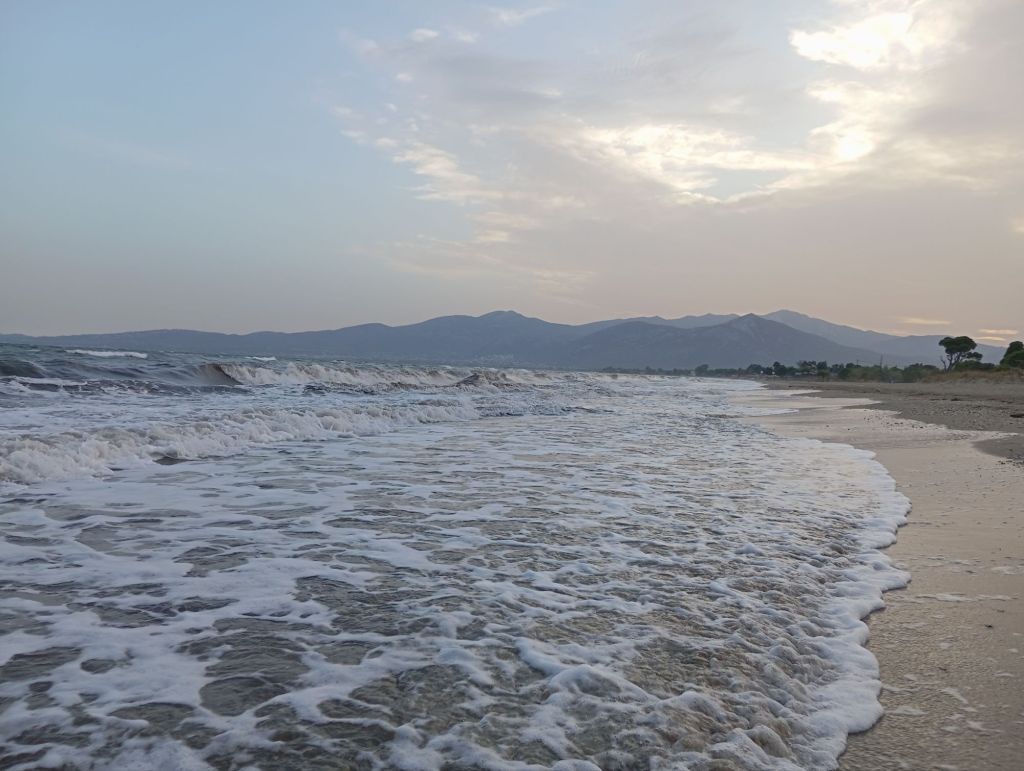
Endlich ein Sonntag wie im Bilder- und Sachbuch steht! Das Wetter ist toll, ach was sag ich: großartig! Die Wellen rauschen leicht zum Raffaello Windchen und euer hoffentlich geschätzter Autor liegt im Bett und atmet durch.
Die Stunden sind vorbereitet, die Rechnungen sind bezahlt, Silvana spült im Negligee und ich bin fast zu faul zum Tippen.
Wir haben diesen Tag gebraucht, denn unsere Kräfte sind erschöpft, aber wir sind glücklich, dass wir es auch endlich.mal sein können.
Denn übermorgen bekommen wir schon wieder Besuch auf den sich Silvana so freut wie ich auf Zoé.
Ich bin da ein bisschen Wehmütig, denn obwohl ich „Sturmfrei“ habe, überkommt mich eine Melancholie, allein zu sein.
Ja, es ist nicht immer einfach zu zweit auf so engem Raum, aber allein ist schlimmer.
Also, genießen wir jetzt unseren Sonntag und hoffen, dass ihr es auch könnt.
Euer Ulf
In english
Good morning dear sun! Finally a Sunday like in the picture and non-fiction book! The weather is great, oh what can I say: great! The waves are swaying gently to the Raffaello breeze and your hopefully esteemed author is lying in bed breathing deeply.
The lessons have been prepared, the bills have been paid, Silvana is doing the dishes in her negligee and I’m almost too lazy to type.
We needed this day because our strength is exhausted, but we are happy that we can finally be.
Because the day after tomorrow we’ll be having visitors again, who Silvana is looking forward to as much as I’m looking forward to Zoé.
I’m a little wistful, because although I’m „storm-free“, I’m overcome with melancholy at being alone.
Yes, it’s not always easy with two people in such a small space, but alone is worse.
So, let’s enjoy our Sunday and hope you can too.
Your Ulf
En francaise
Bonjour, cher soleil ! Enfin un dimanche comme il est écrit dans le livre d’images et de faits ! Le temps est superbe, que dis-je, génial ! Les vagues bruissent légèrement au son du petit vent de Raffaello et votre auteur, que j’espère apprécié, est allongé dans son lit et respire.
Les cours sont préparés, les factures sont payées, Silvana fait la vaisselle en déshabillé et je suis presque trop paresseux pour taper.
Nous avions besoin de cette journée, car nos forces sont épuisées, mais nous sommes heureux de pouvoir enfin.l’être.
Car après-demain, nous aurons à nouveau de la visite, que Silvana attend avec autant d’impatience que moi pour Zoé.
Je suis un peu nostalgique, car même si je suis „sans tempête“, je suis envahie par la mélancolie d’être seule.
Oui, ce n’est pas toujours facile d’être à deux dans un espace aussi restreint, mais seul, c’est pire.
Alors, profitons maintenant de notre dimanche et espérons que vous le pouvez aussi.
Votre Ulf
El Español
¡Buenos días querido sol! ¡Por fin un domingo como en el libro de fotos y no ficción! El tiempo es estupendo, ¡oh, qué puedo decir: estupendo! Las olas rompen suavemente contra la brisa de Raffaello y su estimado autor está tumbado en la cama respirando profundamente.
Las clases están preparadas, las facturas pagadas, Silvana se lava en bata y a mí casi me da pereza escribir.
Necesitábamos este día porque estamos agotados, pero estamos contentos de poder ser por fin nosotros mismos.
Porque pasado mañana tendremos otra visita, que Silvana espera con tantas ganas como yo a Zoé.
Yo estoy un poco nostálgica, porque aunque estoy „libre de tormentas“, me invade la melancolía de estar sola.
Sí, no siempre es fácil con dos personas en un espacio tan pequeño, pero estar solo es peor.
Así que disfrutemos de nuestro domingo y espero que tú también puedas hacerlo.
Und schon ist wieder alles wie vorher. Aber ist wirklich alles wie vorher? Nein, ganz bestimmt nicht.
Eigentlich ist nichts wie vorher. Alles ist anders, denn der Besuch von Zoé hat, nicht nur bei ihr, Spuren hinterlassen, sondern auch bei uns.
Ja, ich bin zu kritisch und ja, ich bin zu theoretisch, aber wir spürten auch, wo Kommunikation fehlte und wozu das führen kann und wir spürten auch, das wir zu eigen wurden.
Das hat sich geändert und noch so viel mehr, von dem ich zu gegebener Zeit mehr berichten werde.
Wir überdenken Grad alles, lassen keinen Stein auf dem anderen, keine Denkverbote. Die Gedanken sind frei, denn wir sind frei. Und ich bin so frei ihre kritischen Aussagen zu kultivieren. Ja, einiges passt (mir) nicht, aber sie hat mit Nichten nur Unrecht.
Aber jetzt erst mal wieder zurück zum Alltag. Ein bisschen ist dann wohl (vorerst) doch beim Alten geblieben, wie unser Paket, das auch immer noch nicht da ist.
Euer Ulf
In english
Ulfix and the Germanic woman And everything is as it was before. But is everything really the same as before? No, definitely not.
In fact, nothing is the same as before. Everything is different, because Zoé’s visit has not only left its mark on her, but also on us.
Yes, I’m too critical and yes, I’m too theoretical, but we also noticed where communication was lacking and what that can lead to, and we also felt that we were becoming too personal.
That has changed and so much more, which I will tell you more about in due course.
We are rethinking everything to a degree, leaving no stone unturned, no thought bans. Our thoughts are free, because we are free. And I am free to cultivate their critical statements. Yes, some things don’t suit (me), but she’s certainly not wrong.
But for now, let’s get back to everyday life. Some things have probably stayed the same (for now), like our parcel, which still hasn’t arrived.
Your Ulf
En Francaise
Ulfix et la Germanique Et voilà que tout redevient comme avant. Mais tout est-il vraiment comme avant ? Non, certainement pas.
En fait, rien n’est comme avant. Tout est différent, car la visite de Zoé a laissé des traces, pas seulement chez elle, mais aussi chez nous.
Oui, je suis trop critique et oui, je suis trop théorique, mais nous avons aussi senti où la communication manquait et à quoi cela pouvait mener, et nous avons aussi senti que nous devenions trop propres.
Cela a changé et bien d’autres choses encore, dont je parlerai plus en temps voulu.
Nous repensons tout, nous ne laissons aucune pierre en place, aucune interdiction de penser. Les pensées sont libres, car nous sommes libres. Et je suis assez libre pour cultiver leurs déclarations critiques. Oui, certaines choses ne (me) conviennent pas, mais elle n’a pas tort.
Mais pour l’instant, retour à la vie quotidienne. Il y a quand même un peu de choses qui n’ont pas changé (pour l’instant), comme notre paquet qui n’est toujours pas arrivé.
Votre Ulf
El Español
Ulfix y la mujer germánica Y todo vuelve a ser como antes. Pero, ¿es todo realmente como antes? No, definitivamente no.
De hecho, nada es como antes. Todo es diferente, porque la visita de Zoé no sólo la ha marcado a ella, sino también a nosotros.
Sí, soy demasiado crítica y sí, soy demasiado teórica, pero también nos dimos cuenta de dónde faltaba comunicación y a qué puede llevar eso, y también sentimos que nos estábamos volviendo demasiado personales.
Eso ha cambiado y muchas cosas más, de las que les hablaré a su debido tiempo.
Nos estamos replanteando todo en cierta medida, sin dejar piedra sin remover, sin prohibiciones de pensamiento. Nuestros pensamientos son libres, porque somos libres. Y yo soy libre para cultivar sus afirmaciones críticas. Sí, algunas cosas no le convienen (a mí), pero desde luego no se equivoca.
Pero por ahora, volvamos a la vida cotidiana. Algunas cosas probablemente sigan igual (por ahora), como nuestro paquete, que aún no ha llegado.
Heute war ein schöner Tag mit Zoé. Wir haben am Strand gelegen, Kaffee getrunken und uns über vieles unterhalten.
Dann wurde ich anstrengend, weil das Wort öffentliches Interesse in Bezug auf Recht viel und bei mir der Gedanke keimte, dass, wenn der Staatsanwalt nur dann tätig wird, wenn öffentliches Interesse besteht, doch der im Gesetzesbuch als Straftat titulierte Mord nur dann mehr ist als eine leere Worthülse, wenn ein öffentliches Interesse daran besteht.
Man sagt so schön, wo kein Richter da kein Henker, was so viel heißt wie: Wenn kein öffentliches Interesse am Opfer besteht, der Täter auch nicht sanktioniert wird; oder sollte ich sagen“ werden kann?“
Mich interessieren solche Fragen, denn was macht Putin grad anderes, als statt das Morden zu toppen, das öffentliche Interesse zu ändern?
Ich weiss, damit beschäftigt sich kein Jurist, aber liegt nicht in diesem, aus meiner Perspektive fatalen Desinteresse das eigentliche Problem?
Warum wird über so fundamentale Gedanken nicht mit denen diskutiert, die das öffentliche Interesse zukünftig verteidigen wollen?
Zoé dachte, ich wollte sie kritisieren. Mit Nichten, ich finde es nur Bedauernswert, dass man intelligente Menschen wie sie mit so viel Wissen voll stopft und dabei so Fundamentales auslässt.
Das ist alles.
Euer Ulf
In english
Public interest Today was a lovely day with Zoé. We were lying on the beach, drinking coffee and talking about lots of things.
Then I started to get stressed because the word „public interest“ came up a lot in relation to the law and I started to think that if the public prosecutor only takes action when there is a public interest, then murder, which is a criminal offense in the law book, is only more than an empty phrase when there is a public interest.
As the saying goes, where there is no judge, there is no executioner: If there is no public interest in the victim, the perpetrator will not be sanctioned either; or should I say“ can be?“
I am interested in such questions, because what is Putin doing at the moment other than changing the public interest instead of topping up the murders? interest?
I know that no lawyer deals with this, but isn’t the real problem in this, from my perspective, fatal lack of interest?
Why are such fundamental ideas not discussed with those who want to defend the public interest in the future?
Zoé thought I wanted to criticize her. By no means, I just find it regrettable that intelligent people like her are stuffed with so much knowledge and yet such fundamental things are and leave out such fundamental things.
That’s all.
Your Ulf
En francaise
Intérêt public Aujourd’hui, c’était une belle journée avec Zoé. Nous nous sommes allongés sur la plage, avons bu du café et avons parlé de beaucoup de choses.
Puis j’ai commencé à m’énerver parce que le mot intérêt public était utilisé en rapport avec le droit et que j’ai commencé à penser que si le procureur n’agit que lorsqu’il y a un intérêt public, le meurtre, qui est un délit dans le code pénal, n’est plus qu’un mot vide de sens lorsqu’il y a un intérêt public.
Comme on dit, pas de juge, pas de bourreau, ce qui revient à dire : S’il n’y a pas d’intérêt public pour la victime, le coupable ne sera pas non plus sanctionné ; ou devrais-je dire“ peut être sanctionné“ ?
Ce genre de questions m’intéresse, car que fait Poutine en ce moment, sinon qu’au lieu de faire mieux en matière de meurtre, il change l’intérêt public. changer d’intérêt ?
Je sais qu’aucun juriste ne s’occupe de cela, mais n’est-ce pas dans ce désintérêt, fatal selon moi, que réside le véritable problème ?
Pourquoi des idées aussi fondamentales ne sont-elles pas discutées avec ceux qui veulent défendre l’intérêt public à l’avenir ?
Zoé pensait que je voulais la critiquer. Loin de là, je trouve juste regrettable que l’on bourre des gens intelligents comme elle de tant de connaissances et que l’on oublie des choses aussi fondamentales. omettre de le faire.
C’est tout.
Votre Ulf
El Español
Öffentliches Interesse Heute war ein schöner Tag mit Zoé. Wir haben am Strand gelegen, Kaffee getrunken und uns über vieles unterhalten.
Dann wurde ich anstrengend, weil das Wort öffentliches Interesse in Bezug auf Recht viel und bei mir der Gedanke keimte, dass, wenn der Staatsanwalt nur dann tätig wird, wenn öffentliches Interesse besteht, doch der im Gesetzesbuch als Straftat titulierte Mord nur dann mehr ist als eine leere Worthülse, wenn ein öffentliches Interesse daran besteht.
Man sagt so schön, wo kein Richter da kein Henker, was so viel heißt wie: Wenn kein öffentliches Interesse am Opfer besteht, der Täter auch nicht sanktioniert wird; oder sollte ich sagen“ werden kann?“
Mich interessieren solche Fragen, denn was macht Putin grad anderes, als statt das Morden zu toppen, das öffentliche Interesse zu ändern?
Ich weiss, damit beschäftigt sich kein Jurist, aber liegt nicht in diesem, aus meiner Perspektive fatalen Desinteresse das eigentliche Problem?
Warum wird über so fundamentale Gedanken nicht mit denen diskutiert, die das öffentliche Interesse zukünftig verteidigen wollen?
Zoé dachte, ich wollte sie kritisieren. Mit Nichten, ich finde es nur Bedauernswert, dass man intelligente Menschen wie sie mit so viel Wissen voll stopft und dabei so Fundamentales auslässt.
Na ihr? War ein harter Tag, oder? Ich weiss, meiner war auch anstrengend, obwohl wirklich viel Großartiges passiert ist.
Wir waren in Athina, yehaaaa! Und wir haben das Panteon und die Akropolis gesehen, was wirklich beeindruckend war, aber ja, Zoé und ich merkten, dass es ein bisschen good will brauchte, um sich wieder anzunähern.
Ich bin halt der Papa und sie die erwachsene Tochter, woran sich beide gewöhnen mussten. Aber auch an den Umstand, dass ich jetzt der alte Sack bin. Wir haben wohl beide unterschätzt wie weh dieser Umstand tun kann.
Und dass wir uns nur selten sehen, machte alles nicht leichter.aber das Dunkel der Nacht legt seinen Schleier der Versöhnlichkeit über uns.
Wir werden jetzt noch gemütlich was Essen gehen, sofern der Bus irgendwann fährt und dann morgen noch mal zum Strand, das hat gestern eigentlich ganz gut geklappt und manchmal sollte man etwas das sich bewährt hat ruhig wiederholen.
Zugegeben, das ist keine altgriechische Weisheit sondern eine pragmatische der Neuzeit von einem mir unbekannten Autor, aber manchmal braucht es genau sowas.
Ich wünsche allen einen chilligen Abend,
Euer Ulf
In english
What loves each other teases each other How about you? It’s been a tough day, hasn’t it? I know, mine was exhausting too, although a lot of great things happened.
We were in Athina, yehaaaa! And we saw the Panteon and the Acropolis, which was really impressive, but yes, Zoé and I realized that it took a bit of good will to get closer again.
I’m the dad and she’s the grown-up daughter, which we both had to get used to. But also to the fact that I’m the old bag now. I think we both underestimated how painful this can be.
And the fact that we only rarely see each other didn’t make things any easier, but the darkness of the night has cast a veil of reconciliation over us.
We’re going to go out for a leisurely meal now, provided the bus leaves at some point, and then we’ll go to the beach again tomorrow, which actually worked out quite well yesterday and sometimes you should repeat something that has proved its worth.
Admittedly, that’s not ancient Greek wisdom but a pragmatic modern saying by an author I don’t know, but sometimes that’s exactly what you need.
I wish everyone a chilled evening,
Your Ulf
Il Francaise
Quand on s’aime, on se taquine Alors, vous ? La journée a été dure, n’est-ce pas ? Je sais, la mienne aussi a été fatigante, même s’il s’est passé beaucoup de choses extraordinaires.
Nous étions à Athina, yehaaaa ! Et nous avons vu le Panteon et l’Acropole, ce qui était vraiment impressionnant, mais oui, Zoé et moi nous sommes rendu compte qu’il fallait un peu de bonne volonté pour se rapprocher à nouveau.
Je suis le papa et elle la fille adulte, ce à quoi tous deux ont dû s’habituer. Mais aussi au fait que je suis maintenant le vieux con. Nous avons tous les deux sous-estimé à quel point cette situation pouvait être douloureuse.
Et le fait que nous ne nous voyions que rarement n’a pas facilité les choses, mais l’obscurité de la nuit nous recouvre de son voile de réconciliation.
Nous allons maintenant manger tranquillement quelque chose, à condition que le bus parte un jour, puis nous retournerons à la plage demain, cela a plutôt bien fonctionné hier et il faut parfois répéter ce qui a fait ses preuves.
Certes, il ne s’agit pas d’une sagesse grecque ancienne, mais d’une sagesse pragmatique des temps modernes d’un auteur que je ne connais pas, mais c’est parfois ce dont on a besoin.
Je vous souhaite à tous une bonne soirée,
Votre Ulf
El Espanol
Lo que se ama se burla ¿Y tú? Ha sido un día duro, ¿verdad? Lo sé, el mío también fue agotador, aunque pasaron un montón de cosas geniales.
Estuvimos en Athina, ¡yehaaaa! Y vimos el Panteón y la Acrópolis, que fue realmente impresionante, pero sí, Zoé y yo nos dimos cuenta de que hacía falta un poco de buena voluntad para volver a conocernos.
Yo soy el padre y ella es la hija adulta, a lo que ambos tuvimos que acostumbrarnos. Pero también al hecho de que ahora soy el viejo. Creo que ambos subestimamos cuánto puede doler esto.
Y el hecho de que sólo nos vemos raramente no hizo las cosas más fáciles.
Vamos a salir a cenar tranquilamente, siempre y cuando el autobús salga en algún momento, y mañana volveremos a ir a la playa, que en realidad ayer funcionó bastante bien y a veces conviene repetir algo que ha demostrado su valía.
Es cierto que no es sabiduría griega antigua, sino un dicho moderno y pragmático de un autor que no conozco, pero a veces es exactamente lo que uno necesita.




 Unser Ritt auf der Waiküre