„schluff, schluff“ (Down below in english en français Incluido el español) Man kann eine Geschichte der Dunkelheit erleben, aber um sie zu erzählen, braucht man eine Welt des Lichts. Denn erstens ist unsere Spezies vielfarbsehend, aber darüber hinaus, auch wenn ein Satz wie „er ging die Straße entlang und es machte „klong!““, vielleicht noch Witz hätte, im Dunkeln -streng genommen- sieht man keine Straße, sondern nur Schwarz. Man fühlt Sprache, wenn man so will. Also müsste der Satz “ er ging bis es Klong machte“ heißen. Bei Gedanken versunken schlenderte er durch Paris gar nur „schluff, schluff“.
Es braucht die Erfahrung, die im Kopf das Bild erstellt und wir sprechen deshalb von Bild, weil es ein Ding ist, das man vor seinem inneren Auge, in der Fantasie sehen kann und auch für dieses Bild braucht es Licht, selbst für das Bild einer nicht brennenden Kerze.
Das Interessante an der Dunkelheit ist aber, das die Qualität von Dingen bei Tag mit denen der Nacht gleichgesetzt werden. Man weiss sie zwar in der Dunkelheit noch, aber sieht sie nicht mehr. Die Laterne auf der Straße ist Teil der Dunkelheit für unsere Augen. Es ist beinahe so, als würde das Schwarz die physikalische Dichte ändern, von dunkler Energie oder Materie, was immer das ist, in Hart wie Kruppstahl,ohne, dass sich etwas außer dem oder jener die sich stößt, nichts verändert hat.
Das Moment der Überraschung des Seins. Alles wird spekulativ wie bei „etwas da, vielleicht“ oder „ich dachte dort“und „wow, ist das hart“.
Aber wenn wir lange genug in der Dunkelheit sind, lernen wir sie zu sehen, nutzen jede Idee von Licht und verwandeln schwarz in eine bunte Welt, auch wenn wir eigentlich kaum mehr sehen als in der totalen Dunkelheit.
Aber das Faszinierenste an der Nacht ist wohl, das uns Menschen dieses Mysterium „blind“ zwar abschreckt, doch nicht selten mehr Neugierde provoziert als das „Wahre, Sichtbare“.
Die Ironie ist, dass wir sehend auch nur präziser über etwas genauso Unbekanntes sprechen können, jedoch denken, alles er-kannt zu haben, obwohl wir nur ge-sehen haben
Bis morgen Abend,
Euer Ulf
English
„schluff, schluff“ You can experience a story of darkness, but to tell it, you need a world of light. Because firstly, our species has multi-colored vision, but beyond that, even if a sentence like „he was walking down the street and it went „klong!““ might still be funny, in the dark – strictly speaking – you don’t see stones, only black. You feel language, if you like. So the sentence should read „he walked until it went klong“. Lost in thought, he strolled through Paris with only „schluff, schluff“.
It takes experience to create an image in the mind, and we speak of an image because it is something that you can see in your mind’s eye, in your imagination, and this image also requires light, even for the image of a candle that is not burning.
The interesting thing about darkness, however, is that the quality of things during the day is equated with that of the night. You still know them in the dark, but you can no longer see them. The lantern on the street is part of the darkness for our eyes. It’s almost as if the black changes the physical density, from dark energy or matter, whatever that is, to hard as nails, without anything having changed except the one or the ones who bump into each other.
The moment of surprise of being. Everything becomes speculative as in „something there, maybe“ or „I thought there“ and „wow, that’s hard“.
But if we are in the dark long enough, we learn to see it, use every idea of light and turn black into a colorful world, even if we actually see little more than we do in total darkness.
But the most fascinating thing about the night is probably that although this mystery of „blindness“ frightens us humans, it often provokes more curiosity than the „real, visible“.
The irony is that we can only speak more precisely about something equally unknown when we can see, but we think we know everything, even though we have only seen it
See you tomorrow evening,
Your Ulf
français
„schluff, schluff“ On peut vivre une histoire dans l’obscurité, mais pour la raconter, il faut un monde de lumière. Car tout d’abord, notre espèce a une vision des couleurs, mais en plus, même si une phrase comme „il marchait dans la rue et ça a fait „klong !““ peut être amusante, dans l’obscurité – à proprement parler – on ne voit pas les pierres, mais seulement le noir. On ressent la langue, si l’on veut. La phrase devrait donc être : „Il déambula jusqu’à ce que ça fasse clong“. Perdu dans ses pensées, il déambulait dans Paris avec seulement „schluff, schluff“.
Il faut de l’expérience pour faire naître une image dans l’esprit, et nous parlons d’une image parce que c’est quelque chose que l’on peut voir devant l’œil de l’esprit, dans l’imagination, et cette image a aussi besoin de lumière, même pour l’image d’une bougie qui ne brûle pas.
Mais ce qui est intéressant dans l’obscurité, c’est que la qualité des choses le jour est assimilée à celle de la nuit. Dans l’obscurité, on les connaît encore, mais on ne les voit plus. Le réverbère dans la rue fait partie de l’obscurité pour nos yeux. C’est presque comme si le noir changeait de densité physique, passant d’une énergie ou d’une matière sombre, quelle qu’elle soit, à une matière dure comme du béton, sans que rien n’ait changé, si ce n’est celui ou ceux qui se heurtent.
Le moment de la surprise de l’être. Tout devient spéculatif dans le sens „il y a quelque chose, peut-être“ ou „je pensais que c’était là“ et „wow, c’est dur“.
Mais si nous restons assez longtemps dans l’obscurité, nous apprenons à voir, à utiliser chaque idée de lumière et à transformer le noir en un monde coloré, même si nous ne voyons en fait rien de plus que dans l’obscurité totale.
Mais ce qui est sans doute le plus fascinant dans la nuit, c’est que ce mystère de la „cécité“ nous fait certes peur, à nous les humains, mais qu’il éveille souvent plus de curiosité que ce qui est „vraiment visible“.
L’ironie réside dans le fait que nous ne pouvons parler plus précisément de quelque chose d’également inconnu que si nous pouvons voir, mais nous croyons tout savoir alors que nous n’avons fait que le voir
À demain soir,
Ton Ulf
español
„schluff, schluff“ Se puede vivir una historia en la oscuridad, pero para contarla se necesita un mundo de luz. Porque, en primer lugar, nuestra especie tiene visión cromática, pero más allá de eso, aunque una frase como „Caminaba por la calle y se puso „¡klong!““ pueda tener gracia, en la oscuridad -en sentido estricto- no se ven piedras, sólo se ve negro. Si quieres, puedes sentir el lenguaje. Así que la frase debería decir: „Se paseó hasta que tintineó“. Perdido en sus pensamientos, paseó por París con sólo „schluff, schluff“.
Se necesita experiencia para crear una imagen en la mente, y hablamos de imagen porque es algo que puede verse en el ojo de la mente, en la imaginación, y esta imagen también necesita luz, incluso para la imagen de una vela que no está encendida.
Pero lo interesante de la oscuridad es que la calidad de las cosas durante el día se equipara a la calidad de las cosas por la noche. En la oscuridad, aún se reconocen, pero ya no se ven. La farola de la calle forma parte de la oscuridad para nuestros ojos. Es casi como si la oscuridad cambiara su densidad física, de energía o materia oscura, sea lo que sea, a materia dura como el hormigón, sin que nada haya cambiado salvo el o los que chocan.
Es el momento de la sorpresa del ser. Todo se vuelve especulativo en el sentido de „hay algo ahí, tal vez“ o „creía que estaba ahí“ y „vaya, qué duro“.
Pero si permanecemos en la oscuridad el tiempo suficiente, aprendemos a ver, a utilizar cualquier idea de luz y a convertir la oscuridad en un mundo colorido, aunque en realidad no veamos nada más que en completa oscuridad.
Pero quizá lo más fascinante de la noche es que, aunque este misterio de la „ceguera“ nos asuste a los humanos, a menudo despierta más curiosidad que lo „realmente visible“.
La ironía es que no podemos hablar con más precisión de algo igualmente desconocido que cuando podemos ver, pero creemos saberlo todo aunque sólo lo hayamos visto.
(Down below in english en français Incluido el español)Wenn man klein ist, entdeckt man wie Welt aus der Froschperspektive, alles von unten, groß und gewaltig
Je älter man wird, desto höher wandert der Horizont samt Nase. Manche sprechen gar von grenzenlos. Und das, obwohl sie damit eine Linie bezeichnen.
Diesen Punkt hab ich nie erreicht. Mein Horizont liegt auf Augenhöhe einer dicken Kröte und geben wir es ruhig zu: Da gehört er auch hin. Denn hier unten ist war vieles dreckig oder versteckt, weil selbst Staubkörner Felsendimensionen haben und Schatten noch bedröhlicher sind als ihre Werfer.
Hier, in der Dunkelheit des Verborgenen müssen wohl auch die fantasievollsten Geschichten; liegen. Hier lagen sie schon immer, weshalb ich auch von nun an, aus dieser Perspektive, wenn die Eulen der Minerva fliegen.
Denn was in Griechenland passiert, wenn die Sonne untergeht ist mehr als eines von unzähligen einmaligen Bildern. Hier erwacht das Leben wie eine Geräuschkulisse, mit Schakalen, die vielleicht direkt am Jürmann stehen, so wie sie beim Seia waren, oder die Schildkröte am Strand beim Eierlegen überfielen.
Natürlichlich Nachts, wenn Sonne von Sehstärke abgelöst wird und die Realität zur Fabelwelt gerät. Kommen Sie mit hinter die Spiegel?
Morgen Abend tauchen wir ab, dahin wo noch keiner war, oder einfach in das Nachtleben einer Stadt, wir werden sehen.
Jassu,
Euer Ulf
English Behind the mirrors
When you are small, you discover the world from a frog’s perspective, everything from below, big and mighty
The older you get, the higher your horizon and nose rise. Some even speak of limitless. Even if they mean a limit.
I have never reached that point. My horizon is at the eye level of a fat toad, and let’s admit it: that’s where it belongs. Because down here a lot of things were dirty or hidden, because even dust particles are the size of rocks and shadows are even more cheerful than their casters.
Here, in the darkness of the hidden, must lie the most imaginative stories. That is where they have always been, and that is why from now on, from this perspective, the owls of Minerva fly.
Because what happens in Greece when the sun goes down is more than just one of countless unique images. Here, life comes alive like a soundscape, with jackals perhaps standing right next to the Jürmann, as in Seia, or ambushing the turtle as it lays its eggs on the beach.
At night, of course, when the sun is replaced by sunlight and reality becomes a mythical world. Will you accompany us behind the mirrors?
Tomorrow night we will go where no one has gone before, or simply into the nightlife of a city, we’ll see.
Jassu,
Your Ulf
français
Derrière les miroirs
Quand on est petit, on découvre le monde du point de vue de la grenouille, tout est vu d’en bas, grand et puissant.
Plus tu grandis, plus ton horizon et ton nez s’élèvent. Certains parlent même d’absence de limites. Même s’ils entendent par là une limite.
Je n’ai jamais atteint ce point. Mon horizon se trouve à la hauteur des yeux d’un gros crapaud, et avouons-le : c’est là qu’il doit être. Car ici-bas, beaucoup de choses étaient sales ou cachées, parce que même les particules de poussière ont la taille d’un caillou et que les ombres sont encore plus joyeuses que leurs lanceurs.
C’est ici, dans l’obscurité de ce qui est caché, que doivent se trouver les histoires les plus imaginatives. C’est là qu’elles ont toujours été, et c’est pourquoi, à partir de maintenant, dans cette perspective, les hiboux de Minerve volent.
Car ce qui se passe en Grèce lorsque le soleil se couche est plus qu’une des innombrables images uniques. Ici, la vie s’anime comme un décor sonore, avec des chacals qui se tiennent peut-être juste à côté du Jürmann, comme à Seia, ou qui guettent la tortue lorsqu’elle vient pondre ses œufs sur la plage.
Et bien sûr la nuit, lorsque le soleil remplace la lumière du soleil et que la réalité devient un monde mythique. Allez-vous nous accompagner derrière les miroirs ?
Demain soir, nous irons là où personne n’est jamais allé auparavant, ou simplement dans la vie nocturne d’une ville, nous verrons bien.
Jassu,
Ton Ulf
español Detrás de los espejos
Cuando eres pequeño, descubres el mundo desde la perspectiva de una rana, todo se ve desde abajo, grande y poderoso.
Cuanto más mayor te haces, más alto se vuelven tu horizonte y tu nariz. Algunos hablan incluso de ilimitación. Aunque se refieran a un límite.
Yo nunca he llegado a ese punto. Mi horizonte está a la altura de los ojos de un sapo grande, y seamos sinceros: ahí es donde tiene que estar. Porque aquí abajo muchas cosas estaban sucias u ocultas, porque incluso las partículas de polvo tienen el tamaño de un guijarro y las sombras son aún más alegres que sus fundidores.
Aquí, en la oscuridad de lo oculto, deben encontrarse las historias más imaginativas. Ahí es donde siempre han estado, y por eso a partir de ahora, desde esta perspectiva, vuelan los búhos de Minerva.
Porque lo que ocurre en Grecia cuando se pone el sol es algo más que una de las innumerables imágenes únicas. Aquí, la vida cobra vida como un paisaje sonoro, con chacales tal vez junto al Jürmann, como en Seia, o vigilando a la tortuga mientras desova en la playa.
Y, por supuesto, la noche, cuando el sol sustituye a la luz solar y la realidad se convierte en un mundo mítico. ¿Nos acompañará tras los espejos?
Mañana por la noche iremos donde nadie ha ido antes, o simplemente a la vida nocturna de una ciudad, ya veremos.
(Down below in english en français Incluido el español)Eigentlich wollten wir gestern in die Stadt fahren, Silvana meinte es gäbe da diese moderne Erfindung Namens „Dusche“. Aber als wir die Tür öffneten, erblickten wir den Strand in Toastbrot Belichtung und auf ihm sukzessive unzählige Griechen mit einem sechseckigen Drachen.
Es war ein Bild wie bei Mary Poppins, als am Ende Mr Banks mit seinen Kindern in den Park ging, nur dass wir uns hier direkt am Meer befanden. Kinder allen Alters und nicht selten auch über 40 holten aus Kofferräumen wie in Deutschland einen Grill, ein uraltes Kinderspielzeug,hielten es in den Wind und hingen so bunten Tupfen in den blauen Himmel, so weit das Auge reichte.
Ich musste mich unweigerlich daran erinnern, wie ich mit Zoé einst einen pinken Drachen baute, so groß, dass mein Engel kleiner war und sie diesen, wie einen Schild stolz vor sich hertrug. Geflogen ist er leider nie, weil in meiner Heimat wohl der Grill Männersache ist, aber wie wir ihn bauten und wie schön sie ihn fand, werde ich nie vergessen.
Hier wäre er in die Lüfte gegangen und hätte mit seinen Kollegen den Himmel in ein Meer aus Kinderspielzeugen verwandelt unter dem unzählige Familien, ganz ohne Aufseher, den Tag genossen.
Kein „Jaqueline, Pass auf“, kein „Kevin, das ist hier kein Spielplatz“ und keine Väter, die nach dem dritten Bier darüber wetteiferten, wer den größten hat.
Wenn sich zwei in den Böen leicht verfingen, löste man ganz einfach gemeinsam den Knoten und spielte weiter. Einfach glücklich sein. und während ich dieses Schauspiel, direkt vor unserer Tür genoss, backte Silvana mit frischen Zitronen einen Kuchen.
So feiert man in Griechenland Rosenmontag, allerdings nennt man ihn „sauberen Montag“ und Silvana und ich haben uns inmitten dieser Idylle ein kleines bisschen mehr in dieses Land verliebt, so sehr, dass der Regen heute kein Scheißwetter ist, sondern einfach nur notwendig, damit Blumen und Gräser, Zitronen, Orangen, Thymian und Oliven auch weiterhin wachsen können, damit der Kuchen hier auch zukünftig ohne Dr. Oetger gebacken werden kann.
Bis morgen,
Euer Ulf
English
And yet another wonderful day at the beach comes to an end
We actually wanted to go into town yesterday, Silvana said there was this modern invention called a „shower“. But when we opened the door, we saw the beach in toast bread exposure and on it successively countless Greeks with a hexagonal kite.
It was a picture like in Mary Poppins, when at the end Mr Banks went to the park with his children, only here we were right by the sea. Children of all ages, often over 40, were pulling a barbecue out of car trunks like in Germany, an ancient children’s toy, holding it up to the wind and hanging colorful polka dots in the blue sky as far as the eye could see.
I couldn’t help but remember how I once built a pink kite with Zoé, so big that my angel was smaller and she carried it proudly in front of her like a shield. Unfortunately, it never flew, because in my home country barbecues are probably a man’s thing, but I will never forget how we built it and how beautiful she thought it was.
Here he would have taken to the skies and, together with his colleagues, turned the sky into a sea of children’s toys under which countless families enjoyed the day without any supervisors.
No „Jaqueline, watch out“, no „Kevin, this isn’t a playground“ and no fathers competing to see who had the biggest after the third beer.
If two people got easily caught up in the gusts, they simply untied the knot together and carried on playing. Just be happy. And while I enjoyed this spectacle right outside our door, Silvana baked a cake with fresh lemons.
This is how they celebrate Rose Monday in Greece, but they call it „Clean Monday“ and Silvana and I have fallen a little bit more in love with this country in the midst of this idyll, so much so that the rain today is not shitty weather, but simply necessary so that flowers and grasses, lemons, oranges, thyme and olives can continue to grow, so that the cake can continue to be baked here without Dr. Oetger.
See you tomorrow,
Your Ulf
français
Une fois de plus, une magnifique journée à la plage s’achève.
En fait, hier nous voulions aller en ville, Silvana disait qu’il y avait cette invention moderne appelée „douche“. Mais lorsque nous avons ouvert la porte, nous avons vu la plage en pain de mie et, par-dessus, successivement, d’innombrables Grecs avec un cerf-volant hexagonal.
C’était une image comme dans Mary Poppins, lorsque M. Banks finit par aller au parc avec ses enfants, sauf qu’ici, nous étions directement au bord de la mer. Des enfants de tous âges, souvent âgés de plus de 40 ans, sortaient comme en Allemagne un barbecue du coffre de leur voiture, un jouet d’enfant très ancien, le tenaient dans le vent et accrochaient des taches colorées dans le ciel bleu à perte de vue.
Je ne pouvais m’empêcher de penser à la fois où j’ai construit avec Zoé un cerf-volant rose, si grand que mon ange était plus petit, et où elle l’a porté fièrement devant elle comme un bouclier. Malheureusement, il n’a jamais volé, car dans mon pays, les grillons sont sans doute une affaire d’hommes, mais je n’oublierai jamais comment nous l’avons construit et combien elle le trouvait beau.
Ici, il se serait élevé dans les airs et, avec ses collègues, aurait transformé le ciel en une mer de jouets pour enfants, sous laquelle d’innombrables familles auraient profité de la journée sans personne pour les surveiller.
Pas de „Jaqueline, fais attention“, pas de „Kevin, ce n’est pas un terrain de jeu“ et pas de pères qui rivalisent pour savoir qui a la plus grosse après la troisième bière.
Si deux personnes étaient légèrement prises dans les rafales, elles défaisaient simplement le nœud ensemble et continuaient à jouer. Être heureux, tout simplement. Et pendant que je profitais de ce spectacle juste devant notre porte, Silvana préparait un gâteau avec des citrons frais.
C’est ainsi que l’on fête le lundi des Roses en Grèce, mais ils l’appellent „Clean Monday“, et Silvana et moi sommes tombés un peu plus amoureux de ce pays au milieu de cette idylle, à tel point que la pluie d’aujourd’hui n’est pas un temps de merde, mais simplement nécessaire pour que les fleurs et les herbes, les citrons, les oranges, le thym et les olives puissent continuer à pousser, pour que le gâteau puisse continuer à être cuit ici sans le Dr Oetger.
Alors à demain,
Ton Ulf
Español
Otro maravilloso día en la playa llega a su fin.
En realidad ayer queríamos ir a la ciudad, Silvana nos dijo que había un invento moderno llamado „ducha“. Pero cuando abrimos la puerta, vimos la playa hecha una tostada y sobre ella, uno tras otro, innumerables griegos con una cometa hexagonal.
Era una imagen como en Mary Poppins, cuando el Sr. Banks por fin va al parque con sus hijos, sólo que aquí estábamos justo al lado del mar. Niños de todas las edades, a menudo mayores de 40 años, sacaban del maletero del coche una cometa, como en Alemania, un antiguo juguete infantil, la levantaban al viento y colgaban manchas de colores en el infinito cielo azul.
Pensé en cómo había construido con Zoe una cometa rosa tan grande que mi ángel era aún más pequeño, y ella la llevaba orgullosa como un escudo. Por desgracia, nunca voló, porque en mi país los grillos son probablemente cosa de hombres, pero nunca olvidaré cómo la construimos y lo bonita que le pareció a ella.
Aquí habría surcado los cielos y, junto con sus colegas, habría convertido el cielo en un mar de juguetes para niños, bajo los cuales innumerables familias habrían disfrutado del día sin que nadie velara por ellas.
Sin „Jaqueline, cuidado“, sin „Kevin, esto no es un parque infantil“ y sin padres compitiendo por ver quién la tenía más grande después de la tercera cerveza.
Si dos personas se veían ligeramente atrapadas por las ráfagas, simplemente deshacían el nudo juntas y seguían jugando. Simplemente siendo felices. Y mientras yo disfrutaba de este espectáculo a la puerta de casa, Silvana preparaba una tarta con limones frescos.
Así es como se celebra el Lunes Rosa en Grecia, pero ellos lo llaman „Lunes Limpio“, y Silvana y yo nos enamoramos un poco más de este país en medio de este idilio, tanto que la lluvia de hoy no es un tiempo de mierda, sino simplemente necesario para que las flores y las hierbas, los limones, las naranjas, el tomillo y las aceitunas puedan seguir creciendo, para que el pastel pueda seguir horneándose aquí incluso sin el Dr. Oetger.
(Down below in english en français Incluido el español. Und nur für Aristea heute auch auf griechisch „Στα ελληνικά“) Es gibt in der Natur Alternativen zum Geschlechterspezifikum, wie sagt man es ohne ernsthaft anmaßend zu sein? Vielleicht so: zum Unterschied. (Exemplarische Beispiele Sind Mann und Frau“(Was auch immer dass in voller Kontingenz, also vieldimensionierten Potentialen in conclusio, zusammengenommen, als Ergebnis „so da“, wie Heidegger der Nazi (Wertung!)es wohl nennen würde).
Eine davon nennt man auf Griechisch, wie passend: Autogamie (gr. αὐτό autó „selbst“, γάμος gamos „Ehe“), auch Selbstbefruchtung genannt, formuliert es Wikipedia meines Hauptschulabschlussbilogischen Erachtens passend, dass ich es fortlaufend zitiere „Autogamie ist eine Form der sexuellen Fortpflanzung, bei der nur ein Elternteil vorhanden ist oder genetisch zur Fortpflanzung beiträgt. Das bedeutet, dass ein Individuum in der Lage ist, sowohl weibliche als auch männliche Gameten zu bilden.
Durch Autogamie entstehen genetisch nahe verwandte Nachkommen, die aber – anders als bei ungeschlechtlicher Vermehrung – keinen identischen Genotyp haben. Das liegt an den Teilungsschritten bei der Bildung der Eizellen (Oogenese) und Spermienzellen (Spermatogenese). Die Gameten werden durch die meiotischen Teilungen vom Erbgut her verschieden. Dadurch entstehen bei den Befruchtungen in den Zygoten unterschiedliche Genkombinationen. Die Möglichkeiten der genetischen Rekombination sind allerdings deutlich geringer als bei aus verschiedenen Individuen hervorgehenden Nachkommen.
Autogamie ist also die Fähigkeit der Rekombination, also dem, was bei der UNS BEISPIELSWEISE geschlechtlichen Befruchtung, passiert, um sich SO fortzupflanzen. Überspitzt gesagt, Autogamie will den Unterschied von „Mann“ und „Frau“ verhindern.
Gibt es da noch andere? Fuck, fatalistischer Valsifizierbarkeit, also der Möglichkeit sich so zu geben, dass man wiederlegt werden kann,muss es sie geben, denn sonst gäb es keine Autogamie. WAS IST UNGESCHLECHTLISCHE VERMEHRUNG? Liegt hier der Schlüssel zum Glück, der Verschmelzung zum Primus inter pares, Gleicher unter Gleichen?
Die Agamie. Nie wieder: Wer steht auf und gibt Schreihals Fläschchen (Bewusste biologisch verargumrntierter, nicht poetischer Elipse, als Auslassung des Artikels bei Schreihals). Kein Xy ungelöst (für alle anderssprachigen: Einer damalig in Deutschland prominenten Kriminal“Show, im deutschsprachigen Fernsehen) sozusagen.
Nur ein paar Beispiele, um der Mutmaßung Raum zu geben, dass Gehirn vielleicht nicht die geilste Idee sein kann, sind (danke www und Wikipedia, again, ich sag immer hello again, ach ne, das war was anderes). Jedenfalls:
Quer- oder Längsteilung der Zellen bei Einzellern, z. B. bei Archaeen, Bakterien und einzelligen Algen oder Zytogonie, Abschnürung von Tochterzellen von einer Mutterzelle bei Protozoen. Oh, manchmal nicht die schlechteste Idee, oder Schizogonie, Zerfall einer Zelle in viele Zellen bei einigen Protozoen, also Sprossung und Abschnürung wie bei Hefen, Brot, Bier, Kuchen usw. Oder im prakmatischen Alltag „Ich will schwimmen gehen“, haa, schlechte Idee, denn hier Teilen sich Pilzfäden (Hyphen). Ein erstes deutsches Wort und es ist weiblich! Anstechung. Die Ansteckung mit Fußpilzen, Schimmelpilze bilden durch Mitose (genetische Teilung, was anderes als die Maiose oben) Sporen, die als Enden von Pilzhyphen erkennbar sind (Konidien- ja, entdecke die Möglichkeiten.
Die Lösung für das Deutsche Problem sind wieder mal Kartoffeln.
Reproduktion, ohne Befruchtung. Kein Ehekrach, kein Genderproblem, keine Sprachvarieteten.
Genies der Genetik, anders unter gleichen: eine genetische Vielfalt so perfekt, als gäbe es nur die USA, China, Russland, als „peaky fences“ – Tatort Gartenzaun.
Ich finde da „stolze Eltern“ schöner, auch wenn es objektiv gesehen „entspanntere Alternativen hätte (Konjunktiv,Also Möglichkeit).
Genießen wir unsere Art von Anders, durch die geistige Qualität der Möglichkeit auf Absurdität (Wertung!) , also Probleme zu Lieben (Sucht!).
Es ist vollbracht:
Danke Kartoffel!
Bis morgen,
Euer Ulf
English
Oracle Potato – The solution for everything! There are alternatives to gender in nature, how do you say it without being seriously pretentious? Perhaps like this: the difference. (Exemplary examples are „man and woman“ (whatever that in full contingency, i.e. multidimensional potentials in conclusio, taken together, as a result „so there“, as Heidegger the Nazi (valuation!) would probably call it) One of them is called in Greek, how fitting: autogamy (gr. αὐτό autó „self“, γάμος gamos „marriage“), also called self-fertilization, Wikipedia formulates it appropriately in my opinion, so that I quote it continuously „Autogamy is a form of sexual reproduction in which only one parent is present or genetically contributes to reproduction. This means that an individual is capable of producing both female and male gametes. Autogamy produces genetically closely related offspring, which – unlike asexual reproduction – do not have an identical genotype. This is due to the division steps involved in the formation of egg cells (oogenesis) and sperm cells (spermatogenesis). The gametes become different in terms of their genetic material as a result of the meiotic divisions. This results in different gene combinations in the zygotes during fertilization. However, the possibilities of genetic recombination are significantly lower than with offspring produced from different individuals.
Autogamy is therefore the ability to recombine, i.e. what happens during sexual fertilization in order to reproduce. To exaggerate, autogamy wants to prevent the difference between „man“ and „woman“. Are there any others? Fuck, fatalistic valsifiability, i.e. the possibility of giving oneself in such a way that one can be refuted, must exist, because otherwise there would be no autogamy. WHAT IS ASEXUAL REPRODUCTION? Is this the key to happiness, the fusion to primus inter pares, equal among equals?
Agamy. Never again: Who gets up and gives Schreihals a bottle (deliberate biological, non-poetic elipsis, as an omission of the article in Schreihals). No Xy unsolved (for all those who speak other languages: A prominent „crime“ show in Germany at the time, on German-language television), so to speak.
Just a few examples to give room to the speculation that brains may not be the coolest idea (thanks www and Wikipedia, again, I always say hello again, oh no, that was something else). Anyway:
Transverse or longitudinal division of cells in unicellular organisms, e.g. archaea, bacteria and unicellular algae, or cytogony, strangulation of daughter cells from a mother cell in protozoa. Oh, sometimes not the worst idea, or schizogony, disintegration of a cell into many cells in some protozoa, i.e. sprouting and strangulation as in yeasts, bread, beer, cake etc. Or in practical everyday life „I want to go swimming“, haa, bad idea, because here fungal threads (hyphae) divide. A first German word and it’s feminine! Infection. The infection with foot fungi, moulds form spores by mitosis (genetic division, which is different from maiosis above), which are recognizable as the ends of fungal hyphae (conidia- yes, discover the possibilities.
The solution to the German problem is once again potatoes.
Reproduction, without fertilization. No marital strife, no gender problem, no language variants.
Geniuses of genetics, different among equals: a genetic diversity as perfect as if there were only the USA, China, Russia, as „peaky fences“ – crime scene garden fence.
I find „proud parents“ more beautiful, even if, objectively speaking, there are „more relaxed alternatives“ (subjunctive mood, i.e. possibility).
Let’s enjoy our kind of different, through the mental quality of the possibility of absurdity (evaluation!), i.e. problems to love (addiction!).
It is done:
Thank you potato!
See you tomorrow,
Your Ulf
français
Oracle Potato – La solution à tout ! Il existe des alternatives au sexe dans la nature, comment le dire sans être sérieusement prétentieux ? Peut-être comme ceci : la différence. (Des exemples exemplaires sont „l’homme et la femme“ (quoi que cela puisse être en pleine contingence, c’est-à-dire des potentiels multidimensionnels in conclusio, pris ensemble, comme résultat „ainsi là“, comme Heidegger le nazi (jugement de valeur !) l’appellerait sans doute) L’un d’eux s’appelle en grec, comme il se doit : autogamie (gr. αὐτό autó „soi-même“, γάμος gamos „mariage“), aussi appelé autofécondation, Wikipédia le formule à mon avis de manière pertinente, je le cite donc en continu : „L’autogamie est une forme de reproduction sexuelle dans laquelle un seul des parents est présent ou contribue génétiquement à la reproduction. Cela signifie qu’un individu est capable de produire à la fois des gamètes femelles et des gamètes mâles. L’autogamie donne naissance à des descendants génétiquement très proches qui, contrairement à la reproduction asexuée, n’ont pas un génotype identique. Cela est dû aux étapes de division lors de la formation des ovules (ovogenèse) et des spermatozoïdes (spermatogenèse). En raison des divisions méiotiques, les cellules germinales se distinguent par leur patrimoine génétique. Il en résulte des combinaisons de gènes différentes dans les zygotes pendant la fécondation. Les possibilités de recombinaison génétique sont toutefois bien moindres que pour les descendants issus d’individus différents.
L’autogamie est donc la capacité de recombinaison, c’est-à-dire ce qui se passe lors de la fécondation sexuelle pour se reproduire. En forçant le trait, l’autogamie veut empêcher la différence entre „homme“ et „femme“. Il y en a d’autres ? Merde, l’infalsifiabilité fataliste, c’est-à-dire la possibilité de se donner de manière à pouvoir être réfuté, doit exister, sinon il n’y aurait pas d’autogamie. QU’EST-CE QUE LA REPRODUCTION ASEXUÉE ? Est-ce la clé du bonheur, la fusion pour devenir primus inter pares, l’égal parmi les égaux ?
L’agamie. Plus jamais : qui se lève et donne une bouteille à Schreihals (élipsis biologique consciente, non poétique, comme omission du articlè dans Schreihals). Pas de Xy non résolu (pour ceux qui parlent d’autres langues : Une „série policière“ éminente dans l’Allemagne de l’époque, à la télévision germanophone), pour ainsi dire.
Juste quelques exemples pour laisser place à la spéculation selon laquelle les cerveaux ne sont peut-être pas l’idée la plus cool (merci www et Wikipedia, je dis toujours bonjour, ah non, c’était autre chose). Quoi qu’il en soit :
Division transversale ou longitudinale des cellules chez les organismes unicellulaires, par exemple les archées, les bactéries et les algues unicellulaires, ou cytogonie, étranglement des cellules filles à partir d’une cellule mère chez les organismes unicellulaires. Oh, parfois pas la plus mauvaise idée, ou schizogonie, désintégration d’une cellule en de nombreuses cellules chez certains organismes unicellulaires, c’est-à-dire bourgeonnement et étranglement comme chez les levures, le pain, la bière, les gâteaux, etc. Ou dans la vie pratique de tous les jours „Je veux aller nager“, haa, mauvaise idée, car des filaments de champignons (hyphes) se divisent ici. Un premier mot allemand et il est féminin ! Infection . Lors d’une infection par des mycoses des pieds, les moisissures forment par mitose (division génétique différente de la maïose ci-dessus) des spores reconnaissables comme les extrémités d’hyphes fongiques (conidies – oui, découvrez les possibilités).
La solution au problème allemand est une fois de plus la pomme de terre.
Reproduction, sans fécondation. Pas de dispute conjugale, pas de problème de genre, pas de variantes linguistiques.
Des génies de la génétique, différents parmi leurs pairs : une diversité génétique aussi parfaite que s’il n’y avait que les Etats-Unis, la Chine, la Russie, comme „clôtures pointues“ – scène de crime clôture de jardin.
Je trouve les „parents fiers“ plus beaux, même si objectivement il existe des „alternatives plus détendues“ (conditionnel, c’est-à-dire possibilité).
Apprécions notre façon d’être différents, par la qualité mentale de la possibilité de l’absurdité (évaluation !), c’est-à-dire d’aimer les problèmes (addiction !).
C’est fait !
Merci, patate !
À demain, pour la suite,
Ton Ulf
español
Oracle Potato – ¡La solución para todo! Hay alternativas al sexo en la naturaleza, ¿cómo se puede decir eso sin ser seriamente pretencioso? Tal vez así: la diferencia. (Los ejemplos principales son „hombre y mujer“ (sea lo que sea eso en plena contingencia, a saber, potenciales multidimensionales in conclusio, tomados juntos, como resultado „tan ahí“, como probablemente lo llamaría Heidegger, el nazi (¡juicio de valor!)). Uno de ellos se llama en griego, como debe ser: autogamia (griego: αὐτό autó „uno mismo“, γάμος gamos „matrimonio“), también conocido como autofecundación, Wikipedia lo formula acertadamente en mi opinión, así que lo citaré continuamente: „La autogamia es una forma de reproducción sexual en la que sólo uno de los progenitores está presente o contribuye genéticamente a la reproducción. Esto significa que un individuo es capaz de producir tanto gametos femeninos como masculinos. En la autogamia se produce una descendencia genéticamente muy próxima que, a diferencia de la reproducción asexual, no tiene el mismo genotipo. Esto se debe a los pasos de división en la formación de óvulos (oogénesis) y espermatozoides (espermatogénesis). Debido a las divisiones meióticas, las células germinales difieren en su material genético. Esto da lugar a diferentes combinaciones de genes en los cigotos durante la fecundación. Sin embargo, las posibilidades de recombinación genética son mucho menores que en el caso de descendientes de distintos individuos.
La autogamia es, por tanto, la capacidad de recombinación, es decir, lo que ocurre durante la fecundación sexual para reproducirse. Si se lleva al extremo, la autogamia quiere evitar la diferencia entre „hombre“ y „mujer“. ¿Hay algo más? Mierda, la verificabilidad accidental fatalista, es decir, la posibilidad de darse de tal manera que uno pueda ser refutado, debe existir, de lo contrario no habría autogamia. ¿QUÉ ES LA REPRODUCCIÓN ASEXUAL? ¿Es la clave de la felicidad, la fusión para convertirse en primus inter pares, el igual entre iguales?
La agamia. Nunca más: quién se levanta y le da el biberón a Schreihals (elipsis biológica deliberada, no poética, como omisión del pronombre en Schreihals). No hay Xy sin resolver (para los que hablan otros idiomas: Una destacada „serie policíaca“ en la Alemania de la época, en la televisión en lengua alemana), por así decirlo.
Sólo algunos ejemplos para dejar espacio a la especulación de que los cerebros podrían no ser la idea más genial (gracias www y Wikipedia, siempre digo hola, oh no, eso era otra cosa). Sea como fuere:
División transversal o longitudinal de células en organismos unicelulares, por ejemplo, arqueas, bacterias y algas unicelulares, o citogonia, constricción de células hijas a partir de una célula madre en organismos unicelulares. A veces no es la peor idea, o la esquizogonia, desintegración de una célula en muchas células en algunos organismos unicelulares, es decir, brotación y estrangulación como en la levadura, el pan, la cerveza, la tarta, etc. O en la vida práctica cotidiana „Quiero ir a nadar“, ja, mala idea, porque aquí los filamentos de los hongos (hifas) se dividen. Una primera palabra alemana, ¡y es femenina! Infección . Cuando se infectan con el pie de atleta, los mohos forman esporas por mitosis (una división genética diferente a la maiosis anterior), que se reconocen como los extremos de las hifas fúngicas (conidios – sí, detecta las posibilidades).
La solución al problema alemán es, una vez más, la patata.
Reproducción sin fecundación. Sin disputas matrimoniales, sin problemas de género, sin variantes lingüísticas.
Genios genéticos que se diferencian entre sí: una diversidad genética tan perfecta como si sólo existieran EE.UU., China y Rusia como „vallas puntiagudas“.
Me parecen más hermosos los „padres orgullosos“, aunque haya objetivamente „alternativas más relajadas“ (condicional, es decir, posibilidad).
Valoremos nuestra forma de ser diferente por la cualidad mental de la posibilidad del absurdo (¡juicio!), es decir, de amar los problemas (¡adicción!).
Ya está.
¡Gracias, patata!
Hasta mañana para la continuación,
Tu Ulf
Στα ελληνικά
Oracle Potato – Η λύση για τα πάντα!
(Παρακάτω στα αγγλικά en français Incluido el español. Και μόνο για την Αριστέα σήμερα και στα ) Υπάρχουν εναλλακτικές λύσεις για το φύλο στη φύση, πώς το λες χωρίς να γίνεσαι σοβαρά επιτηδευμένος; Ίσως κάπως έτσι: στη διαφορά. (Παραδειγματικά παραδείγματα είναι το „άνδρας και γυναίκα“ (ό,τι κι αν είναι αυτό σε πλήρη ενδεχομενικότητα, δηλαδή πολυδιάστατες δυνατότητες in conclusio, που λαμβάνονται μαζί, ως αποτέλεσμα „έτσι εκεί“, όπως θα το έλεγε μάλλον ο ναζιστής Χάιντεγκερ (κρίση!)) Μια από αυτές λέγεται στα ελληνικά, πόσο ταιριαστό: αυτογαμία (γρ. αὐτό autó „εαυτός“, γάμος γάμος „γάμος“), γνωστή και ως αυτογονιμοποίηση, η Wikipedia το διατυπώνει κατάλληλα κατά τη γνώμη μου, ώστε να το παραθέτω συνεχώς: „Η αυτογαμία είναι μια μορφή σεξουαλικής αναπαραγωγής στην οποία μόνο ο ένας γονέας είναι παρών ή συμβάλλει γενετικά στην αναπαραγωγή. Αυτό σημαίνει ότι ένα άτομο είναι ικανό να παράγει τόσο θηλυκούς όσο και αρσενικούς γαμέτες. Η αυτογαμία παράγει γενετικά στενά συνδεδεμένους απογόνους, οι οποίοι – σε αντίθεση με την αγενή αναπαραγωγή – δεν έχουν πανομοιότυπο γονότυπο. Αυτό οφείλεται στα στάδια διαίρεσης που εμπλέκονται στο σχηματισμό των ωοκυττάρων (ωογένεση) και των σπερματοζωαρίων (σπερματογένεση). Οι γαμέτες καθίστανται διαφορετικοί ως προς το γενετικό τους υλικό ως αποτέλεσμα των μειωτικών διαιρέσεων. Αυτό έχει ως αποτέλεσμα διαφορετικούς συνδυασμούς γονιδίων στα ζυγωτά κατά τη διάρκεια της γονιμοποίησης. Ωστόσο, οι δυνατότητες γενετικού ανασυνδυασμού είναι σημαντικά μικρότερες από ό,τι με τους απογόνους που παράγονται από διαφορετικά άτομα.
Η αυτογαμία είναι επομένως η ικανότητα ανασυνδυασμού, δηλαδή αυτό που συμβαίνει κατά τη σεξουαλική γονιμοποίηση προκειμένου να αναπαραχθεί με αυτόν τον τρόπο. Για να υπερβάλλουμε, η αυτογαμία θέλει να αποτρέψει τη διαφορά μεταξύ „άνδρα“ και „γυναίκας“. Υπάρχουν άλλες; Γαμώτο, η μοιρολατρική αληθοφάνεια, δηλαδή η δυνατότητα να δίνεις τον εαυτό σου με τέτοιο τρόπο ώστε να μπορείς να διαψευστείς, πρέπει να υπάρχει, γιατί αλλιώς δεν θα υπήρχε αυτογαμία. ΤΙ ΕΊΝΑΙ Η ΑΓΕΝΉΣ ΑΝΑΠΑΡΑΓΩΓΉ; Είναι αυτό το κλειδί της ευτυχίας, η συγχώνευση στο primus inter pares, στον ίσο μεταξύ ίσων;
Αγαμία. Ποτέ ξανά: Ποιος σηκώνεται και δίνει στον Σρέιχαλς ένα μπουκάλι (σκόπιμη βιολογική, μη ποιητική ελίψη, ως παράλειψη της αντωνυμίας στον Σρέιχαλς). Δεν υπάρχει Xy άλυτο (για όλους όσοι μιλούν άλλες γλώσσες: Μια εξέχουσα „αστυνομική“ εκπομπή στη Γερμανία εκείνη την εποχή, στη γερμανόφωνη τηλεόραση), να το πω έτσι.
Μερικά μόνο παραδείγματα για να δώσω χώρο στην εικασία ότι τα μυαλά μπορεί να μην είναι και η πιο ωραία ιδέα (ευχαριστώ www και Wikipedia, και πάλι λέω πάντα γεια σου πάλι, ωχ όχι, αυτό ήταν κάτι άλλο). Τέλος πάντων:
Εγκάρσια ή διαμήκης διαίρεση κυττάρων σε μονοκύτταρους οργανισμούς, π.χ. αρχαία, βακτήρια και μονοκύτταρα φύκη ή κυτταρογονία, στραγγαλισμός θυγατρικών κυττάρων από ένα μητρικό κύτταρο στα πρωτόζωα. Ω, μερικές φορές δεν είναι και η χειρότερη ιδέα, ή σχιζογονία, διάσπαση ενός κυττάρου σε πολλά κύτταρα σε ορισμένα πρωτόζωα, δηλ. φύτρωση και στραγγαλισμός όπως στις ζύμες, στο ψωμί, στη μπύρα, στα κέικ κ.λπ. Ή στην πρακτική καθημερινή ζωή „θέλω να πάω για κολύμπι“, χαχα, κακή ιδέα, γιατί εδώ τα μυκητιακά νημάτια (υφές) διαιρούνται. Μια πρώτη γερμανική λέξη και μάλιστα θηλυκού γένους! Μόλυνση. Η μόλυνση με τους μύκητες των ποδιών, οι μύκητες μούχλας σχηματίζουν σπόρια με μίτωση (γενετική διαίρεση, η οποία είναι διαφορετική από την παραπάνω μίτωση), τα οποία είναι αναγνωρίσιμα ως τα άκρα των μυκητιακών υφών (κονίδια – ναι, ανακαλύψτε τις δυνατότητες.
Η λύση στο γερμανικό πρόβλημα είναι και πάλι οι πατάτες.
Αναπαραγωγή, χωρίς γονιμοποίηση. Ούτε συζυγικές διχόνοιες, ούτε προβλήματα φύλου, ούτε γλωσσικές παραλλαγές.
Ιδιοφυΐες της γενετικής, διαφορετικές μεταξύ ίσων: μια γενετική ποικιλομορφία τόσο τέλεια όσο αν υπήρχαν μόνο οι ΗΠΑ, η Κίνα, η Ρωσία, ως „φράχτες με αιχμές“ – φράχτης του κήπου της σκηνής του εγκλήματος.
Βρίσκω πιο ωραίους τους „περήφανους γονείς“, ακόμα κι αν, αντικειμενικά μιλώντας, υπάρχουν „πιο χαλαρές εναλλακτικές“ (υποτακτική διάθεση, δηλαδή δυνατότητα).
Ας απολαύσουμε το είδος του διαφορετικού μας, μέσα από τη νοητική ποιότητα της δυνατότητας του παραλόγου (κρίση!), δηλαδή των προβλημάτων για να αγαπήσουμε (εθισμός!).
Έγινε:
Σας ευχαριστώ πατάτα!
Oracle Potato – Η λύση για τα πάντα! (Παρακάτω στα αγγλικά en français Incluido el español. Και μόνο για την Αριστέα σήμερα και στα ) Υπάρχουν εναλλακτικές λύσεις για το φύλο στη φύση, πώς το λες χωρίς να γίνεσαι σοβαρά επιτηδευμένος; Ίσως κάπως έτσι: στη διαφορά. (Παραδειγματικά παραδείγματα είναι το „άνδρας και γυναίκα“ (ό,τι κι αν είναι αυτό σε πλήρη ενδεχομενικότητα, δηλαδή πολυδιάστατες δυνατότητες in conclusio, που λαμβάνονται μαζί, ως αποτέλεσμα „έτσι εκεί“, όπως θα το έλεγε μάλλον ο ναζιστής Χάιντεγκερ (κρίση!)) Μια από αυτές λέγεται στα ελληνικά, πόσο ταιριαστό: αυτογαμία (γρ. αὐτό autó „εαυτός“, γάμος γάμος „γάμος“), γνωστή και ως αυτογονιμοποίηση, η Wikipedia το διατυπώνει κατάλληλα κατά τη γνώμη μου, ώστε να το παραθέτω συνεχώς: „Η αυτογαμία είναι μια μορφή σεξουαλικής αναπαραγωγής στην οποία μόνο ο ένας γονέας είναι παρών ή συμβάλλει γενετικά στην αναπαραγωγή. Αυτό σημαίνει ότι ένα άτομο είναι ικανό να παράγει τόσο θηλυκούς όσο και αρσενικούς γαμέτες. Η αυτογαμία παράγει γενετικά στενά συνδεδεμένους απογόνους, οι οποίοι – σε αντίθεση με την αγενή αναπαραγωγή – δεν έχουν πανομοιότυπο γονότυπο. Αυτό οφείλεται στα στάδια διαίρεσης που εμπλέκονται στο σχηματισμό των ωοκυττάρων (ωογένεση) και των σπερματοζωαρίων (σπερματογένεση). Οι γαμέτες καθίστανται διαφορετικοί ως προς το γενετικό τους υλικό ως αποτέλεσμα των μειωτικών διαιρέσεων. Αυτό έχει ως αποτέλεσμα διαφορετικούς συνδυασμούς γονιδίων στα ζυγωτά κατά τη διάρκεια της γονιμοποίησης. Ωστόσο, οι δυνατότητες γενετικού ανασυνδυασμού είναι σημαντικά μικρότερες από ό,τι με τους απογόνους που παράγονται από διαφορετικά άτομα.
Η αυτογαμία είναι επομένως η ικανότητα ανασυνδυασμού, δηλαδή αυτό που συμβαίνει κατά τη σεξουαλική γονιμοποίηση προκειμένου να αναπαραχθεί με αυτόν τον τρόπο. Για να υπερβάλλουμε, η αυτογαμία θέλει να αποτρέψει τη διαφορά μεταξύ „άνδρα“ και „γυναίκας“. Υπάρχουν άλλες; Γαμώτο, η μοιρολατρική αληθοφάνεια, δηλαδή η δυνατότητα να δίνεις τον εαυτό σου με τέτοιο τρόπο ώστε να μπορείς να διαψευστείς, πρέπει να υπάρχει, γιατί αλλιώς δεν θα υπήρχε αυτογαμία. ΤΙ ΕΊΝΑΙ Η ΑΓΕΝΉΣ ΑΝΑΠΑΡΑΓΩΓΉ; Είναι αυτό το κλειδί της ευτυχίας, η συγχώνευση στο primus inter pares, στον ίσο μεταξύ ίσων;
Αγαμία. Ποτέ ξανά: Ποιος σηκώνεται και δίνει στον Σρέιχαλς ένα μπουκάλι (σκόπιμη βιολογική, μη ποιητική ελίψη, ως παράλειψη της αντωνυμίας στον Σρέιχαλς). Δεν υπάρχει Xy άλυτο (για όλους όσοι μιλούν άλλες γλώσσες: Μια εξέχουσα „αστυνομική“ εκπομπή στη Γερμανία εκείνη την εποχή, στη γερμανόφωνη τηλεόραση), να το πω έτσι.
Μερικά μόνο παραδείγματα για να δώσω χώρο στην εικασία ότι τα μυαλά μπορεί να μην είναι και η πιο ωραία ιδέα (ευχαριστώ www και Wikipedia, και πάλι λέω πάντα γεια σου πάλι, ωχ όχι, αυτό ήταν κάτι άλλο). Τέλος πάντων:
Εγκάρσια ή διαμήκης διαίρεση κυττάρων σε μονοκύτταρους οργανισμούς, π.χ. αρχαία, βακτήρια και μονοκύτταρα φύκη ή κυτταρογονία, στραγγαλισμός θυγατρικών κυττάρων από ένα μητρικό κύτταρο στα πρωτόζωα. Ω, μερικές φορές δεν είναι και η χειρότερη ιδέα, ή σχιζογονία, διάσπαση ενός κυττάρου σε πολλά κύτταρα σε ορισμένα πρωτόζωα, δηλ. φύτρωση και στραγγαλισμός όπως στις ζύμες, στο ψωμί, στη μπύρα, στα κέικ κ.λπ. Ή στην πρακτική καθημερινή ζωή „θέλω να πάω για κολύμπι“, χαχα, κακή ιδέα, γιατί εδώ τα μυκητιακά νημάτια (υφές) διαιρούνται. Μια πρώτη γερμανική λέξη και μάλιστα θηλυκού γένους! Μόλυνση. Η μόλυνση με τους μύκητες των ποδιών, οι μύκητες μούχλας σχηματίζουν σπόρια με μίτωση (γενετική διαίρεση, η οποία είναι διαφορετική από την παραπάνω μίτωση), τα οποία είναι αναγνωρίσιμα ως τα άκρα των μυκητιακών υφών (κονίδια – ναι, ανακαλύψτε τις δυνατότητες.
Η λύση στο γερμανικό πρόβλημα είναι και πάλι οι πατάτες.
Αναπαραγωγή, χωρίς γονιμοποίηση. Ούτε συζυγικές διχόνοιες, ούτε προβλήματα φύλου, ούτε γλωσσικές παραλλαγές.
Ιδιοφυΐες της γενετικής, διαφορετικές μεταξύ ίσων: μια γενετική ποικιλομορφία τόσο τέλεια όσο αν υπήρχαν μόνο οι ΗΠΑ, η Κίνα, η Ρωσία, ως „φράχτες με αιχμές“ – φράχτης του κήπου της σκηνής του εγκλήματος.
Βρίσκω πιο ωραίους τους „περήφανους γονείς“, ακόμα κι αν, αντικειμενικά μιλώντας, υπάρχουν „πιο χαλαρές εναλλακτικές“ (υποτακτική διάθεση, δηλαδή δυνατότητα).
Ας απολαύσουμε το είδος του διαφορετικού μας, μέσα από τη νοητική ποιότητα της δυνατότητας του παραλόγου (κρίση!), δηλαδή των προβλημάτων για να αγαπήσουμε (εθισμός!).
(Down below in english en français Incluido el español)Karneval ist die Zeit, oder das Event, an dem man sich zum Kasper macht. Egal ob Köln, Rio, Venedig oder hier in Griechenland.
Nur das die Griechen ihn erst an diesem Wochenende feiern und nicht im Winter, wie in den anderen Hochburgen.
Aber der griechische Karneval fühlt sich auch anders an als der, den ich bisher erlebt habe, was leider nur in Deutschland war. Denn die Helen sind sogar beim. Feiern entspannter.
Sie schreien nicht Helau wie in Düsseldorf oder Alaaf wie in Köln, sie schreien gar nicht. Sie lachen, tanzen und amüsieren sich, ganz so, wie man es in Rio erwartet, nur dass man hier auch als Schlumpf, Gollum oder andere Skurilitäten Auftritt und die Götter gute Männer und Frauen sein lässt.
Alle sind einfach ausgelassen fröhlich, drängen keinem ihr Glück auf und obwohl sie im normalen Leben auch nicht die Partylöwen zu sein scheinen, hat man nicht das Gefühl,dass sie was zu kompensieren haben.
Kein besoffenes Gegröhle, keine Schlägereien, kaum Krankenwagen und wenn, dann ohne Martinshorn. Es war wohl alles nicht so schlimm.
Die Griechen genießen das Leben so wie der Akkordeonspieler jetzt am Hafen, der zum Kistenschlagzeug seines Freundes singt und einfach nur die Luft mit ein wenig Glück bereichert.
Griechen verzaubern, indem Sie sind wie sie sind und nicht so tun, als wären sie wer anderes.
Das Leben hier ist für viele härter, weil der Stundenlohn niedriger ist, aber die Preise dennoch deutsch sind. Die Politik wirkt willkürlicher, man weiss nie genau, welche Gesetze im Moment wichtig und welche vernachlässigt werden können. Helmpflicht ja, Helme nein. Geschwindigkeitsbegrenzungen ja, aber obwohl es drakonische Strafen gibt, hält man sich wohl erst ab 40 dran.
Aber wenn man dann wie ich ein Krieche ist, wird nicht gehupt. Kriechen und heizen lassen.siga, siga. In Griechenland versucht man nicht unentwegt das Das Rad neu zu erfinden, obwohl man die Demokratie erfunden hat.
Man ist hier einfach mit sich beschäftigt, ohne Egoist zu sein. In Griechenland ist man einfach gerne glücklich. Und zum glücklich sein braucht man Sonne und kein Geld.
„Hier werden Sie geholfen“, weil das selbstverständlich ist, nicht weil es sich so gehört. In Griechenland will man nicht die Weltherrschaft sondern in Ruhe gelassen werden.
Wenn man hier laut wird, dann muss einem schon der Himmel auf den Kopf fallen und dann auch nur, weil das eben weh tut und an Karneval passiert das schon nicht, deshalb will man auch nicht ein Tag Chef sein, sondern genießen, das man es nicht ist.
Bis morgen,
Euer Ulf
English
Yes means Ναι Carnival is the time, or the event, when you make a fool of yourself. Whether in Cologne, Rio, Venice or here in Greece.
The only difference is that the Greeks only celebrate it this weekend and not in winter, as in the other strongholds.
But the Greek carnival also feels different to the one I’ve experienced so far, which unfortunately was only in Germany. Because the people of Helen are even more relaxed. They are more relaxed when celebrating.
They don’t shout Helau like in Düsseldorf or Alaaf like in Cologne, they don’t shout at all. They laugh, dance and have a good time, just as you would expect in Rio, except that here they also appear as Smurfs, Gollum or other bizarre characters and let the gods be good men and women.
They’re all just happy-go-lucky, don’t force their happiness on anyone and although they don’t seem to be the party animals in normal life either, you don’t get the feeling that they have anything to compensate for.
No drunken bawling, no fights, hardly any ambulances and when they do, it’s without a siren. I guess it wasn’t all that bad.
The Greeks enjoy life like the accordion player now at the harbor, singing to his friend’s crate drums and simply enriching the air with a little happiness.
Greeks enchant by being who they are and not pretending to be someone else.
Life here is harder for many because the hourly wage is lower, but the prices are still German. Politics seems more arbitrary, you never know exactly which laws are important at the moment and which can be neglected. Compulsory helmets yes, helmets no. Speed limits yes, but although there are draconian penalties, people don’t stick to them until they’re over 40.
But if you’re a creeper like me, they don’t honk. In Greece, they don’t constantly try to reinvent the wheel, even though they invented democracy.
People here are simply concerned with themselves, without being selfish. In Greece, people simply like to be happy. And to be happy, you need sunshine, not money.
„You’ll be helped here“ because it’s a matter of course, not because it’s the right thing to do. In Greece, people don’t want to rule the world, they want to be left alone.
If you get loud here, the sky has to fall on your head and then only because it hurts and that doesn’t happen at carnival, so you don’t want to be the boss for a day, you want to enjoy the fact that you’re not.
See you tomorrow,
Your Ulf
français
Oui signifie Ναι. Le carnaval est le moment, ou l’événement, où l’on fait le fou. Que ce soit à Cologne, à Rio, à Venise ou ici en Grèce.
La seule différence est que les Grecs ne le célèbrent que ce week-end et non en hiver comme dans les autres hauts lieux.
Mais le carnaval grec se sent aussi différent de celui que j’ai vécu jusqu’à présent, qui n’a malheureusement eu lieu qu’en Allemagne. Car les habitants d’Hélène sont encore plus détendus. Ils sont plus détendus quand ils font la fête.
Ils ne crient pas Helau comme à Düsseldorf ou Alaaf comme à Cologne, ils ne crient pas du tout. Ils rient, dansent et s’amusent, comme on pourrait s’y attendre à Rio, sauf qu’ici, ils se déguisent aussi en Schtroumpfs, Gollum ou autres personnages bizarres et laissent les dieux être de bons hommes et femmes.
Ils sont tous simplement joyeux, n’imposent leur bonheur à personne et même s’ils ne semblent pas être des fêtards dans la vie normale, on n’a pas l’impression qu’ils ont quelque chose à compenser.
Pas de beuveries, pas de bagarres, peu d’ambulances et quand elles le sont, c’est sans sirène. Ce n’était pas si grave que ça.
Les Grecs profitent de la vie, comme l’accordéoniste qui chante sur le port au son de la caisse de son ami et qui enrichit simplement l’air d’un peu de bonheur.
Les Grecs charment par le fait qu’ils sont ce qu’ils sont et ne prétendent pas être quelqu’un d’autre.
La vie ici est plus dure pour beaucoup, car le salaire horaire est plus bas, mais les prix sont toujours allemands. La politique semble plus arbitraire, on ne sait jamais vraiment quelles lois sont importantes à un moment donné et lesquelles peuvent être négligées. Le casque obligatoire, oui, les casques, non. Les limitations de vitesse, oui, mais bien que les sanctions soient draconiennes, les gens ne les respectent pas avant d’avoir dépassé la quarantaine.
Mais quand on est un traînard comme moi, on ne klaxonne pas. En Grèce, on ne cherche pas constamment à réinventer la roue, même si on a inventé la démocratie.
Ici, les gens se préoccupent simplement d’eux-mêmes, sans être égoïstes. En Grèce, les gens veulent simplement être heureux. Et pour être heureux, il faut du soleil, pas de l’argent.
„Ici, on t’aide“, parce que cela va de soi, pas parce que c’est juste. En Grèce, les gens ne veulent pas dominer le monde, ils veulent qu’on les laisse tranquilles.
Ici, quand on fait du bruit, le ciel doit nous tomber sur la tête, et encore, parce que ça fait mal, et ça n’arrive pas au carnaval, alors on ne veut pas être le chef pour un jour, on veut profiter de ne pas l’être.
On se voit demain,
Ton Ulf
español
Sí significa Ναι. El Carnaval es la época o el acontecimiento que te vuelve loco. Ya sea en Colonia, Río, Venecia o aquí en Grecia.
La única diferencia es que los griegos sólo lo celebran este fin de semana y no en invierno como en el resto de plazas fuertes.
Pero el carnaval griego también es diferente al carnaval que he vivido hasta ahora, que por desgracia sólo tenía lugar en Alemania. Porque la gente de Helena es aún más relajada. Están más relajados cuando lo celebran.
No gritan Helau como en Düsseldorf o Alaaf como en Colonia, no gritan nada. Se ríen, bailan y se divierten, como cabría esperar en Río, salvo que aquí también se disfrazan de Pitufos, Gollum u otros personajes extraños y dejan que los dioses sean hombres y mujeres buenos.
Todos son simplemente alegres, no empujan su felicidad sobre nadie y aunque no parecen ser fiesteros en la vida normal, no se tiene la impresión de que tengan nada que compensar.
Nada de borracheras, nada de peleas, apenas ambulancias y cuando lo hacen es sin sirenas. No era tan malo como parecía.
Los griegos disfrutan de la vida, como el acordeonista que canta en el puerto al son de la caja registradora de su amigo y simplemente enriquece el aire con un poco de felicidad.
Los griegos encantan siendo quienes son y no pretendiendo ser otra persona.
La vida aquí es más dura para muchos, ya que los salarios por hora son más bajos pero los precios siguen siendo alemanes. La política parece más arbitraria, nunca se sabe exactamente qué leyes son importantes en un momento dado y cuáles se pueden ignorar. Cascos obligatorios sí, cascos no. Límites de velocidad sí, pero aunque las sanciones son draconianas, la gente no los cumple hasta que ha superado los 40.
Pero si eres un retrasado como yo, no tocas el claxon. En Grecia no tratan constantemente de reinventar la rueda, aunque inventaron la democracia.
Aquí, la gente simplemente se cuida sin ser egoísta. En Grecia, la gente sólo quiere ser feliz. Y para ser feliz, necesitas sol, no dinero.
„Aquí te ayudamos“ porque es natural, no porque sea lo correcto. En Grecia, la gente no quiere gobernar el mundo, quiere que la dejen en paz.
Si haces ruido aquí, el cielo tiene que caer sobre tu cabeza, y eso es porque duele, y eso no pasa en carnaval, así que no quieres ser el jefe por un día, quieres disfrutar de no ser el jefe.
(Down below in english en français Incluido el español) Wasser und Feuer haben keine Gefühle. Feuer brennt, wenn es die Energie von Holz sowie den Sauerstoff aus der Luft bekommt und erlischt, wenn Wasser es erstickt.
Als Mensch wäre es nicht ungewöhnlich, das Zischen, das dann entsteht als Wut, oder Kampf gegen das Sterben der Flammen zu interpretieren, aber Feuer ist nicht wütend. Auch Wasser nicht. Es löscht die Flammen nicht, weil es diese nicht mag oder einen Groll dagegen hegt.
Und Feuer nimmt keinen gebührenden Abstand von Wasser, um zu brennen. Wenn es direkt an Wasser Brennbares, Luft und konzentrierte Hitze gibt, beginnt es zu lodern, auch wenn im nächsten Augenblick eine Welle kommt und ihn eines der notwendigen Elemente des Seins, wie in diesem Falle Sauerstoff entzieht.
Wenn Feuer lebendig wäre, würde man es dumm schimpfen, weil es nicht darauf achtet ausgelöscht zu werden, obwohl es einen viel klügeren Weg nimmt, es breitet sich in andere Richtungen aus oder verschwindet, bis eine neue Notwendigkeit gegeben ist, zu sein.
Feuer wartet nicht auf Gelegenheiten wieder zu brennen oder es dem Wasser heim zu zahlen, das es schon so häufig der Daseinsberechtigung enthoben hat.
Feuer ist, immer wieder neu und doch immer wieder gleich. Jedes Feuer ist anders, aber doch immer wieder zweifelsfrei Feuer. Es tut nicht so Baum zu sein, oder Stein, es verhüllt nicht heiß zu sein, es schämt sich auch nicht seiner selbst, wenn das Wasser stärker scheint oder feiert sich, wenn es ganze Wälder dem Erdboden gleich macht.
Feuer hat nämlich keine Gefühle, weil es keinen Geist hat. Ich würde aber mit Nichten sagen, dass Feuer dumm Ist.
Ich bin dumm, weil ich denke, Geist ist ein Privileg. Ja, Geist macht mich als Menschen besonders, aber ob es eine positive Qualität ist, bezweifle ich.
Heute zum Beispiel hätte ich gerne das Privileg „Geistfrei“, denn wenn mir in meinem Leben immer wieder was im Weg steht, ist es der Geist, nicht der Tot, denn letztere lässt mich nur da verschwinden, wo ich nicht lebensfähig bin, während Geist mich immer wieder glauben macht, einen Kampf gewinnen zu können, dessen Ende auch ohne meine Wertung so ausgeht, wie es ausgeht. Mal tot und mal als Überlebender, aber nie als Sieger.
Aber Feuer ist immer auch eines: Brachiale Veränderungsgewalt der Natur, man könnte fast sagen, der Geist des Seins, der scheinbar zerstört aber am Ende notwendig ist, dass der Kreislauf des Lebens weiter in Bewegung bleibt, nur dass sich das Feuer nichts darauf einbildet.
Bis morgen,
Euer Ulf
English
It burns Water and fire have no feelings. Fire burns when it receives the energy of wood and oxygen from the air and goes out when water smothers it.
As a human, it would not be unusual to interpret the hissing that then arises as anger or a struggle against the dying flames, but fire is not angry. Neither is water. It doesn’t extinguish the flames because it doesn’t like them or holds a grudge against them.
And fire does not take a proper distance from water to burn. If there are combustibles, air and concentrated heat right next to water, it begins to blaze, even if a wave comes in the next moment and deprives it of one of the necessary elements of being, such as oxygen in this case.
If fire were alive, it would be called stupid because it does not care to be extinguished, although it takes a much wiser path, it spreads in other directions or disappears until a new need to be is given.
Fire does not wait for opportunities to burn again or to pay back the water that has so often deprived it of its right to exist.
Fire is always new and yet always the same. Every fire is different, but always undoubtedly fire. It doesn’t pretend to be a tree or a stone, it doesn’t pretend to be hot, it isn’t ashamed of itself when the water seems stronger or celebrates itself when it razes entire forests to the ground.
Fire has no feelings because it has no spirit. But I would by no means say that fire is stupid.
I’m stupid because I think spirit is a privilege. Yes, spirit makes me special as a person, but I doubt whether it is a positive quality.
Today, for example, I would like to have the privilege of being „spirit-free“, because if something keeps getting in the way of my life, it is spirit, not death, because the latter only makes me disappear where I am not viable, while spirit makes me believe again and again that I can win a battle that ends the way it does without my judgment. Sometimes dead and sometimes a survivor, but never a winner.
But fire is also always one thing: the brute force of change of nature, one could almost say the spirit of being, which seems to destroy but in the end is necessary for the cycle of life to keep moving, except that the fire doesn’t think anything of it.
See you tomorrow,
Your Ulf
français
Ça brûle L’eau et le feu n’ont pas de sentiments. Le feu brûle lorsqu’il absorbe l’énergie du bois et l’oxygène de l’air, et s’éteint lorsque l’eau l’étouffe.
En tant qu’être humain, il ne serait pas anormal d’interpréter le sifflement qui se produit alors comme de la colère ou une lutte contre les flammes mourantes, mais le feu n’est pas en colère. L’eau non plus. Elle n’éteint pas les flammes parce qu’elle ne les aime pas ou qu’elle leur en veut.
Et le feu n’a pas non plus besoin d’être à la bonne distance de l’eau pour brûler. Si des matières combustibles, de l’air et de la chaleur concentrée se trouvent à proximité immédiate de l’eau, il se met à brûler, même si l’instant d’après une vague vient le priver de l’un des éléments nécessaires à son existence, comme dans ce cas l’oxygène.
Si le feu était vivant, on le qualifierait de stupide parce qu’il ne veut pas se laisser éteindre, bien qu’il prenne un chemin beaucoup plus sage, se propageant dans d’autres directions ou disparaissant jusqu’à ce qu’un nouveau besoin d’être soit donné.
Le feu n’attend pas les occasions de brûler à nouveau ou de rembourser l’eau qui lui a si souvent retiré son droit d’exister.
Le feu est toujours nouveau et pourtant toujours le même. Chaque feu est différent, mais toujours indiscutablement feu. Il ne prétend pas être un arbre ou une pierre, il ne prétend pas être chaud, il n’a pas honte lorsque l’eau semble plus forte, ou il se célèbre lorsqu’il rase des forêts entières.
Le feu n’a pas de sentiments parce qu’il n’a pas d’esprit. Mais je ne dirais en aucun cas que le feu est stupide.
Je suis stupide parce que je crois que l’esprit est un privilège. Oui, l’esprit me rend spécial en tant que personne, mais je doute qu’il s’agisse d’une qualité positive.
Aujourd’hui, par exemple, j’aimerais avoir le privilège d’être „sans esprit“, car si quelque chose se met toujours en travers de ma vie, c’est l’esprit, pas la mort, car cette dernière ne fait que me faire disparaître là où je ne suis pas viable, tandis que l’esprit me fait toujours croire que je peux gagner un combat qui se termine comme il se termine, sans que je sois jugé. Parfois mort, parfois survivant, mais jamais vainqueur.
Mais le feu est toujours une chose : la force de changement brutale de la nature, on pourrait presque dire l’esprit de l’être, qui semble détruire, mais qui est finalement nécessaire pour que le cycle de la vie reste en mouvement, sauf que le feu n’en pense rien.
À demain, donc,
Ton Ulf
Español
Quema El agua y el fuego no tienen sentimientos. El fuego arde cuando absorbe la energía de la madera y el oxígeno del aire, y se apaga cuando es sofocado por el agua.
Como ser humano, no sería antinatural interpretar el silbido que se produce entonces como ira o como una lucha contra las llamas moribundas, pero el fuego no está enfadado. Tampoco lo está el agua. No apaga las llamas porque no le gusten o esté enfadada con ellas.
Y el fuego no tiene por qué estar a la distancia adecuada del agua para arder. Si hay sustancias inflamables, aire y calor concentrado en las inmediaciones del agua, ésta empezará a arder, aunque al momento siguiente llegue una ola y le prive de uno de los elementos necesarios para su existencia, como el oxígeno en este caso.
Si el fuego estuviera vivo, se le llamaría estúpido porque no quiere extinguirse, aunque toma un camino mucho más sabio extendiéndose en otras direcciones o desapareciendo hasta que se da una nueva necesidad de ser.
El fuego no espera oportunidades para volver a arder o para devolver el favor al agua que tantas veces le ha privado de su derecho a existir.
El fuego es siempre nuevo y, sin embargo, siempre el mismo. Cada fuego es diferente, pero siempre innegablemente fuego. No finge ser un árbol o una piedra, no finge estar caliente, no se avergüenza cuando el agua parece más fuerte, ni se celebra a sí mismo cuando arrasa bosques enteros.
El fuego no tiene sentimientos porque no tiene espíritu. Pero nunca diría que el fuego es estúpido.
Soy estúpido porque creo que la mente es un privilegio. Sí, el espíritu me hace especial como persona, pero dudo que sea un atributo positivo.
Hoy, por ejemplo, me gustaría tener el privilegio de ser „estúpido“ porque si algo se interpone alguna vez en mi camino es la mente, no la muerte, porque la muerte sólo me hace desaparecer allí donde no soy viable, mientras que la mente siempre me hace creer que puedo ganar una batalla que acaba como acaba sin ser juzgado. A veces estoy muerto, a veces sobrevivo, pero nunca soy un vencedor.
Pero el fuego es siempre una cosa: la fuerza brutalmente transformadora de la naturaleza, casi podría decirse que el espíritu del ser, que parece destruir pero que en última instancia es necesaria para mantener en movimiento el ciclo de la vida, salvo que el fuego no piensa en ello.
(down below in english) Während am Anfang die Zeit, Korn für Korn beinahe in Zeitlupe durch die Sanduhr lief, scheinen derzeit Baggerschaufeln voll Gestein mit jedem bewußten Augenblick unbewusst vergangen zu sein.
Ein schlechtes Zeichen, denn es bedeutet, dass sich Routine eingestellt hat und das Besondere an unserem Trip ein wenig verloren gegangen scheint. In einem Van zu leben und zu arbeiten ist also Alltag geworden, den man, mal mehr, mal weniger glücklich bewältigt.
Zugegeben, ich bin glücklicher denn je, rege mich kaum noch auf und genieße jeden Abend die schönsten Sternenhimmel und morgens Sonnenschein über Mittelmeer, aber Griechenland ist für uns wie eine Art Zuhause geworden, wo man Öffnungszeiten und Wege kennt und bereits in Landessprache die ersten Floskeln parlieren kann.
Aber als Rolling Stone fühle ich mich ein wenig wie in eine Kuhle gekullert, die zwar sehr gemütlich ist, aber auch wenig Neues bereit hält.
Wie gut, dass ich Silvana dabei habe, die mich seit Längerem schon mit Ausflügen motivieren will, die Komfort Zone zu verlassen und wie morgen auf den Karneval nötigt.
Bisher fühltte ich mich dazu oft nicht bereit, weil die Aufgaben nicht vernachlässigt werden durften und ich dachte, sie fordern alle Aufmerksamkeit, doch jetzt merke ich, dass alles im Fluss ist.
Die Schule ist freudige Aufgabe, keine Bürde mehr, denn es ist unheimlich erfüllend, anderen zu helfen und dabei neue Kulturen kennen zu lernen und mit dem neuen Rechner ist weder Unterricht noch Chatten aktig. Rechner auf und los.
Natürlich muss ich mich konzentrieren und weiter machen (wie bisher), aber ich brauche nicht mehr zu befürchten, dass ich der Aufgabe, dieses Leben zu finanzieren, nicht gewachsen bin.
Jetzt kann ich mich endlich erneut und jetzt noch beschwingter, der wahren Qualität dieser Reise widmen: erleben. Mit Silvana den naheliegenden Wald erkunden, mit ihr und unserem Freund Jiannis Karneval feiern sowie bald Geburtstag, aber dann auch wieder reisen.
Weiter Richtung Orient in die Türkei, wo wir dank des Sohnes dieses kautzig freundlichen Mannes bereits eine Anlaufstelle in Bodrum haben und dieses unbekannte Land inhalieren dürfen, um im Anschluss den Kontinent Richtung Westen zu durchqueren, damit der nächste Winter hinter Casablanca unserem Leben neue Impulse schenken kann.
Ich freue mich,
Bis morgen,
Euer Ulf
As time goes by
While in the beginning time ran through the hourglass, grain by grain, almost in slow motion, at present excavator shovels full of rock seem to have passed unconsciously with every conscious moment.
A bad sign, because it means that routine has set in and the special thing about our. Trip seems to have been lost a little. So living and working in a van has become part of everyday life, which we cope with, sometimes more, sometimes less happily.
Admittedly, I’m happier than ever, I hardly get upset anymore and enjoy the most beautiful starry skies every evening and sunshine over the Mediterranean in the morning, but Greece has become a kind of home for us, where we know opening times and routes and can already parrot the first phrases in the local language.
But as a Rolling Stone, I feel a bit like I’ve rolled into a hollow, which is very cozy, but also has little new to offer.
How good it is that I have Silvana with me, who has been trying to motivate me to leave the comfort zone with excursions for a while now and will force me to go to the carnival tomorrow.
Until now, I often didn’t feel ready to do this because the tasks could not be neglected and I thought they demanded all my attention, but now I realize that everything is in a state of flux.
School is a joyful task, no longer a burden, because it is incredibly fulfilling to help others and get to know new cultures, and with the new computer, neither lessons nor chatting are active. Computer on and go.
Of course I have to concentrate and keep going (as before), but I no longer have to worry that I’m not up to the task of financing this life.
Now I can finally devote myself to the true quality of this journey again, and now even more exhilarated: experiencing. Exploring the nearby forest with Silvana, celebrating carnival with her and our friend Jiannis and soon a birthday, but then traveling again.
Onwards towards the Orient to Turkey, where we already have a place to stay in Bodrum thanks to the son of this cheeky, friendly man, and where we can inhale the unknown Country before crossing the continent to the west so that the next winter behind Casablanca can give our lives new impetus.
(down below in english) Als der erste Mensch am Wasser stand und Musik statt Rauschen erklang, passierte ein Wunder. Jede Welle wurde zum rhythmischen Taktgeber und ihre weichen, sich überschlagenden Schaumkronen, zum Vehikel einer Emotion der Sehnsucht.
Vielleicht war es aber auch kein Wasser, sondern ein Bambusrohr, das vertrocknet und verlassen darauf wartete, geblasen zu werden. Plötzlich musste ein sensibles Ohr von Angriffswarnung auf Melancholie umgesprungen sein, und eine Lucy lauschte dem heiseren Ton nach, der sich aus dem Hohlrohr befreite und alles Sein in Erinnerungen tauchte.
Jeder sich bewegende Kiesel lachte ein sanftes Kinderlächeln und ein kleines Gebüsch mit dichtem Laub kündete von einer vergangenen romantischen Nacht. Alle bildlichen Eindrücke erwachen im Kopf als vergangenes Leben und erzählen der Phantasie eine Geschichte, die so berührt, dass einem die Tränen in die Augen schießen, ohne dass sich auch nur eine Wolke zu bewegen scheint
Die Sonne strahlt nicht mehr, sondern streichelt wie eine fürsorgliche Mutter über den Kopf und der Wind haucht einem das Lied der Freiheit ins Ohr.
Mein Gehirn entführte mich heute in einen dieser Momente und summte eine Melodie, deren vertraute Töne von der Bildgewalt einer Szene künden, an dessen Ende ein Mann und seine Frau glücklich in die dunkle Zukunft reiten.
Die Kerzenständer auf dem Tisch sind gefallen und ihre Dochte sind erloschen. Das Böse hat für einen Moment ausgedient und macht der Hoffnung Platz, die bei mir hier in einem Blick aus dem Jürmann in die Ferne ihren Zenit erreicht.
Bitte lass mich noch ein wenig verweilen, Muse der Sensiblen, denn ich bin noch nicht wieder bereit für Blätterrauschen und Wellenbrechen, mein Überich will noch ein wenig in Vergangenheiten weilen und sich auf die Zukunft freuen.
Bis morgen,
Euer Ulf
The magic of music
When the first person stood at the water’s edge and heard music instead of noise, a miracle happened. Each wave became a rhythmic beat and its soft, swirling whitecaps a vehicle for an emotion of longing.
Or maybe it wasn’t water, but a bamboo reed, dried up and abandoned, waiting to be blown. Suddenly, a sensitive ear must have switched from attack warning to melancholy, and a Lucy listened for the hoarse sound that broke free from the hollow tube, bathing all being in memories.
Every moving pebble laughed a gentle child’s smile and a small bush with dense foliage told of a romantic night gone by. All the visual impressions come to life in the mind as a past life and tell the imagination a story that is so moving that tears spring to the eyes without even a cloud seeming to move
The sun no longer shines, but caresses your head like a caring mother and the wind breathes the song of freedom into your ear.
My brain whisked me away to one of these moments today, humming a melody whose familiar tones tell of the imagery of a scene at the end of which a man and his wife ride happily into the dark future.
The candlesticks on the table have fallen and their wicks have gone out. Evil has had its day for a moment and makes way for hope, which reaches its zenith for me here in a look out of the Jürmann into the distance.
Please let me linger a little longer, muse of the sensitive, because I am not yet ready for the rustling of leaves and the breaking of waves, my superego wants to dwell a little longer on the past and look forward to the future.
(Down below in english) Gewitter sind in Griechenland mehr als nur Donner und Blitze, deshalb sind sie im Jürmann auch immer ein echtes Erlebnis.
Plötzlich wird es durch die kleinen Fenster taghell und der Wind rüttelt wie ein Geldeintreiber am Zuhause, während es so furchterregend donnert, dass man sich wie ein Kind fühlt.
Man bekommt eine Ahnung davon wie Mann sich vor gut 2000 Jahren gefühlt hat, als der Irminsul, einer alten Eiche gehuldigt wurde.
In der Nacht von Mittwoch auf Donnerstag wurde der Gott Donhar so um Gnade gebeten, dass er nicht Haus und Hof in Brant setzte.
Subtrahiert man nun in unserem Falle das Vorleben, spürt man, wie verzweifelt die Germanen (Kriegerische, Wilde – lat. Gere=Krieg) waren, als Karl der Große diesen Baum im Zuge der Christianisierung fällen ließ.
Wer einmal nicht schlafen konnte, weil alles wackelt und Donner wie Blitze einen das Fürchten lehren, indem Sie einem die eigene Nichtigkeit beweisen, bekommt Respekt vor der Natur und weiss, wer hier wen Untertan gemacht hat.
Mag sein, dass Karl wirklich nur beste Absichten hatte, als er dem Haidenglauben den Gar ausmachen wollte, aber womit hat er das Recht, den Menschen ihre Hoffnung zu nehmen?
Vielleicht wollte er auch nur zeigen, dass, wer die Irminsul fällt, auch den Donner kontrolliert, aber wenn ich Abends oder Nachts zucke, weil Donhar sein Unwesen treibt, wünsche ich mir eine alte Eiche und keinen Karl den Großen.
Bis morgen,
Euer Ulf
Thursday (Day of Thunder)
Thunderstorms in Greece are more than just thunder and lightning, which is why they are always a real experience at the Jürmann.
Suddenly it becomes as bright as day through the small windows and the wind shakes your home like a bill collector, while it thunders so terrifyingly that you feel like a child.
You get an idea of how people felt a good 2000 years ago when they paid homage to the Irminsul, an ancient oak tree.
In the night from Wednesday to Thursday, the god Donhar was asked for mercy so that he would not set the house and farm on fire.
If you now subtract the previous life in our case, you can sense how desperate the Germanic tribes (warriors, savages – lat. Gere = war) were when Charlemagne had this tree felled in the course of Christianization.
Anyone who has ever been unable to sleep because everything is shaking and thunder and lightning teach you to fear by proving your own nothingness gains respect for nature and knows who has subjugated whom.
It may be that Charlemagne really only had the best of intentions when he wanted to put an end to the belief in sharks, but what right does he have to take away people’s hope?
Maybe he just wanted to show that whoever falls the Irminsul also controls the thunder, but when I twitch in the evening or at night because Donhar is up to mischief, I wish for an old oak tree and not Charlemagne.
Beim Blick auf die weißen Schaumkronen der Wellen, erinnere ich mich an eine Werbung, bei der Wildpferde wie in einer Fabel daraus hervor galoppieren. Mit schnaubenden Nüstern und angezogenen Vorderläufen gestaltet sich aus Wassertropfen lebendiges Leben und symbolisiert so die Lebenskraft, die in Wasser steckt.
Ich kann nicht anders, als immer wieder beim Blick an den Strand dieses beeindruckende Bild zu halluzinieren und dabei an meine Zeit als Werber zurück zu denken, in der es meine Aufgabe war, in solch faszinierenden Bildern die Moderne zu verkaufen.
Mein Porsche ließ die Sonne untergehen und bündelte so „Naturgewalten“ und mein Mercedes goss mit seinen Abgasen Blumen oder spielte in Queensland mit dem Auspuff Didgeridoo. Alles war erlaubt, solange die Bildidee zum Träumen einlud, indem eine Symbiose von Technik und Natur diese Versöhnung als frohe Botschaft die Massen zum konsumieren einlud.
Wenn ein Amarok den Homo sapiens Sapiens dahin brachte, wo noch keiner war, oder zur Arbeit, dann ging mein Herz auf und wenn man meine Ideen klaute, wie bei der Start/Stop Automatik, dem ersten Stillstand, der Fortschritt bedeutete, wurde ich nur wütend darüber, dass ich dafür nicht bezahlt wurde, aber nicht, weil es eine Einladung zur Umweltverschmutzung war.
Wenn mein Porsche 911 GT3 RS mit dem Verbrennen von unzähligen Litern Benzin Rekorde aufstellte, dann galt es, diese zu brechen und nicht, endlich mit diesem Irrsinn aufzuhören.
Und als ich es feiern sollte, dass man mit Lidl Kaffee so viel Geld sparen würde, jedoch „mit dem „Sozialen“ kam, verlor ich meinen Job. Solche Menschen warben für sich selbst mit dem Namen „Freunde“ und als ich irgendwann den Irrsinn verstand und kündigte, würde ich für dumm erklärt, denn man kann doch nicht einen gut dotierten Job nur wegen sensibler Animositäten aufgeben. „Wovon willst Du denn in den Urlaub fahren?“,fragte man mich allen Ernstes.
Heute stehe ich mit Silvana im Jürmann am Strand und noch immer verfolgen mich die Dämonen der Vergangenheit, denen ich teilweise selbst und freiwillig Tür und Tor zu meiner Seele gestatte und ich weiss nicht, ob ich mich freuen sollte, dass ich mit jedem Bild an meine Entwicklung erinnert werde oder bedauere, dass ich bei Wellen, nicht einfach nur an Wasser denken kann.
Bis morgen,
Euer Ulf
HiShort commercial break Looking at the white whitecaps on the waves, I remember an advertisement in which wild horses gallop out of them like in a fable. With snorting nostrils and raised forelegs, drops of water are transformed into living life, symbolizing the life force that lies in water.
I can’t help but hallucinate this impressive image every time I look at the beach and think back to my time as an advertiser, when it was my job to sell modernity in such fascinating images.
My Porsche let the sun go down and thus bundled „forces of nature“ and my Mercedes watered flowers with its exhaust fumes or played the didgeridoo in Queensland with its exhaust pipe. Everything was allowed as long as the image idea invited you to dream, in that a symbiosis of technology and nature invited the masses to buy this reconciliation as good news.
When an Amarok took Homo sapiens Sapiens where no one had gone before, or to work, my heart soared and when my ideas were stolen, as with the automatic start/stop system, the first standstill that signified progress, I only got angry that I wasn’t paid for it, but not because it was an invitation to pollute the environment.
If my Porsche 911 GT3 RS was setting records by burning countless liters of gasoline, it was to break them, not to finally stop this madness.
And when I was supposed to celebrate the fact that Lidl coffee would save so much money, but „came up with the „social“, I lost my job. People like that advertised themselves as „friends“ and when I eventually understood the madness and quit, I was declared stupid, because you can’t give up a well-paid job just because of sensitive animosities. „What do you want to go on vacation for?“ I was asked in all seriousness.
Today I’m standing on the beach with Silvana at Jürmann and I’m still haunted by the demons of the past, some of which I have voluntarily allowed to enter my soul and I don’t know whether I should be happy that I’m reminded of my development with every picture or regret that I can’t just think of water when I see waves.


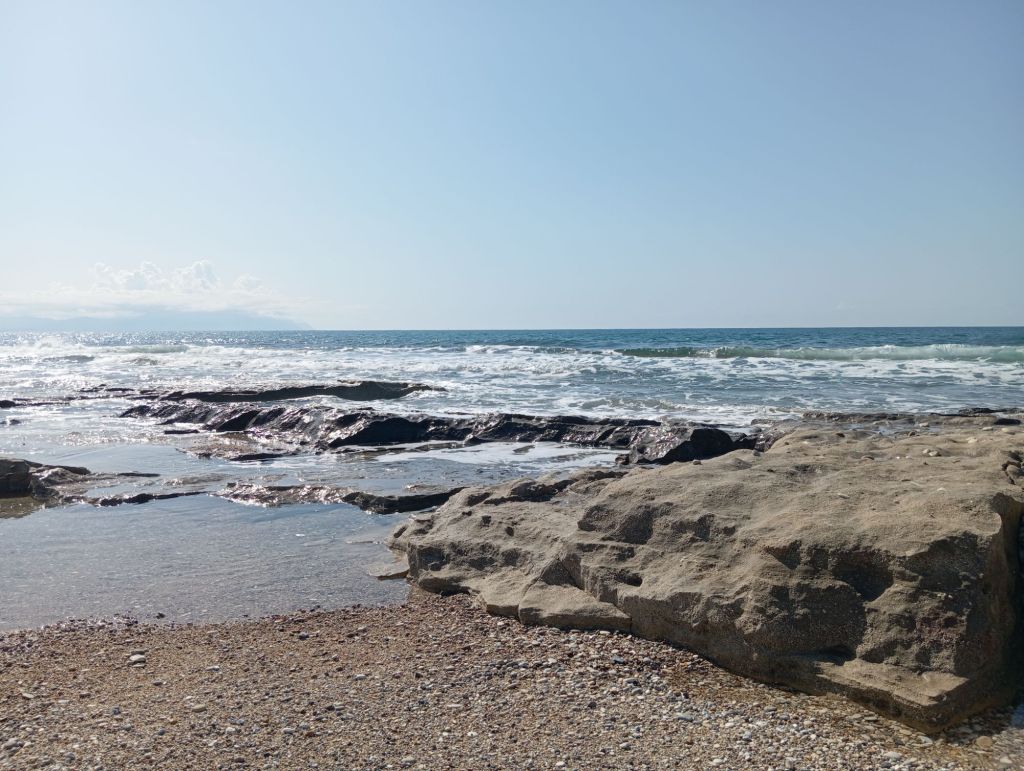


 Unser Ritt auf der Waiküre