Nicht selten werde wir oder ich, aktiv, passiv, von uns selbst oder anderen mit der formulierten oder behavioristisch dargestellten Frage konfrontiert: Darf es nicht a bisserl mehr sein?
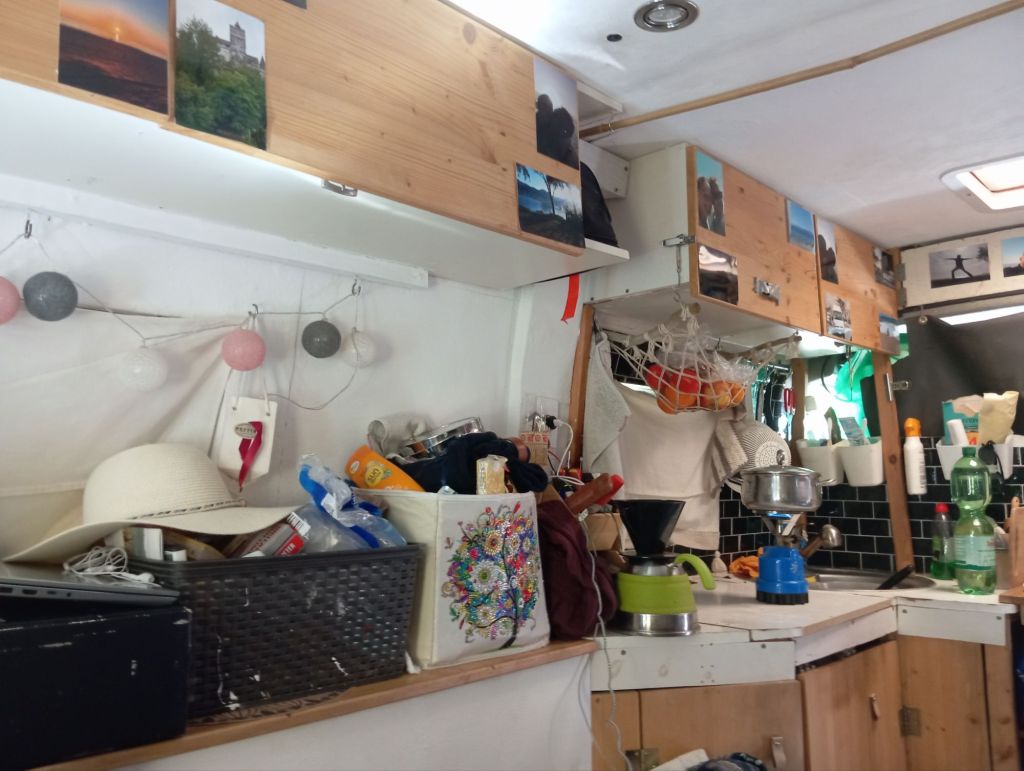
Immerhin leben wir seit knapp zwei Jahren auf nur vier Quadratmetern und haben auch sonst unseren monetären Anspruch weitestgehend runter gefahren.
Aber Silvana und ich bemerkten gestern erst, dass der Wunsch nach mehr sich eigentlich nicht verändert hat, denn uns beiden ist gemein, dass wir diesen auf 100, 40 oder jetzt 4 Quadratmetern immer ähnlich spürten. Der Wunsch nach etwas mehr blieb, egal in welcher Lebensphase oder unter welchen Bedingungen wir uns lebten.
Wir sind uns also bewusst, dass selbst wenn wir uns zu ,“a bisserl mehr“ entschlössen, der Wunsch bliebe. Was sich aber verändern würde, wäre das Potential es erreichen zu können.
Wenn wir folglich jetzt im Jürmann residieren, wäre es relativ leicht ein basal notwendiges Mehr wie die am Samstag für Silvana anstehenden neuen Schuhe relativ leicht zu erreichen und einen größeren Genuss schaffen, als ein Mallorcaurlaub in einem beinahe unendlichen 9 to 5 Job.
Interessant ist, dass die Qualität des neuen Mehr für Silvana nicht abnimmt, obwohl die neuen Schuhe für den aktuellen Job gebraucht werden, der sie doch nicht mehr als anziert.
Das Glück im Ritt auf der WIküre liegt folglich nicht in einer Quantifizierung luxuriöser Statussymbole, sondern in einer ganz realistisch notwendigen Verbesserung der Lebensumstände, also in mehr Wohlsein, auch in der Arbeit, wie ich im neuen Rechner für meinen Unterricht.
Man kann also zumindest begründet glauben, dass wir zwar wahrscheinlich kein objektiv besseres Leben führen als Nichtnomaden, aber ein wahrhaftigeres, denn unser Leben lässt und fordert echte Emotionen. Wir spüren und leben Verzicht und dessen Kompensation notwendiger.
Die Füße Schmerzen mit kaputten Schen kurzzeitig natürlich mehr, was aber auch zu intensiveren Glücksgefühlen beimTragen der Neuen führt(vom Erlebnis sie zu erwerben, also Konsum ohne der Qualität der Ersatzbefriedigung für nicht kompensierte seelische Leere ganz zu schweigen).
Aber das Schönste ist, dass wenn es uns irgendwo, irgendwie nicht mehr gefällt, können wir umgehend weiter ziehen und dass ganz ohne die neuen Schuhe abzunutzen, sondern auf vier Rädern. Wie dekadent.
In english
On the philosophical happiness of new shoes
Not infrequently we or I, actively or passively, are confronted by ourselves or others with the formulated or behavioristically presented question: Couldn’t it be a bit more?
After all, we have only been living in four square meters for almost two years and have also reduced our monetary demands as far as possible.
But Silvana and I only noticed yesterday that the desire for more hasn’t really changed, because we both have in common that we always felt the same way when we lived in 100, 40 or now 4 square meters. The desire for something more remained the same, no matter what stage of life we were in or under what conditions we were living.
So we are aware that even if we decided to have a little more, the desire would remain. What would change, however, would be the potential to achieve it.
So if we now reside at Jürmann, it is relatively easy to achieve a basic necessary more, such as the new shoes Silvana is due to wear on Saturday, and create greater enjoyment than a vacation in Mallorca in an almost endless 9 to 5 job.
It is interesting to note that the quality of the new more for Silvana does not diminish, even though the new shoes are needed for the current job, which does not yet call for them.
Happiness in the ride on the WIcure therefore does not lie in a quantification of luxurious status symbols, but in a very realistically necessary improvement in living conditions, i.e. in feeling better, even at work, as I do with the new computer for my lessons.
It is therefore at least reasonable to believe that we probably do not lead an objectively better life than non-nomads, but a more truthful one, because our lives allow and demand real emotions. We feel and live renunciation and its compensation more necessarily.
Of course, our feet hurt more for a short time with broken shoes, but this also leads to more intense feelings of happiness when wearing the new ones (not to mention the experience of acquiring them, i.e. consumption without the quality of substitute satisfaction for uncompensated emotional emptiness).
But the best thing is that if we no longer like it somewhere, somehow, we can move on immediately and without wearing out the new shoes, but on four wheels. How decadent.

 Unser Ritt auf der Waiküre