Was macht das Leben lebenswert? Manchmal habe ich das Gefühl, man könne Geld essen. Hier rund um Sofia muss es besonders gut schmecken, denn die Konsumtempel oder Shoppingmalls sind „modern“ also irgendwie neu und bunt und glitzernd und laut und unerträglich und die SUVs, vor diesen Marken, stehen den Tempeln des Kapitalismus in nichts nach, aber schaut man nur einen Kilometer in die Peripherie, stehen diese Nobelkarossen vor Baufälligen Kaschemmen, die Notdürftig mit unzähligen Kabeln verbunden sind, denn sonst könnte man ja nicht in 4K von all dem Bullshitbingo träumen, der einem suggeriert, das Kaufen das Schönste sei.
Kleine Indizien weisen nur darauf hin, dass die Menschen hier nur ertragen, denn was hier wirklich billig ist, sind Alkohol und Zigaretten, der Rest ist wie überall, sogar der Name des Verkäufers ist auch hier Lidl.
Der große Gewinner der Globalisierung heißt Schwarz nicht Mensch.
Beinahe zynisch lustig ist da, dass der neue Pabst ein linker Amerikaner ist, die Welt ist wirklich absurd und wird sie jeden Tag mehr.
In Griechenland werden mit die wichtigsten Konsumenten verscheucht, indem Langzeitstehen verboten wird, weil sie angeblich so viel Müll machen(come ON, die Nerven mit ihrem reinlichen Heilugenschein, aber nicht mit Feuchttüchern im Naturschutzgebiet), in Bulgarien wird aus der einst einzigartigen Natur nur noch eine Bergkulisse für IKEA Parkplätze und in den USA wird die wichtigste Medizinerin eine Influrencerin.
Mal schauen, was in Rumänien los ist, wenn die jetzt auch einen Rechten Präsidenten bekommen und bei meinem verwilderten Aussehen wird man mich ander deutschen Grenze wohl auch erst Mal in ein Auffanglager stecken.
Aber es ist wie es ist, das Leben ist ein Spiel und ich Versuche es zu genießen, irgendwann gegen Herbst sind wir ja hoffentlich vor den Toren Afrikas, vielleicht gibt es da ja noch vernünftige Leute.
In english
The whole of life is an (absurd) game What makes life worth living? Sometimes I have the feeling that you can eat money. Here around Sofia it must taste particularly good, because the temples of consumption or shopping malls are „modern“, i.e. somehow new and colorful and glittering and loud and unbearable, and the SUVs that stand in front of them are in no way inferior to the temples of capitalism, but if you look just one kilometer into the periphery, these luxury cars are parked in front of dilapidated shacks that are poorly connected with countless cables, because otherwise you wouldn’t be able to dream in 4K of all the bullshit bingo that suggests that buying is the most beautiful thing.
Small clues only point to the fact that people here only endure, because what is really cheap here is alcohol and cigarettes, the rest is like everywhere else, even the name of the seller is Lidl here too.
The big winner of globalization is not called Schwarz Mensch.
It is almost cynically funny that the new pope is a left-wing American, the world is really absurd and is becoming more so every day.
In Greece, the most important consumers are being scared away by banning long-term standing because they allegedly make so much garbage (come ON, the nerves with their clean medical certificate, but not with wet wipes in a nature reserve), in Bulgaria the once unique natural environment is being turned into a mountain backdrop for IKEA parking lots and in the USA the most important doctor is becoming an Influrencer.
Let’s see what happens in Romania when they get a right-wing president and with my feral appearance I’ll probably be put in a reception camp at the German border.
But it is what it is, life is a game and I’m trying to enjoy it, hopefully we’ll be at the gates of Africa sometime in the fall, maybe there are still some sensible people there.
Es war am Freitag spontan, als uns das Fernweh drückte und wir nicht anders konnten, als den Weg Richtung Deutschland anzutreten, um endlich die Reisekasse wieder aufzubessern.
Aber statt wenigen Kilometern sind wir heute, noch keine Woche später schon im Speckgürtel von Sofia, der Hauptstadt dieses so grünen Landes, das auf mich wie die Sprache wirkt: eine Mischung aus Griechisch und Russisch.
Leider ist das Wetter relativ deutsch und die Standplätze sind… Na sagen wir durchwachsen. Bis zum Feldweg sind die Straßen besser als in Deutschland, aber wenn es dann links ab gehen muss, dann ist man auch nur froh, wenn man irgendwann zum Stehen kommt, weshalb wir letzte Nacht notgedrungen auf einem Video überwachten Truckerrastplatz Zwischenparken mussten.
Aber das Schlimmste war bzw ist eine private Katastrophe, die ich an dieser Stelle nicht weiter kommentieren möchte, denn das wäre nur von voyeristischen Gedanken begleitet, womit keinem geholfen wäre.
Es gibt einfach Dinge, die muss jeder für sich ausmachen, denn wie sagte Nitzsche so schön: Es versteht eh keiner den anderen, man ist nur zufällig einer Meinung oder nicht.
Ich melde mich aber ganz bestimmt bald wieder, denn bei einem sind sich Silvana und ich sicherer als je zuvor: Jetzt hat die Reise eigentlich erst richtig angefangen und das mit dem ersten frisch gezapften Bier seit fast zwei Jahren: Hmmm… Lecka!
English
Bulgaria It was a spontaneous decision on Friday when our wanderlust struck and we couldn’t help but set off for Germany to finally top up our travel funds.
But instead of just a few kilometers, today, less than a week later, we are already in the suburbs of Sofia, the capital of this green country, which seems to me like the language: a mixture of Greek and Russian.
Unfortunately, the weather is relatively German and the pitches are… Well, let’s say mixed. Up to the dirt road, the roads are better than in Germany, but when you have to turn left, you’re only happy when you come to a halt, which is why we had to park in a video-monitored truck stop last night.
But the worst thing was or is a private catastrophe that I don’t want to comment on at this point, because that would only be accompanied by voyeristic thoughts, which wouldn’t help anyone.
There are simply things that everyone has to work out for themselves, because as Nitzsche said so well: nobody understands anyone else anyway, you just happen to agree or disagree.
But I’ll definitely be in touch again soon, because Silvana and I are more sure of one thing than ever before: the journey has really only just begun, and with the first freshly tapped beer in almost two years: Hmmm… Lecka!
Die Tage vergehen und während der Frühling kaum angekommen scheint, steht schon der Sommer vor der Tür.
Es wird heiß. Noch ist es Nachts oft Recht kühl, weil zu oft noch Wolken die Sonne am Dienst als Vitamin D Booten hindern, aber wenn der Himmel blau ist, steigen die Temperaturen schon (weit) über 25 Grad.
Wir betrachten das Spiel der Gezeiten derzeit mit gemischten Gefühlen, denn es wird wohl vorerst der letzte Frühling in Griechenland sein. Wir erinnern uns noch böse an den Sommer, als wir uns kaum bewegen konnten, ohne den Victoria Wasserfällen in Afrika zu gleichen.
Aktuell ist noch alles gut. Ich schlafe sogar noch mit Decke, aber die Zeiten des Tuchs zur guten Nacht werden kürzer.
Bald schon, werden wir wieder in Bukarest und anschließend in Sophia sein, wo uns keine hohe Luftfeuchtigkeit mehr hilft, wir erinnern uns noch düster an die Sitzung im Stau letztes Jahr.
Aber wir freuen uns auf das was kommt und vielleicht macht die Wehmut des Abschieds derzeit alles sogar noch ein bisschen schöner.
Wer weiss, was jetzt kommt, worüber wir vielleicht in einem Jahr sagen: Weißt du noch?
In english
As time goes by The days go by and while spring barely seems to have arrived, summer is already just around the corner.
It’s getting hot. It’s still often quite cool at night, because too often clouds still prevent the sun from acting as a vitamin D boat, but when the sky is blue, temperatures are already (well) above 25 degrees.
We have mixed feelings about the tides at the moment, as this will probably be the last spring in Greece for the time being. We still have vivid memories of the summer when we could hardly move without resembling the Victoria Falls in Africa.
At the moment, everything is still fine. I’m even still sleeping with a blanket, but the times when I have to sleep under a blanket are getting shorter.
Soon we’ll be back in Bucharest and then in Sophia, where we won’t be helped by the high humidity – we still have faint memories of the session in the traffic jam last year.
But we’re looking forward to what’s to come and perhaps the melancholy of saying goodbye is making everything a little more beautiful at the moment.
Who knows what’s coming next, what we might be saying in a year’s time: remember?
Wenn ein monumentaler Film sich dem Ende neigt, wird es noch einmal harmonisch. Alle Hürden sind gemeistert und alle Friktionen haben sich in Wohlwollen aufgelöst. Was folgt ist pure Harmonie.
Ein letztes Treffen mit allen Protagonisten steht bevor und man trifft sich gelöst, aber gezeichnet von den zurückliegenden Strapazen in einer Taverne bei strahlendem Mondschein.
Genau an diesem Punkt befinden wir uns aktuell in Griechenland während des Ritts auf der Waiküre.
Na gut, nicht ganz, denn der Abschied von unserem guten Freund Jiannis ist schon fast wieder zwei Wochen her und auch von einem „alles ist gut“ Happy-End sind wir derzeit so weit entfernt wie ich figürlich von meiner Form vor knapp zwei Jahren, aber beim Blättern des Kapitels „im Land der Götter“ schielen wir schon auf die letzte Seite.
Wir freuen uns zwar auf das unverhoffte Wiedersehen mit den Kanadiern, aber insgeheim auch wieder aufs Fahren. Genug der Ruhe, die uns so fehlte und genug der Anfängerfehler, die uns allesamt heimgesucht haben.
Man kann sagen, wir haben die Kindheit der Reise beinahe hinter uns und fühlen uns gewappnet für die Adoleszensphase.
Wie viel haben wir wirklich gelernt? Was bleibt von all den guten Vorsätzen, die wir uns nach Niederlagen geschworen haben? Und vor allem: Haben wir die Zeit hier genutzt um uns wirklich zu entwickeln und von alten Gewohnheiten zu emanzipieren?
Wir wissen es nicht, aber irgend ein Gefühl in uns sagt: Es wird wieder Zeit für ein bisschen mehr Action.
Also genießt mit uns die letzten griechischen Sonnentage und begleitet uns langsam über Bulgarien und Transsilvanien zurück nach Deutschland, um nach einem kurzen Finanzpolsterstop die Reise endlich in Richtung Afrika zu beginnen, schließlich erwartet man uns schon in Simbabwe, Rwanda, Uganda, Togo und Madagaskar.
Und nein, lieber Marco, Jens Peter, Sayer, Marvin, und alle anderen ungenannten hier, wir vergessen Euch nicht.
Dreamer Supertramp
In english
Cliffhanger When a monumental film draws to a close, things become harmonious once again. All hurdles have been overcome and all friction has dissolved into goodwill. What follows is pure harmony.
A final meeting with all the protagonists is about to take place and they meet in a tavern in the bright moonlight, relaxed but marked by the past exertions.
This is exactly where we currently find ourselves in Greece during the ride on the Waiküre.
Well, not quite, because it’s been almost two weeks since we said goodbye to our good friend Jiannis and we’re currently as far away from an „all is well“ happy ending as I was from my form almost two years ago, but we’re already looking at the last page of the chapter „In the land of the gods“.
Although we are looking forward to the unexpected reunion with the Canadians, we are also secretly looking forward to driving again. Enough of the peace and quiet we’ve been missing and enough of the rookie mistakes that have afflicted us all.
You could say that we have almost left the childhood of traveling behind us and feel ready for the adolescent phase.
How much have we really learned? What remains of all the good intentions we swore after defeats? And above all: have we used our time here to really develop and emancipate ourselves from old habits?
We don’t know, but some feeling inside us says: it’s time for a bit more action again.
So enjoy the last days of Greek sunshine with us and slowly accompany us back to Germany via Bulgaria and Transylvania to finally start our journey towards Africa after a short financial stopover, as we are already expected in Zimbabwe, Rwanda, Uganda, Togo and Madagascar.
And no, dear Marco, Jens Peter, Sayer, Marvin and all the others not mentioned here, we are not forgetting you.
Ich glaube, dass der Mensch mit seinem ständigen Drang das Paradies zu finden oder zu erschaffen, es zerstört. Jeder Versuch ist wie ein Hammerschlag in die Harmonie, die man doch so vermisst.
Nichts ist schlimm, nichts ist hässlich, aber auch nicht schön oder traumhaft, bis jemand kommt und es so findet.
Die subjektive Perspektive macht aus jedem „einfach Gut“ eine Ansichtssache, eine Verhandlungssachen, als ob ein individuell menschlicher Nutzen eine objektive Qualität wäre.
Vielleicht nervt mich ein Stein am Traumstrand oder eine Qualle im türkisfarbenen Meer. Aber was gibt mir als Mensch das Recht darüber zu urteilen?
Wenn alles Kontingent notwendig ist, dann ist der Stein oder die Qualle doch notwendige Bedingung für ein Paradies, wer auch immer davon träumt. Selbst gehasste Menschen am Ende der Welt machen doch dann meinen Traum erst möglich.
Ich will nicht mehr suchen. Aber wie kann ich mich nur mit mir versöhnen? Wie schaffe ich es nur, dass das Haar in der Suppe folglich nicht Grund zum Frust, sondern zur Freude ist?
In english
The fly in the ointment I believe that man, with his constant urge to find or create paradise, is destroying it. Every attempt is like a hammer blow to the harmony that we miss so much.
Nothing is bad, nothing is ugly, but nothing is beautiful or dreamlike either, until someone comes along and finds it so.
The subjective perspective turns every „simply good“ into a matter of opinion, a matter of negotiation, as if an individual human benefit were an objective quality.
Perhaps a stone on a dream beach or a jellyfish in a turquoise sea annoys me. But what gives me, as a human being, the right to judge it?
If everything is contingent, then the stone or the jellyfish is a necessary condition for a paradise, whoever dreams of it. Even hated people at the end of the world make my dream possible.
I don’t want to search anymore. But how can I reconcile with myself? How can I make sure that the fly in the ointment is not a cause for frustration but for joy?
Noch immer den Aufbruch als Abschied von Jiannis und der neuen Routine in den Knochen, liege ich aktuell an einem ruhigen See und lausche den lauten Gedanken als blitzartig sireniger Ton in meinen Gedanken, während Silvana das Moskitonetz vorbereitet und unter schwärzer werdenden Wolken Pelikane nach ihrem Abendessen Ausschau halten.
Die Erinnerungen drehen sich noch um Siddhartha und insgeheim überkommt mich die Sehnsucht nach dem Steppenwolf, jenem Misanthropen, der mir mit jedem Tag sympathischer wird.
Ich bin froh, dass wir wieder unterwegs sind, weil es mir hilft, den Gedanken zu kultivieren, nur dann glücklich sein zu können, wenn man alles annimmt, wie es ist, denn auf dieser Lebensreise merke ich das in jeder Faser.
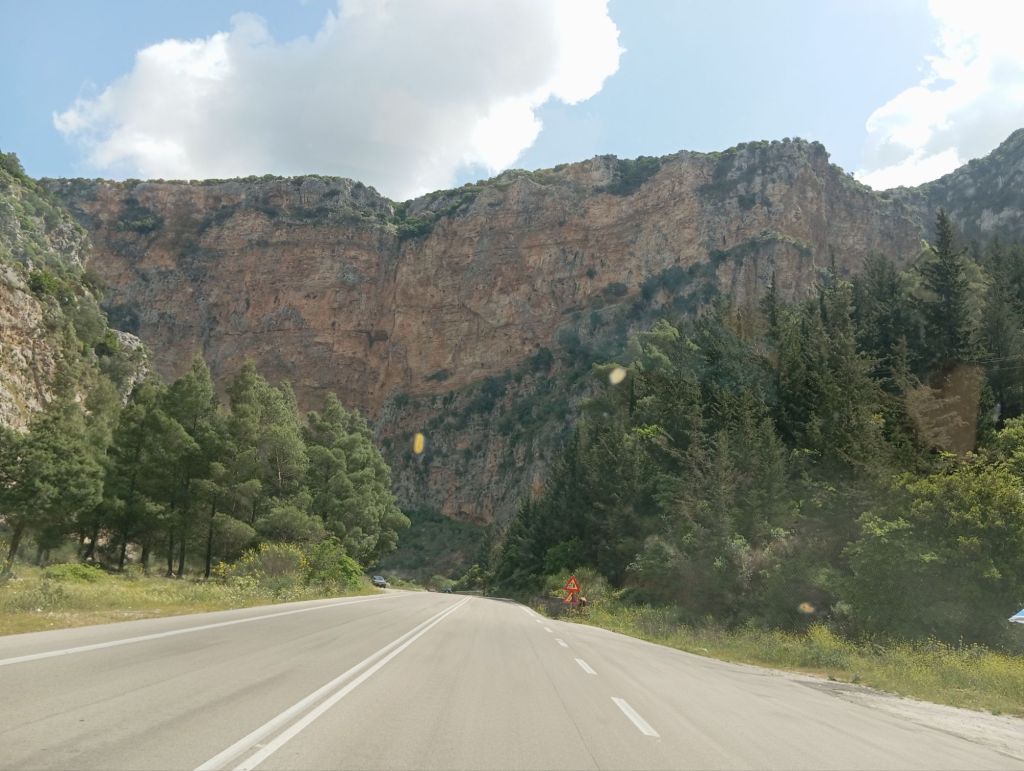
Egal ob wir mitten durch Gebirge kreuzen, die wie die Rocky Mountains die Straßen säumen oder inmitten von Olivenhainen drehen müssen.
So ist es gut. So ist es richtig. Die Endlichkeit meiner Seele im unendlichen Kreislauf kontingenter Ereignisse, die in ihrem Jetzt immer alles sind. Der Berg ist oder war Sand und ich bin und war es auch.
Mein Jetzt als Ulf ist ein notwendiges Sein, damit die Welt jetzt als Ganzheit funktioniert. Im weltlichen Morgen bin ich vielleicht ein Pelikan oder die Schildkröte, die uns eben begegnet ist. Und wenn sie, er oder ich nicht mehr Schildkröte, Pelikan, Ulf oder Berg sind, dann braucht uns der unendliche Kreislauf als kumulierter Sternenstaub wohl in anderer Gestalt.
So will ich das Leben und die Menschen und alles andere lieben und schätzen lernen. Deshalb bin ich unterwegs. Jetzt im Van, morgen. Vielleicht als Fährmann und übermorgen vielleicht als Silvana, die in einem Gegenüber wie mir als Ulf den Sinn des Lebens annehmen und genießen lernen muss.
In english
Today like this, tomorrow like this With the departure as a farewell to Jiannis and the new routine still in my bones, I am currently lying by a calm lake and listening to the loud thoughts as a lightning siren sets the tone in my mind, while Silvana prepares the mosquito net and pelicans look out for their dinner under the darkening clouds.
My memories still revolve around Siddhartha and I am secretly overcome by a longing for the Steppenwolf, the misanthrope who becomes more likeable with each passing day.
I am glad that we are on the road again because it helps me to cultivate the idea that you can only be happy if you accept everything as it is, because on this journey through life I feel this in every fiber.
It doesn’t matter whether we have to cross through the middle of mountains that line the roads like the Rocky Mountains or turn in the middle of olive groves.
This is good. That’s the right way. The finiteness of my soul in the infinite cycle of contingent events that are always everything in their now. The mountain is or was sand and I am and was too.
My now as Ulf is a necessary being so that the world now functions as a wholeness. In the worldly tomorrow, I am perhaps a pelican or the turtle that we have just encountered. And if she, he or I are no longer a turtle, pelican, Ulf or mountain, then the infinite cycle as cumulative stardust probably needs us in a different form.That’s how I want to learn to love and appreciate life and people and everything else. That’s why I’m on the road. Now in the van, tomorrow. Maybe as a ferryman and maybe the day after tomorrow as Silvana, who has to learn to accept and enjoy the meaning of life in a counterpart like me as Ulf
Es ist schon (wieder einmal) ein denkwürdiger Zufall, dass der Papst stirbt und ich, beinahe aus einer Laune heraus, eine Prozession in den Whatsapp Status setzte, der wir am Freitag beiwohnen konnten.
Ich habe auf dieser Reise oft mit der Idee „Gott“ gehadert und geliebäugelt, aber Franziskus hat mich als Mensch wirklich beeindruckt.
Zugegeben, es ist noch nicht lange her, da wäre auch ich bei vielen Aussagen von ihm auf die hier direkt vor mir thronende Palme gegangen, aber der Ritt auf der Waiküre hat mich gnädiger gemacht. Zu Menschen mit anderen Überzeugungen aber vor allem zu mir selbst und wenn ich an Franziskus denke, bleibt mir genau das bei ihm am beeindruckensten in Erinnerung: Er haderte nie mit sich selbst, indem er sich von Selbstglorifizierung maximal distanzierte.
Er stand zu und für sich als das, was er gewesen ist (Perfekt als vollendete Gegenwart). Und um alle Zweifler unter der oben angedeuteten (göttlichen) Fügung noch weiter zu irritieren: erst gestern habe ich mit Siddhartha von Hermann Hesse begonnen, einem Buch über einen jungen Mann, der mit seinem Freund auszieht, um „mittelfreier“ Mönch zu werden.
Das schöne an diesem Buch ist es, dass Siddhartha beinahe heilig eingeführt wird, um dann den Verlockungen der Gesellschaft zu verfallen, aber dass er nur kurz an sich hadert, ob der Verfehlungen, die er nach alter Überzeugung wohl begangen hat. Er freut sich über die Erfahrungen und sieht sie als notwendigen Stein auf seinem Weg an, der dazu nötig ist, um – ganz subjektiv- sich selbst zu entdecken und daraus den Schluss zu ziehen, dass dieses Gefundene als Sinn für ein individuelles Leben genügt und alles weitere nur Verlockungen sind, die vordergründig Vergnügen, aber langfristig nur Bürde bedeuten.
Seine Kernkompetenzen beschrieb er im „denken, fasten und warten“.
Ich bin mir nicht sicher, ob Franziskus das „warten“ so leicht unterstrichen hätte wie Siddhartha, obwohl ich mir sicher bin, dass er es schlussendlich, (wie ich) mit einem Lächeln getan hätte, den Franziskus war durchaus ungeduldig, aber als gelernter Chemiker wohl nachweislich ein guter Denker, der mit der einen Kompetenz die andere als das begriffen hätte, was sie war: eine würdig zu verdienende Tugend, die wahrlich die wohl am schwersten zu Erreichende ist.
Denken macht jeder, objektiv nicht zwingend immer nur Gutes, aber der physische Prozess des Austausches von elektrischen Spannungen finden statt, solange es Neuronen gibt.
Hungern, eine mir nicht unbekannte Tugend, lernte ich aus Armut, wofür man sie laut Siddhartha auch beherrschen sollte, zu dumm, das der Lernprozess umgekehrt ist. Anyway. Hunger ertragen, als Epikuräer würde ich gar sagen „zu genießen“, ist wahrlich etwas, das schmerzt, es lähmt den ganzen Körper und dennoch lähmt ein opulentes Mahl mehr, wie die meisten meiner Leser wohl zumindest heimlich zugeben können.
Fasten ist aber nicht Hunger. Fasten ist aus Überzeugung „nein“ zum „zu viel“ zu sagen. Fasten ist Hunger erwarten statt Hunger vermeiden
Und „warten“? „Warten“ ist Hoffnung, „warten“ ist genügsam sein, „warten“ ist sich selbst er-tragen lernen. Und das bedeutet, das im Spiegel zu sehen, was man befürchtet, „eine Fratze“. Es dauert lange dieser Fratze den Schrecken zu nehmen, aber wenn man plötzlich das verletzte Kind dahinter entdeckt, dass immer sein Bestes gegeben hat und selbstbewusst behauptend auch immer machen wird, kann nur Selbstzufriedenheit stehen (wollen).
Papst Franziskus hat für die zukünftigen Beerdigungen angeordnet, dass der Bischofsstab als Insignie (weltlicher) Macht, nicht mehr neben einem verstorbenen Papst aufgestellt wird.
Für mich ist das nicht „abgeben“, sondern ein Synonym für Loslassen, Das Folgende als Jetzt zu akzeptieren, ohne es mit einem Vergangenen in moralischen Wettbewerb zu setzen.
Was in unserem Falle heißt: Von merkwürdigen französischen Campern flankiert vegetarische Spaghetti Bolognese zu essen, während wir auf den Ölwechsel morgen beim Jürmann warten.
So denke ich mir das zumindest, begleitet von der aufkeimenden Überzeugung in diesem Augenblick froh zu sein, dass ich fasten lernen durfte.
Euer Ulf
english
To all ( = Catholic, Greek)
It’s quite a memorable coincidence (again) that the Pope is dying and I, almost on a whim, put a procession in the Whatsapp status that we were able to attend on Friday.
I’ve often struggled and flirted with the idea of “God” on this trip, but Francis really impressed me as a person. Admittedly, it wasn’t long ago that I too would have gone up the palm tree enthroned right in front of me at many of his statements, but the ride on the Waiküre made me more gracious. To people with different convictions, but above all to myself, and when I think of Francis, this is exactly what I remember most impressively about him: he never quarrelled with himself, distancing himself from self-glorification to the maximum.
He stood by and for himself as what he was (perfect as the perfect present). And to further irritate any doubters under the (divine) providence alluded to above: only yesterday I started reading Siddhartha by Hermann Hesse, a book about a young man who sets out with his friend to become a “middle-free” monk.
The beauty of this book is that Siddhartha is almost introduced as a saint, only to fall prey to the temptations of society, but that he only briefly has second thoughts about the transgressions he has probably committed according to his old convictions.
He rejoices in his experiences and sees them as a necessary stone on his path to discovering himself – quite subjectively – and drawing the conclusion that what he has found is sufficient as a meaning for his individual life and that everything else is just temptation, which is superficially a pleasure but in the long term only a burden.
He described his core competencies as “thinking, fasting and waiting”. I’m not sure that Francis would have underlined “waiting” as easily as Siddhartha, although I’m sure he would have done so with a smile in the end (as I did), because Francis was certainly impatient, but as a trained chemist he was probably demonstrably a good thinker who, with the one competence, would have understood the other for what it was: a virtue worthy of merit, which is truly the most difficult to achieve.
Everyone thinks, not necessarily always objectively for good, but the physical process of exchanging electrical voltages will take place as long as there are neurons. I learned hunger, a virtue not unknown to me, from poverty, for which, according to Siddhartha, one should also master it, too bad that the learning process is the other way around. Anyway. To endure hunger, as an Epicurean I would even say “to enjoy”, is truly something that hurts, it paralyzes the whole body and yet a sumptuous meal paralyzes more, as most of my readers can probably at least secretly admit.
But fasting is not hunger. Fasting is saying “no” to “too much” out of conviction. Fasting is expecting hunger instead of avoiding hunger
And “waiting”? Waiting is hope, “waiting” is being frugal, “waiting” is learning to bear oneself. And that means seeing in the mirror what you fear, “a grimace”. It takes a long time to take the horror out of this grimace, but when you suddenly discover the wounded child behind it, who has always done his best and will always do his best with self-confidence, there can only be self-satisfaction.
For future funerals, Pope Francis has ordered that the crosier, as an insignia of (worldly) power, will no longer be placed next to a deceased pope.
For me, this is not “giving up”, but a synonym for letting go, accepting what follows as the now, without putting it in moral competition with a past.
Which in our case means eating vegetarian spaghetti bolognese flanked by strange French campers while we wait for the oil change at Jürmann’s tomorrow.
At least that’s what I’m thinking, accompanied by the burgeoning conviction that I’m glad at this moment that I was allowed to learn to fast.
Erinnert ihr Euch noch an 2023? Wir kamen grad aus Igoumenitsa und waren auf dem Weg nach Kalamata, als uns das Schicksal glücklicherweise bei Jiannis zum Einkehren nötigte.
Was für eine nachhaltig tolle Begegnung, denn neben sauberer Wäsche fanden wir auch noch einen sehr guten Freund.
So gut, dass wir im Frühjahr 24 wieder vor Ort waren. Von freundschaftlicher Sehnsucht und einem kaputten Computer geplagt. Gut dass es Jiannis gibt!
Wäsche? Kein Problem. Computer? Kein Problem und einen neuen Ersatzschlüssel braucht ihr auch? Geht zu Paul. Was auch immer los war und ist, Jiannis war und ist zu Stelle.
Wie vor zwei Monaten, als erneut ein neuer Computer nnstand und unser Heiliger Johannes Rat und Hilfe bot. Sogar bei der Wohnung, die wir suchten und schlussendlich nicht nehmen konnten, weil wir ganz unbemerkt doch zu Zigeunern geworden sind.
Und was ein richtig guter Zigeuner ist, achtet darauf, dass sein Pferd immer mit guten Hufeisen beschlagen ist, weshalb wir am Freitag erneut bei unserem Hufschmied Paul vorbei schauen, um Öl und Luftfilter zu wechseln, um im Anschluss, wahrscheinlich am Samstag mit dem besten Jiannis der Welt Abschied feiern zu müssen.
Ich werde Euch ewig im Herzen tragen liebe Griechen, ihr seit großartig und wer weiss….
In english
Chez Paul II Do you still remember 2023? We had just come from Igoumenitsa and were on our way to Kalamata when fate fortunately forced us to stop off at Jiannis.
What a great, long-lasting encounter, because in addition to clean laundry, we also found a very good friend.
So good that we were there again in spring 24. Plagued by a longing for friendship and a broken computer. Good thing there’s Brother Jiannis!
Laundry? No problem. Computer? No problem and you need a new spare key too? Go to Paul. Whatever was and is going on, Jiannis was and is there to help.
Like two months ago, when we needed another new computer and our St. John offered advice and help. Even with the apartment that we were looking for but ultimately couldn’t take because we had become gypsies without anyone noticing.
And a really good gypsy makes sure that his horse is always shod with good horseshoes, which is why we will be visiting our farrier Paul again on Friday to change the oil and air filter and then, probably on Saturday, we will have to say goodbye to the best Jiannis in the world.
I will carry you in my heart forever, dear Greeks, you are great and who knows….
ich weiß, dass Du Dir Sorgen machst, da ich eine für Dich so fremde Perspektive auf die Welt habe. Es ist schwer, beinahe unmöglich nachzuvollziehen, warum ich was mache und wie ich es mache. Das belastet Dich, weil Du mir vermutlich helfen willst und immer wieder merkst, das Deine Mittel beschränkt sind, denn Deine Erfolgsrezepte sind nicht meine.
Unsere Schnittmengen sind gering, aber fundamental, denn eine Schnittmenge ist das familiâre Band. Würden wir nicht verwandt sein, würden wir uns nicht kennen, weil wir uns nicht einmal begegnet wären, aber wir sind es und ich bin sehr froh darüber. Du gibst mir Halt und Mut und Kraft, ja, es gibt auch viele Momente, wo wir uns gegenseitig scheinbar weh tun, aber das ist doch nur deshalb so, weil es uns verletzt, dass wir oft hilflos sind. Es scheint doch so einfach gewissen Problemen Herr zu werden, man muss ja nur…
Aber dein und mein „man muss ja nur..“ sind nur für den jeweils Das denkenden ein „man muss ja nur“, es ist so unmissverständliche Wahrheit, dass es für den Sprecher des jeweiligen“ man muss ja nur..“oft nicht einmal ein solches ist.
Ich muss nie einfach nur, ich mache oder nicht, mein „man muss ja nur“ ist ein Reproduzieren eines für mich “ ist ja ganz einfach“ und umgekehrt. Aber dein „ist ja klar“ist für mich auch klar, denn wir leben ja in der gleichen Welt, aber klar, also eindeutig und logisch für Dich, ist es für mich nicht und deshalb oft unmöglich, denn logisch Bedingt Argumentationsketten die auf Erfahrungen beruhen und die sind nie gleich. Selbst Situationen, die wir nur gemeinsam erlebt haben, reflektieren wir beide aus einer völlig anderen Perspektive, allein schon aus der, dass ich sie mit meiner Mutter und du sie mit deinem Sohn erlebt hast.
Ich kenne keinen Menschen länger als Dich, das heißt aber nicht, dass ich Dich besser kenne als andere. Du prägst mich nur regelmässig von Beginn meines Lebens an und dafür bin ich sehr dankbar.
Ich bin selten Deiner Meinung, aber im Notfall werde ich Dich als letzte Instanz um Rat oder Hilfe bitten, weil Du eines meiner Erfolgsrezepte bist, denn auch wenn Du mir nicht immer helfen könntest, könnte ich Dich doch immer fragen. Das ist ein großartige und sehr wichtiges Gefühl, auf das ich sehr stolz bin, es immer gehabt zu haben, auch wenn ich oft zu stolz war, es in Anspruch zu nehmen.
Morgen geht es wieder los (erst aus der Wohnung und nach einem technischen Checkup in etwa zwei Wochen dann richtig)und ich muss zugeben, ein bisschen Wehmut schwingt bei aller Vorfreude doch mit. Die Nachbarn und der Vermieter sind unglaublich nett und sind es auch nach unserer schweren Entscheidung geblieben. Wir wissen, dass das nicht selbstverständlich ist, aber der Gedanke zu bleiben hat uns erdrückt.
Und jetzt? Was kommt nun? Was erwarten wir?
Nein, wir erwarten nicht, das es schöner wird, denn freundlicher kann einem ein Umfeld nicht begegnen. Vielleicht laufen wir vor einer Leere im Herzen weg, die wir entdeckt haben und noch nicht mit Sinn füllen konnten. Ja vielleicht geht das nicht einmal.
Aber wir starten diesmal anders als im Spätsommer 23. Natürlich mit Kribbeln im Bauch, aber dennoch pragmatischer. Wir wissen, dass wir nicht in den Urlaub fahren und unsere Haushaltskasse sagt das auch. Wir haben wohl einfach noch nicht uns und unseren Platz in dieser Welt gefunden.
Noch sind wir im „nicht-angekommen“ am ehesten Zuhause. Aber diesmal wissen wir es. Der Weg, so sagt man, ist das Ziel, aber wenn man wagt diesen Gedanken zu kultivieren, bemerkt man, das ein Leben im Ziel Jetzt schwer zu ertragen ist.
Wir spüren, dass das Leben nur den Sinn hat, mit sich im Rheinen zu sein und das sind wir wohl noch nicht. Aber wir sind dankbarer für alles und gnädiger mit uns selbst, dem Partner und der Welt geworden.
Ein Anfang. Nicht mehr, aber auch nicht weniger.
In english
All beginnings are hard
Tomorrow we start again (first from the apartment and then, after a technical check-up in about two weeks, for real) and I have to admit that, despite all the anticipation, there is a bit of melancholy. The neighbors and the landlord are incredibly nice and have remained so even after our difficult decision. We know that this can’t be taken for granted, but the thought of staying was overwhelming.
And now? What’s next? What do we expect?
No, we don’t expect things to get better, because you can’t get a friendlier environment than this. Perhaps we are running away from an emptiness in our hearts that we have discovered and have not yet been able to fill with meaning. Perhaps we can’t even do that.
But this time we are starting differently than in late summer 23 – with a tingling in our stomachs, of course, but still more pragmatically. We know that we’re not going on vacation and our household budget says the same. We just haven’t found ourselves and our place in this world yet.
We are still most at home in the “not arrived”. But this time we know it. The journey, they say, is the destination, but if you dare to cultivate this thought, you realize that living in the destination now is hard to bear.
We feel that the only purpose of life is to be at peace with ourselves and we are probably not yet. But we have become more grateful for everything and more gracious with ourselves, our partner and the world.






 Unser Ritt auf der Waiküre