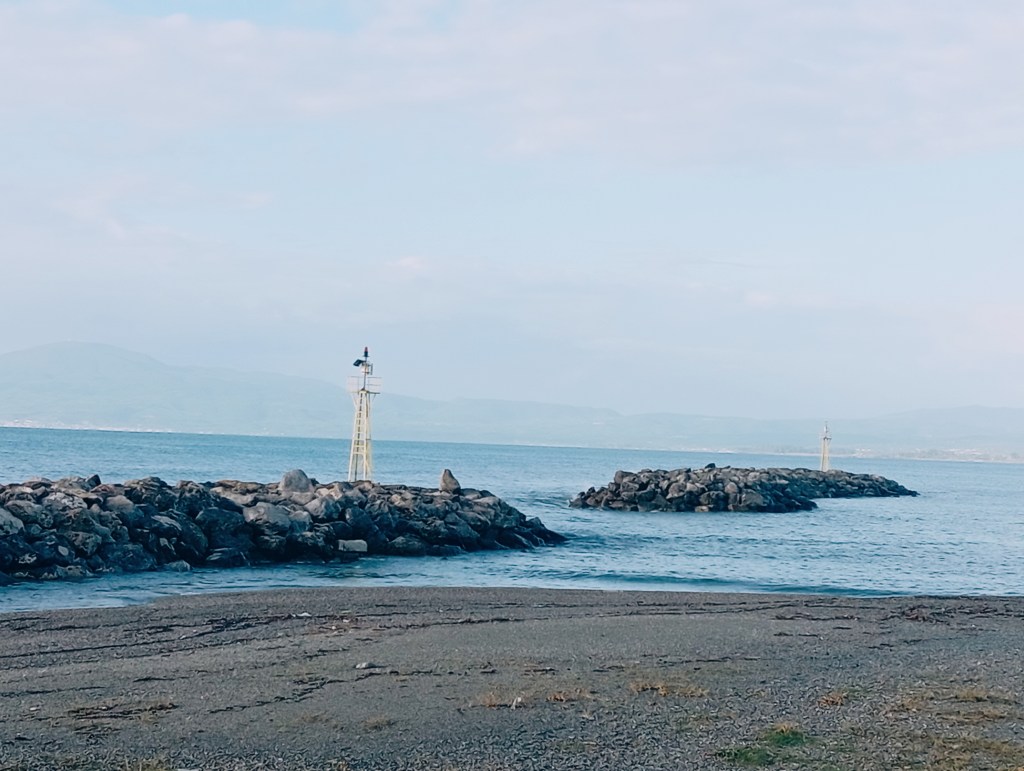
(down below in english) Tage wie heute kennt jeder. Tage wie heute sind somit nichts besonders und genau darin steckt ihr destruktiv es Potential, das Schöne einfach nicht sehen zu können.
An solchen Tagen, ist die Sonne, die grad auf das Schönste die Seele beglückt, beinahe störend, denn man ist von Kopf bis Fuss auf Melancholie eingestellt.
Mann und Frau nutzen die Gelegenheit des Wolken verhangenen Himmels für tiefsinnige Gespräche, die nicht geplant sind, sondern entstehen, wie Unkraut in einem Blumenbeet.
Sie gehören dazu, denn die Sonne scheint nicht nur für Rosen, weil die Welt und das Sein eine Ganzheit ist, die miteinander sein muss, auch wenn der eine den anderen nicht mag, oder ohne ihn scheinbar mehr zur Geltung kommt.
Wie bei den Menschen, sind es die scheinbar unspektakulären Daseins wie Gräser und Disteln, die durch Photosynthese aus der Sonne die meiste Kraft schöpfen. Die meiste Glukose bilden (Zucker) und dadurch am stärksten wachsen.
Also kann man sagen, nur wo auch Disteln wachsen (können), sind Rosen möglich und nur wo graue Tristesse das Schöne in seiner Strahlkraft hindert, kann es an gleicher Stelle zu anderer Zeit wieder paradiesisch schön sein.
Die Aufgabe heute besteht also darin, das Distel sein zu kultivieren und im Grau das Potential der Rose zu erkennen, die ich zwar jetzt nicht sehe oder bin aber ebenso möglich ist.
Vielleicht trägt deshalb die ursprüngliche Rose Stacheln, weil sie näher mit der Distel verwandt ist, als sie zugeben mag.
Bis morgen,
Euer Ulf
Why roses got thorns
Everyone knows days like today. Days like today are therefore nothing special and that is precisely where their destructive potential lies, in simply not being able to see the beauty.
On days like this, the sun, which is currently delighting the soul in the most beautiful way, is almost disturbing, because we are set on melancholy from head to toe.
Men and women take the opportunity of the cloudy sky for profound conversations that are not planned, but spring up like weeds in a flower bed.
They are part of it, because the sun does not only shine for roses, because the world and being is a wholeness that must be together, even if one does not like the other or seems to be more effective without it.
As with humans, it is the seemingly unspectacular things like grasses and thistles that draw the most strength from the sun through photosynthesis. They produce the most glucose (sugar) and therefore grow the most.
So we can say that roses are only possible where thistles (can) grow, and only where gray dreariness hinders the radiance of beauty can it be paradisiacally beautiful again in the same place at another time.
So the task today is to cultivate the thistle and to recognize the potential of the rose in the grey, which I do not see or am now, but which is just as possible.
Perhaps this is why the original rose has thorns, because it is more closely related to the thistle than it would like to admit.
See you tomorrow,
Your Ulf


 Unser Ritt auf der Waiküre